


A Personal Note:
Yesterday morning, I published a newsletter about engine fires and how we handles as pilots…
Specifically: what happens in the cockpit during an engine fire at V1 or at cruise altitude.
✅ The procedures.
✅ The memory items.
✅ The training.
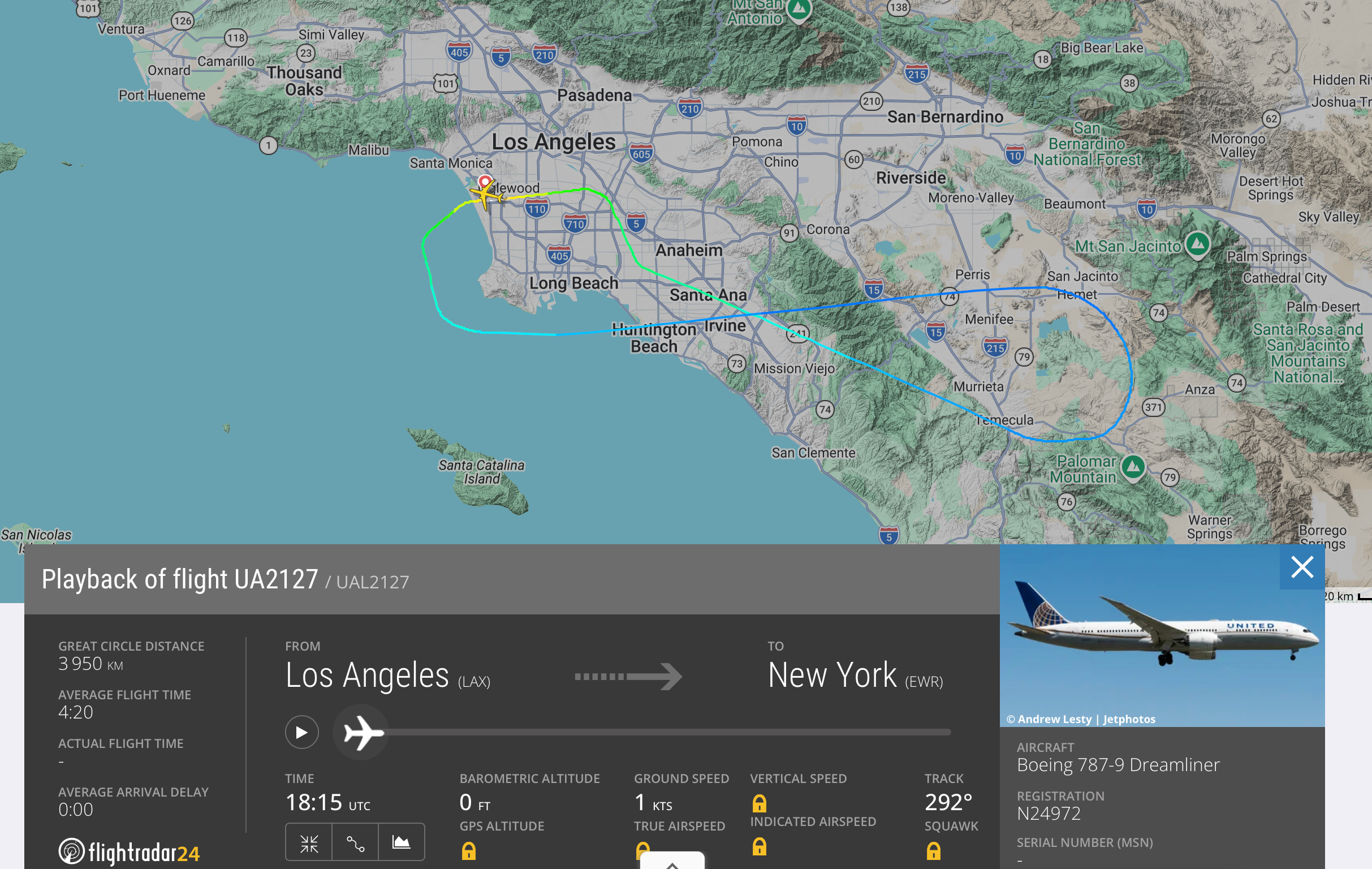
A few hours later, United flight 2127 departed Los Angeles. Roughly 15–20 minutes after takeoff, the crew declared an emergency and returned to LAX with a left engine issue that resulted in smoke and a post-landing evacuation.
The timing was surreal.
And if you haven’t read yesterday’s breakdown yet, it matters.
Because I walk through exactly what happens in the cockpit during an engine fire at V1 or at 35,000 feet — the memory items, the crew coordination, the decision-making under pressure.
You can read that full cockpit deep dive here 👇🏻

Yesterday’s incident was a real-world version of that training in action.
Now let’s look at what happened on United 2127.
Let’s walk through what we know.
The Timeline (Confirmed Information)
• Aircraft: Boeing 787-9 Dreamliner
• Route: Los Angeles (LAX) to Newark (EWR)
• Occupants: 256 passengers, 12 crew
10:43 AM — Departure from Runway 25L at LAX.
Approximately 15–20 minutes into the climb, the crew reports a problem with the left engine. Witnesses later describe seeing smoke and intermittent flashes from the left side.
The crew declares an emergency and requests an immediate return.
Footage from inside the cabin shows United Flight UA2127 making its way back to Los Angeles International Airport shortly after takeoff.
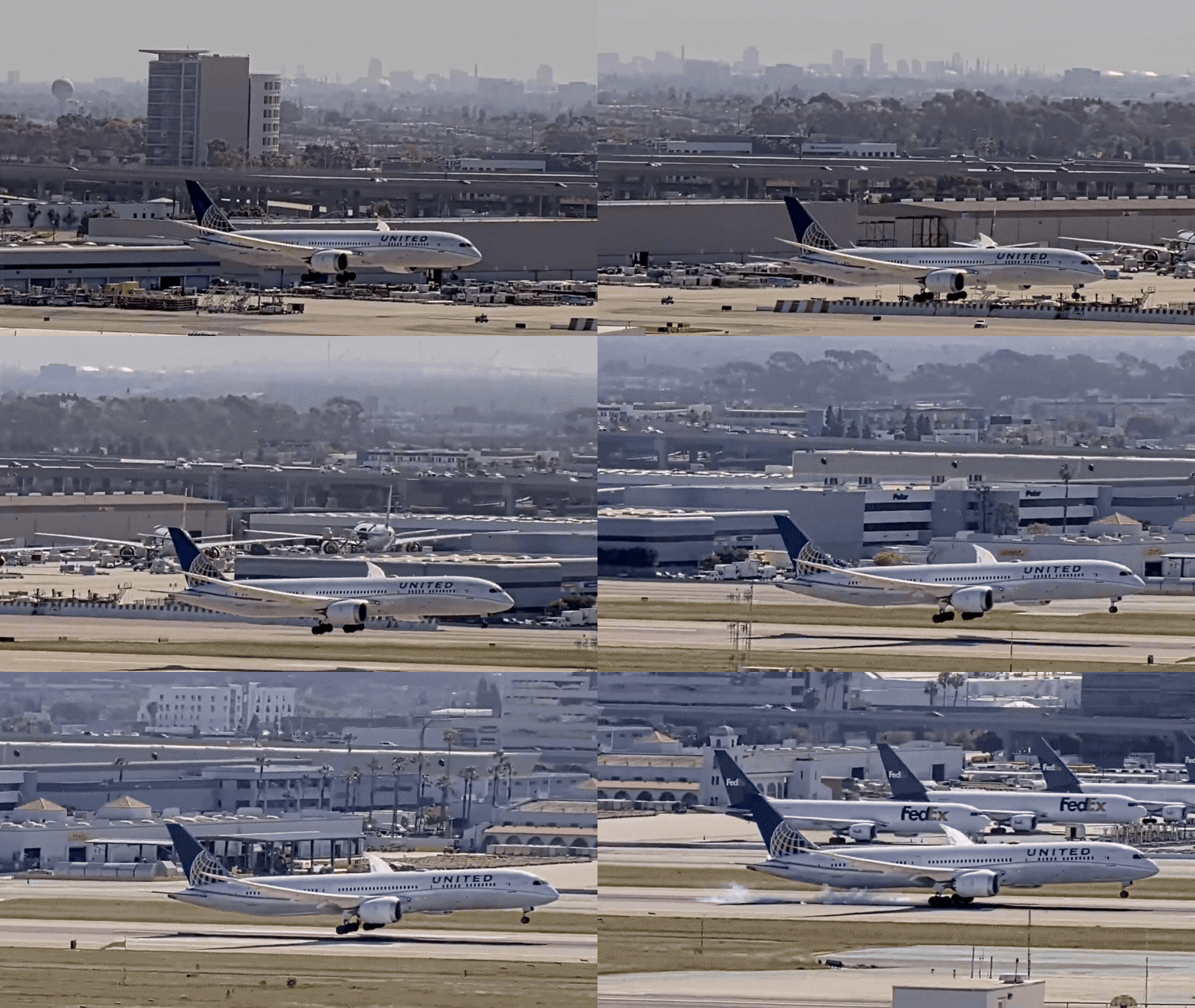
11:19 AM — The aircraft lands safely back at LAX.
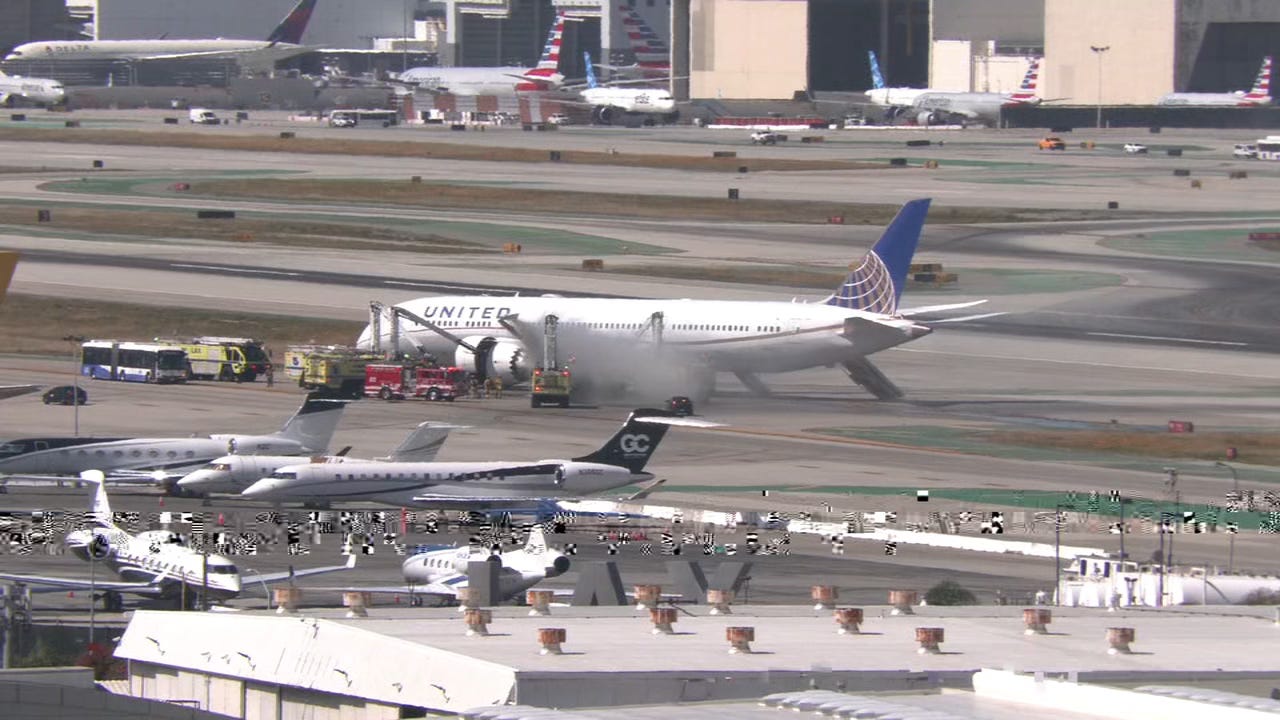
After clearing the runway and stopping on a taxiway, visible smoke from the engine area leads the crew to initiate an evacuation.
All 268 people exit the aircraft.
No serious injuries were reported.
From detection to evacuation: roughly 40 minutes.
What Passengers Likely Experienced
From the cabin, this probably felt like:
A normal takeoff.
A steady climb.
Then perhaps a subtle change a vibration, a shift in engine tone, something slightly different.
The seatbelt sign comes on.
Flight attendants take their seats earlier than expected.
Then the captain makes a calm announcement:
“We’re returning to Los Angeles due to an indication with one of our engines. We’ll be landing shortly.”
No drama. No panic. Just controlled information.
The descent feels purposeful. The landing is firm intentionally so.
Instead of taxiing to the gate, the aircraft stops.
Then come the commands:
“Release seatbelts.”
“Leave everything.”
“Come this way.”
Slides deploy.
Within minutes, passengers are on the ground.
For many, the fear likely hit after they turned around and saw smoke and emergency vehicles.
But by then, they were already safe.
What Was Happening in the Cockpit
When an engine indication appears whether fire warning, severe malfunction, or parameter exceedance pilots do not improvise.
We execute memory items and checklist
If a fire warning is confirmed, that sequence typically includes:
• Thrust lever — Idle
• Fuel control — Cutoff (after confirmation)
• Fire handle — Pull (after confirmation)
• Fire suppression agent — Discharge (if required)
This happens in seconds.
One pilot flies the airplane.
The other runs the checklist and communicates with ATC.
At some point comes the call:
“Emergency Aircraft” or “Mayday”
That declaration clears airspace and activates full emergency response.
From that moment, every layer of the system pivots around you.
The Aircraft
The 787-9 is ETOPS-certified, meaning it is approved to operate for extended periods on a single engine.
Returning to LAX within 30 minutes was well inside its certified capability.
A twin-engine airliner is designed, tested, and certified to fly safely on one engine.
This was serious.
But the aircraft was fully capable of returning safely.
The Evacuation Decision
Evacuations are not automatic after every emergency landing.
The crew must evaluate:
• Is there active fire?
• Is smoke entering the cabin?
• Is remaining onboard safer than exiting?
Evacuations carry risk — slides can cause injuries.
But visible smoke changes the equation.
In this case, the crew made a decisive call to evacuate.
Given the information available at the time, it was a safety-first decision.
One Important Detail: The Bags
There’s something else visible in the clips circulating online.
Several passengers appear to have evacuated with carry-on bags.
This is becoming more common and it is dangerous.
Here’s why:
• A roller bag can puncture an evacuation slide.
• A damaged slide can become unusable.
• That can trap dozens of people behind you.
• Every second matters in an evacuation.
Flight attendants are trained to block passengers from retrieving belongings.
But in a real emergency, with adrenaline high and hundreds of people moving at once, some bags still make it out.
I understand the instinct.
Phones. Passports. Medication.
But in that moment, speed is everything.
The airplane can be replaced.
The bag can be replaced.
People cannot.
If you ever hear “Leave everything,” it is not a suggestion.
It is survival protocol.
What Likely Caused It?
The aircraft is powered by GE GEnx-1B engines — modern high-bypass turbofans with strong reliability records.
The exact cause will be determined by the FAA and NTSB investigation.
Possible categories include:
• Internal engine component failure
• Fuel or oil system malfunction
• Compressor stall with secondary fire indication
• Foreign object ingestion possibly a birdstrike
What matters right now is this:
The detection system worked.
The shutdown procedure worked.
The fire protection system functioned.
The crew training worked.
Why This Should Reassure You
It may sound counterintuitive.
You saw smoke. Slides. Emergency vehicles.
And I’m saying this is evidence of success.
Because safety in aviation does not mean nothing ever fails.
It means when something does fail, multiple layers prevent it from becoming a catastrophe.
Yesterday:
• The engine indication system worked.
• The crew executed the checklist.
• ATC cleared the path.
• Emergency services were ready.
• The evacuation was completed.
All 268 people walked away.
That is modern aviation safety in action.
For Nervous Flyers
If this incident increased your anxiety, that’s completely understandable.
But look at the full picture:
A serious mechanical event occurred.
And the outcome was:
Everyone safe.
Not by luck.
By design.
Airline pilots train repeatedly in simulators for engine failures.
Flight attendants drill evacuations.
Airports rehearse emergency response.
The industry assumes something will eventually go wrong — and builds procedures to manage it.
Yesterday was proof those layers function.
What Happens Now
The FAA and NTSB will:
• Inspect the engine
• Review maintenance records
• Analyze flight data
• Interview the crew
Findings may take months.
Any lessons learned will be incorporated industry-wide.
That is how aviation safety continuously improves.
The Bottom Line
United 2127 experienced a serious engine malfunction shortly after departure from LAX.
The crew identified the problem, secured the engine, declared an emergency, returned safely, and evacuated passengers.
✅ No serious injuries were reported.
✅ The system worked.
✅ Not because nothing went wrong.
✅ But because when something did go wrong, it was handled exactly the way it was designed to be handled.
That’s what aviation safety looks like in 2026.
🎯 IF THIS INCIDENT TRIGGERED FLIGHT ANXIETY
If yesterday's news made your upcoming flight feel scarier, I get it.
Seeing smoke and evacuation slides is visceral even when you understand intellectually that everyone was safe.
People think fear of flying is one problem. It's not. It's a dozen different fears wearing the same mask, the noises you can't decode, the turbulence you can't predict, the feeling that no one's really in control. That's actually why my masterclass “The Physics of Calm” covers everything from the biology of panic to how to read the sky during a storm. Because once I realized that nervous flyers don't just need one answer, they need the full picture, the way I teach completely changed.
🛫 Ready to fly with confidence?
Book a Captain's Private Briefing and get a personalised route, weather, and turbulence analysis from me delivered before your flight so you board knowing exactly what to expect.
Fly Safe,
Pilot Nick

Nervous flyers note: you are not this safe on the highway in your car every day.
The only thing that would have scared me in this situation is my fellow passengers. Not following instructions happens constantly and can get people killed. Clueless ignorance is pandemic in our society.