


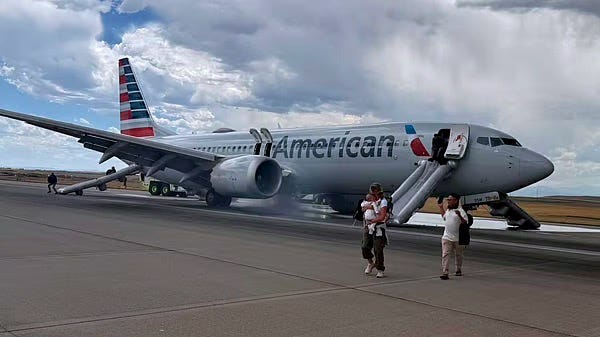
Saturday afternoon at Denver International Airport, American Airlines Flight 3023 experienced a tire fire during takeoff, forcing an emergency evacuation of all 173 passengers and 6 crew members. The headlines today are predictably celebratory: "All passengers evacuated safely!" "Disaster averted!" "Heroic crew saves the day!"
Everyone survived. This time.
But what the cameras captured wasn't a triumph of aviation safety—it was a stark departure from how emergency evacuations are supposed to work, revealing the gap between training protocols and real-world execution.
The Problem Everyone's Ignoring
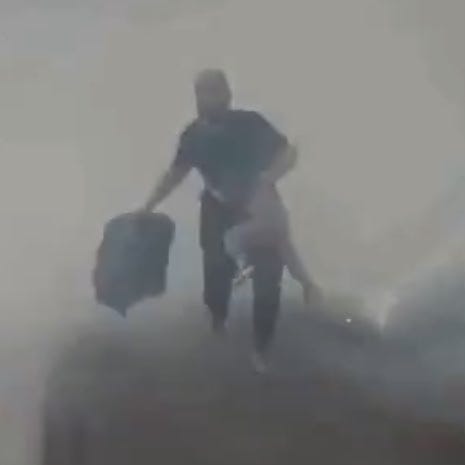
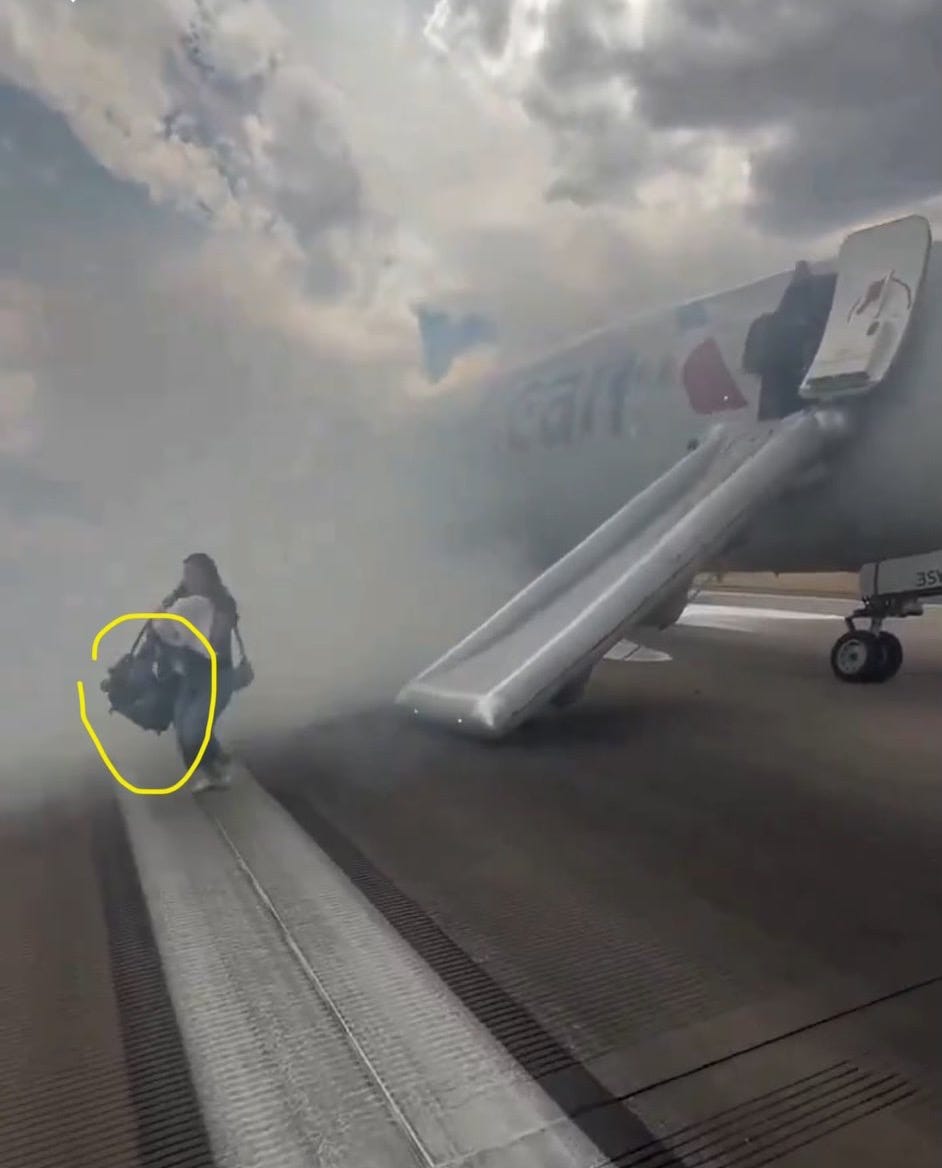
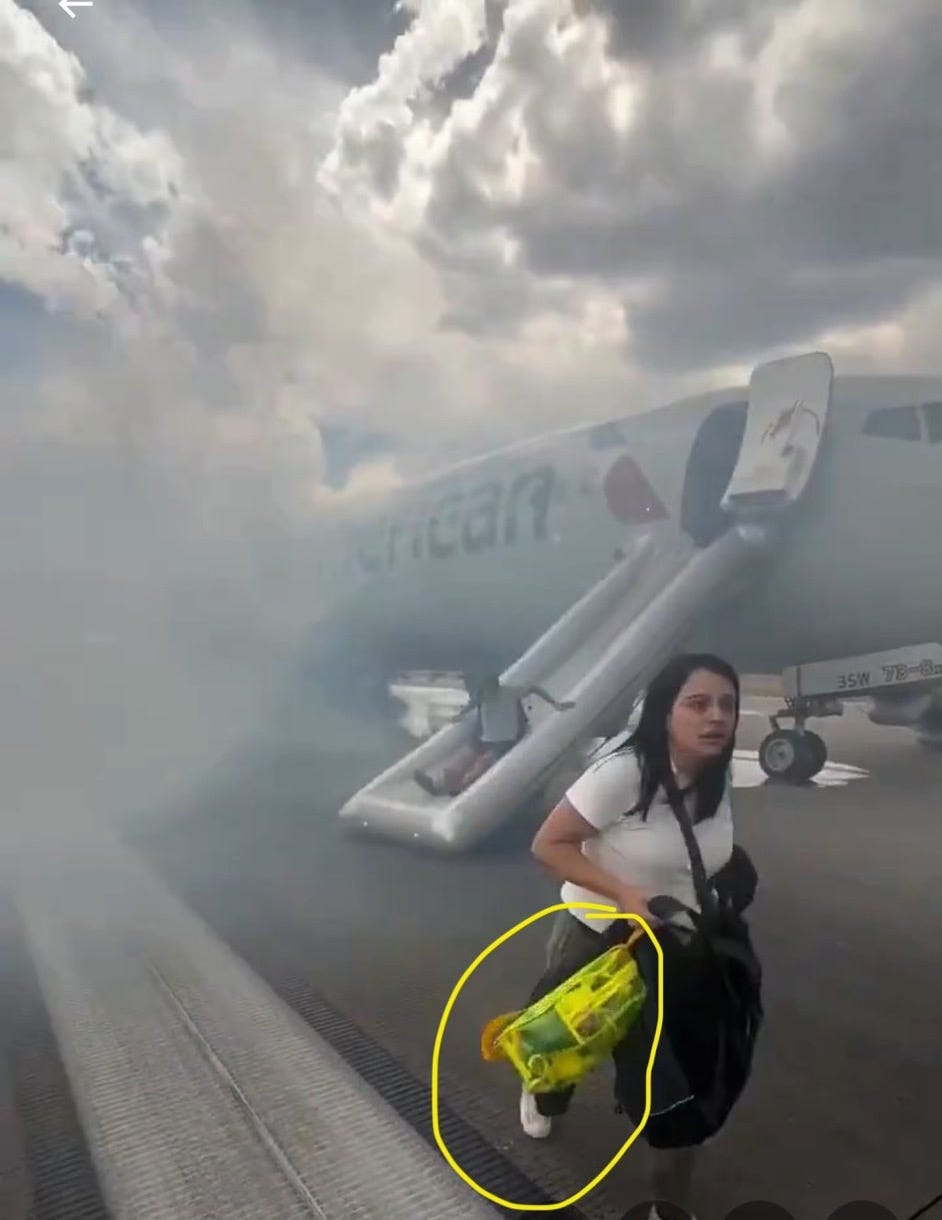
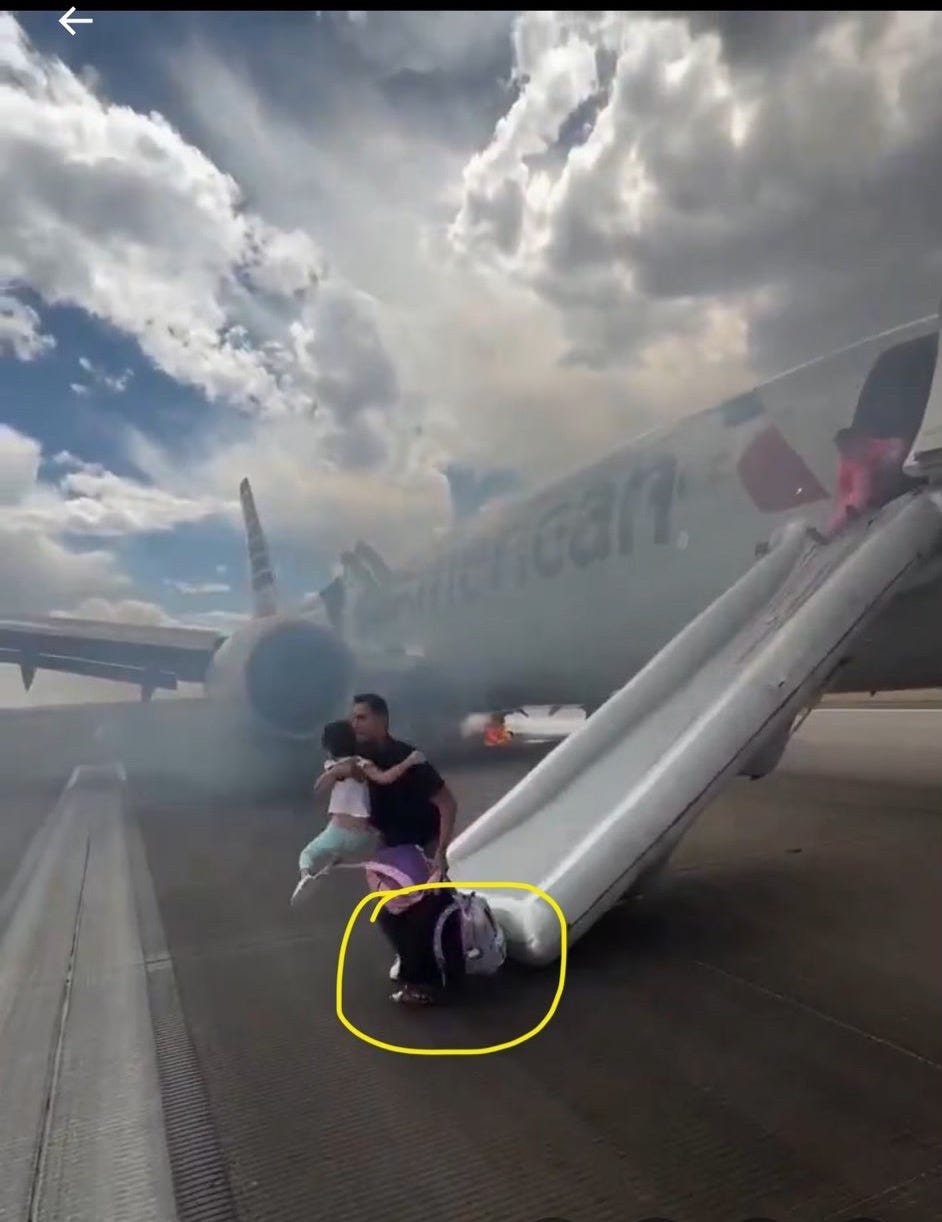
Videos shared on social media show passengers sliding down emergency chutes while carrying luggage, with one passenger holding both a child and suitcase who fell during evacuation. Seventeen-year-old passenger Shay Armistead described the chaos: "One passenger was screaming, 'We're all gonna die.' Another passenger was not sitting down and cooperating, and so it was kind of just a lot of panic." The entire evacuation process took 10 to 15 minutes—nearly 10 times longer than the 90-second certification standard that aircraft are required to meet.
This isn't just "passengers being difficult." This represents a serious departure from safety protocols that could have tragic consequences when time is truly critical.
Why Your Carry-On Bag Becomes a Weapon
An NTSB study found that nearly 50% of passengers interviewed reported trying to remove a bag during evacuations, even when flight attendants commanded passengers to "leave everything."
When people evacuate with luggage, evacuation slides become weapons. Those bags turn into projectiles when people hit the slide, puncturing fabric and knocking down people behind you. Every second counts, aviation regulations require full aircraft evacuation in 90 seconds or less. When you stop to grab your laptop, you're not just risking your life, you're risking everyone behind you who can't get out. As we saw in Denver, people carrying bags fall, creating human obstacles while smoke and fire spread above.
Denver's Alarming Pattern
This is the second American Airlines emergency at Denver in 2025, following a March incident where dozens of passengers were forced to stand on the wing after an engine fire. A month later, a United Airlines plane hit an animal on takeoff and shot out fire. Denver International Airport, the sixth busiest airport in the world—has become a testing ground for emergency responses.
The Contradiction
Yes, everyone survived Flight 3023. The crew did their jobs. The fire department responded quickly. The airport handled the aftermath professionally.
But if this is what our "successful" evacuations look like with passengers treating emergency slides like carnival rides while clutching their belongings, then we're living on borrowed time.
This behavior has become a recurring pattern in emergency evacuations over recent years. While aviation emergencies remain rare, the footage of passengers evacuating with luggage has become disturbingly common from the 2016 American Airlines fire in Chicago to the 2019 Aeroflot tragedy in Moscow where passengers retrieving bags may have cost lives.
What Needs to Change
From a professional aviation perspective, yesterday's evacuation highlighted several areas requiring immediate attention:
Enhanced Crew Training: Flight attendants need specific protocols for physically preventing passengers from accessing overhead bins during evacuations. Current training appears insufficient for managing panicked passengers who prioritize belongings over safety.
Aircraft Design Improvements: Overhead bin locks that automatically engage during emergency situations could eliminate the temptation entirely. If passengers cannot access their belongings, they cannot carry them during evacuation.
Real-World Training Scenarios: Evacuation drills should include realistic passenger behavior patterns, not idealized conditions. Crews need experience managing chaos, not just orderly evacuations with cooperative volunteers.
The 90-second certification standard assumes passengers follow instructions perfectly. Yesterday's reality check shows we need training and procedures that account for human behavior under stress, not just regulatory compliance under controlled conditions.
What do you think? Have you witnessed similar passenger behavior during flight emergencies? Share your thoughts in the comments below.
Subscribe for more analysis of aviation safety incidents and the systemic issues hiding behind the "everything went well" headlines.

Pilot Nick
✈️ Lessons from the Flight Deck
📬 Get more cockpit insights and travel tips, subscribe free to Lessons From the Flight Deck for weekly updates that help you fly calm and confident or visit:
https://www.skycalm.org
Grabbing bags is an utterly reflexive move, isn't it? It's not a conscious decision to disobey the rules. It's our "stuff." We're trained to guard our stuff, especially while traveling. I'm quite positive that I'd leave my stuff behind but I can't be sure unless I'm placed in that horrific position. I hope I'm never in that position.
In a world where airlines don’t give a shit about lost bags in regular operations, airlines are training people to expect they will lose their baggage in an emergency.
Root cause solution?
Six sigma operation protocols for lost baggage.
Prove to me you give a shit in daily operations and then I will TRUST you to get my bags back to me after an emergency.
This is a trust issue.
Six sigma is a trust solution.