


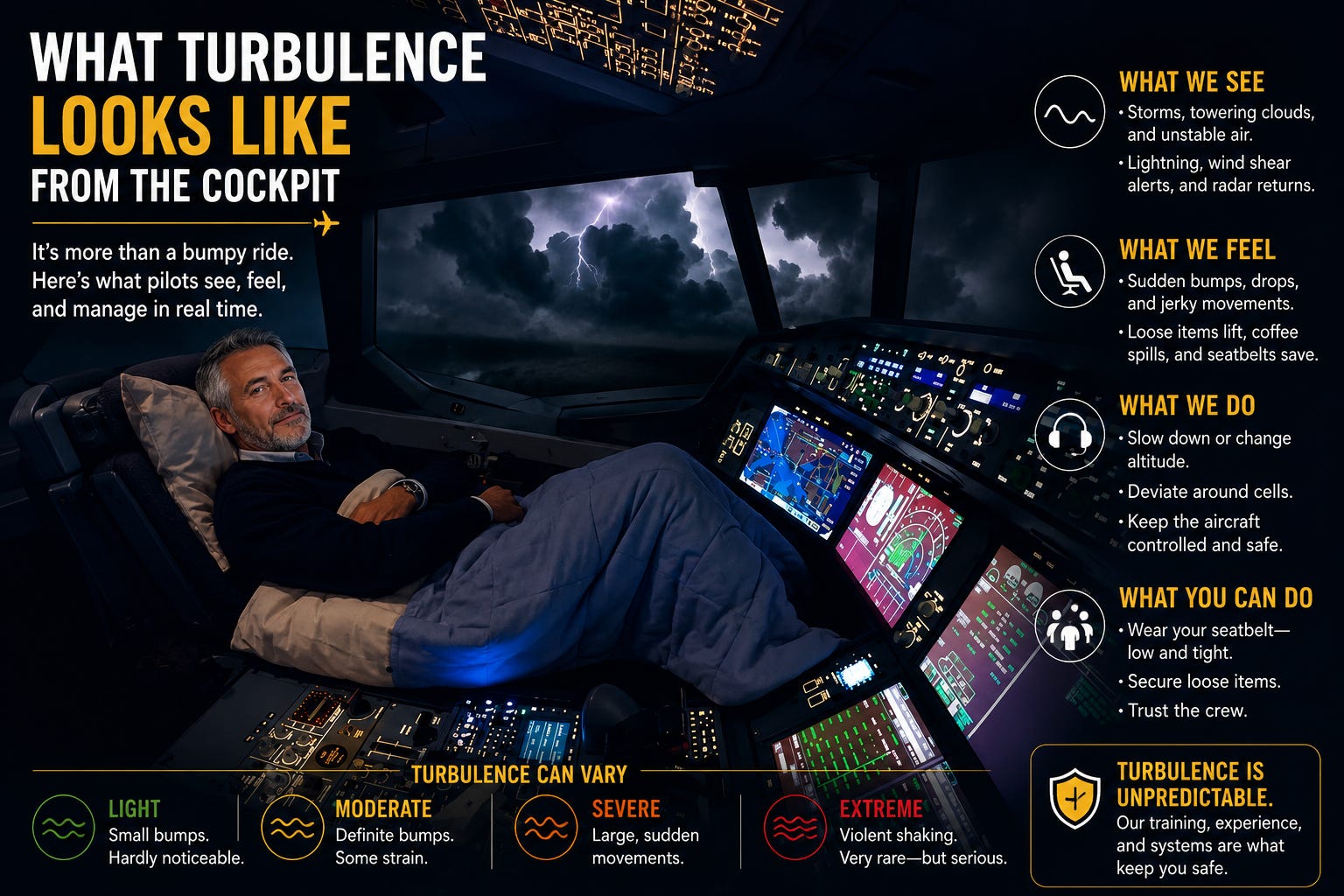
Let me paint you a picture.
You’re in seat 27F. The seatbelt sign just came on. The cabin goes quiet except for the rattle of overhead bins and the nervous cough of the guy across the aisle. Your coffee is doing a little dance in its cup. Your knuckles are white on the armrest.
Now let me tell you what’s happening thirty metres ahead of you, behind the locked door.
I’m sipping my coffee.
Seriously. That’s it. Maybe I’ve turned the seatbelt sign on, adjusted our altitude by a thousand feet, and gone back to my cup of Yorkshire Tea. My heart rate hasn’t changed. My copilot and I might be mid-conversation about where we’re eating on the layover.
That disconnect between what turbulence feels like in the cabin and what it looks like from the flight deck is one of the most misunderstood things in all of aviation. And after thousands of hours in the cockpit, I think it’s time I walked you through it properly.
The dirty secret about turbulence
Here’s something most pilots won’t say out loud in polite company: turbulence is, almost always, a non-event for us.
Not because we’re brave. Not because we’ve been desensitised. But because we understand what’s actually happening and what isn’t.
Turbulence is just the aircraft moving through uneven air. That’s it. The plane isn’t falling. It isn’t breaking. It’s doing exactly what it was designed to do: flex, absorb, and keep flying. Modern airliners are tested to withstand forces far beyond anything you’ll encounter on a commercial flight. The wings on a Boeing 787 can flex upward by nearly 8 metres before they’d be in trouble. You’ll never get close to that number in normal operations. Not even in the bumpy stuff that makes passengers gasp.
What you feel as violent jolts are usually altitude changes of 10 to 30 feet. Sometimes less. Your lift going from the ground floor to the first floor is a bigger movement. But because you can’t see the horizon, because you’re strapped into a metal tube with no frame of reference, your brain interprets it as danger. That’s not a flaw in you — it’s a flaw in the environment. You’re a perfectly rational human being having a perfectly irrational experience.
What we actually see (and don’t see)
Here’s where it gets interesting for the avgeeks.
From the cockpit, turbulence is largely invisible. You can’t see it. There’s no dark cloud with a warning label. No visible wall of “rough air” approaching. Most of the time, we know it’s coming because other aircraft have reported it ahead of us, or because our weather radar is showing precipitation returns that suggest convective activity.
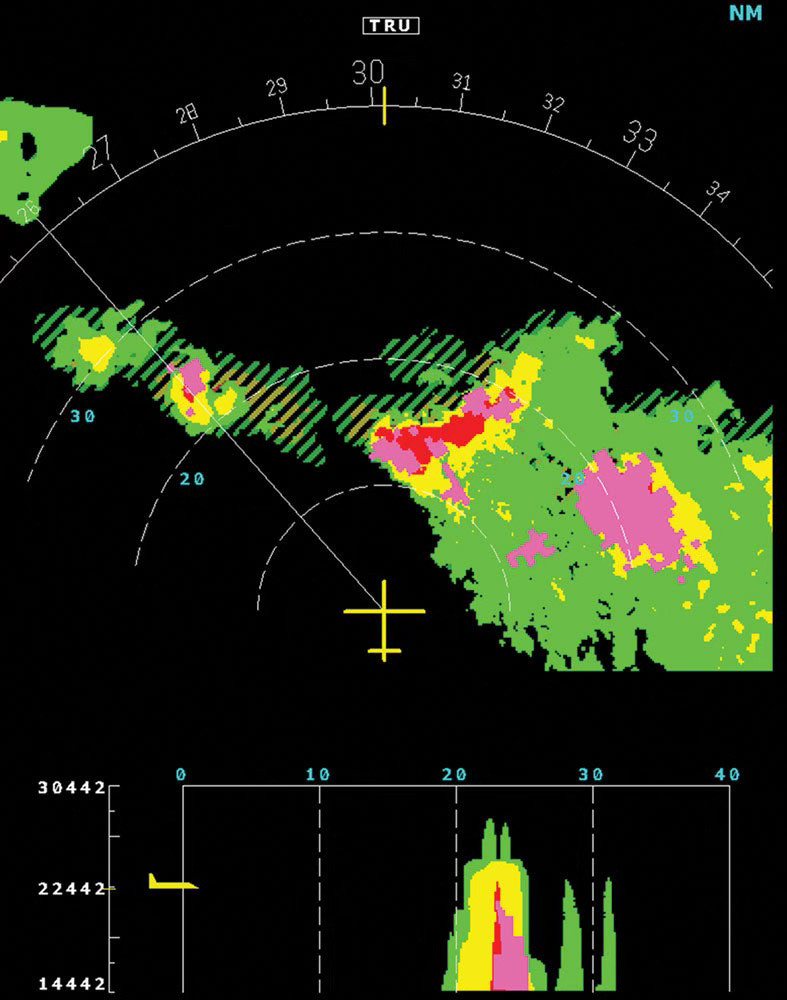
But here’s the thing clear air turbulence (CAT) doesn’t show on radar at all. It’s associated with jet streams and atmospheric shear, not moisture. So it’s genuinely invisible. We rely entirely on pilot reports (PIREPs), dispatcher information, and increasingly sophisticated atmospheric models to anticipate it.
When we do hit it, here’s the cockpit reality:
The autopilot stays engaged. It’s managing the ride far more smoothly than a human could. We might ask ATC for a different altitude “Centre, requesting flight level three-seven-zero for smoother ride conditions” is a sentence I’ve said hundreds of times. We’ll check in with the cabin crew to make sure they’re safe. And we turn the seatbelt sign on and we genuinely want you to listen to it.
That last point matters. More on that in a moment.
The five types of turbulence (and what each one means)
If you really want to understand turbulence like a pilot, you need to know the categories. We report them using a standardised scale, and each one tells a very different story.
Light turbulence — Slight, erratic changes in altitude or attitude. Your drink might ripple. Cabin crew continue service. From the cockpit: barely worth mentioning. I might not even turn the seatbelt sign on.
Light to moderate — A bit more persistent. You feel it in your seat. Unsecured objects might shift. Cabin crew might pause the drinks cart. From the cockpit: a mental note, maybe a PIREP to help the aircraft behind us.
Moderate turbulence — Now we’re paying attention. Definite strain against your seatbelt. Walking is difficult. Cabin service is suspended. From the cockpit: the autopilot is working harder, we’re likely requesting a new altitude, and we’re keeping a closer eye on the weather picture. But the aircraft is still well within its limits.
Severe turbulence — Rare. Genuinely rare. Occupants are forced violently against their seatbelts. Unsecured objects are thrown around the cabin. From the cockpit: we’re fully focused, coordinating with ATC, possibly deviating off course. But even here, the aircraft is designed for this. The structure can handle it. It’s the unrestrained humans inside that are at risk.
Extreme turbulence — Almost never encountered in commercial aviation. The aircraft is practically uncontrollable momentarily. This is what causes the dramatic headlines, but most career airline pilots will never experience it. I never have.
The important pattern to notice: the danger isn’t to the aircraft. It’s to the people inside it who aren’t wearing their seatbelts. The aircraft doesn’t care about turbulence. You need to care about your seatbelt.
An insider’s confession: the seatbelt sign politics
Here’s something passengers don’t know. The seatbelt sign is a surprisingly political decision.
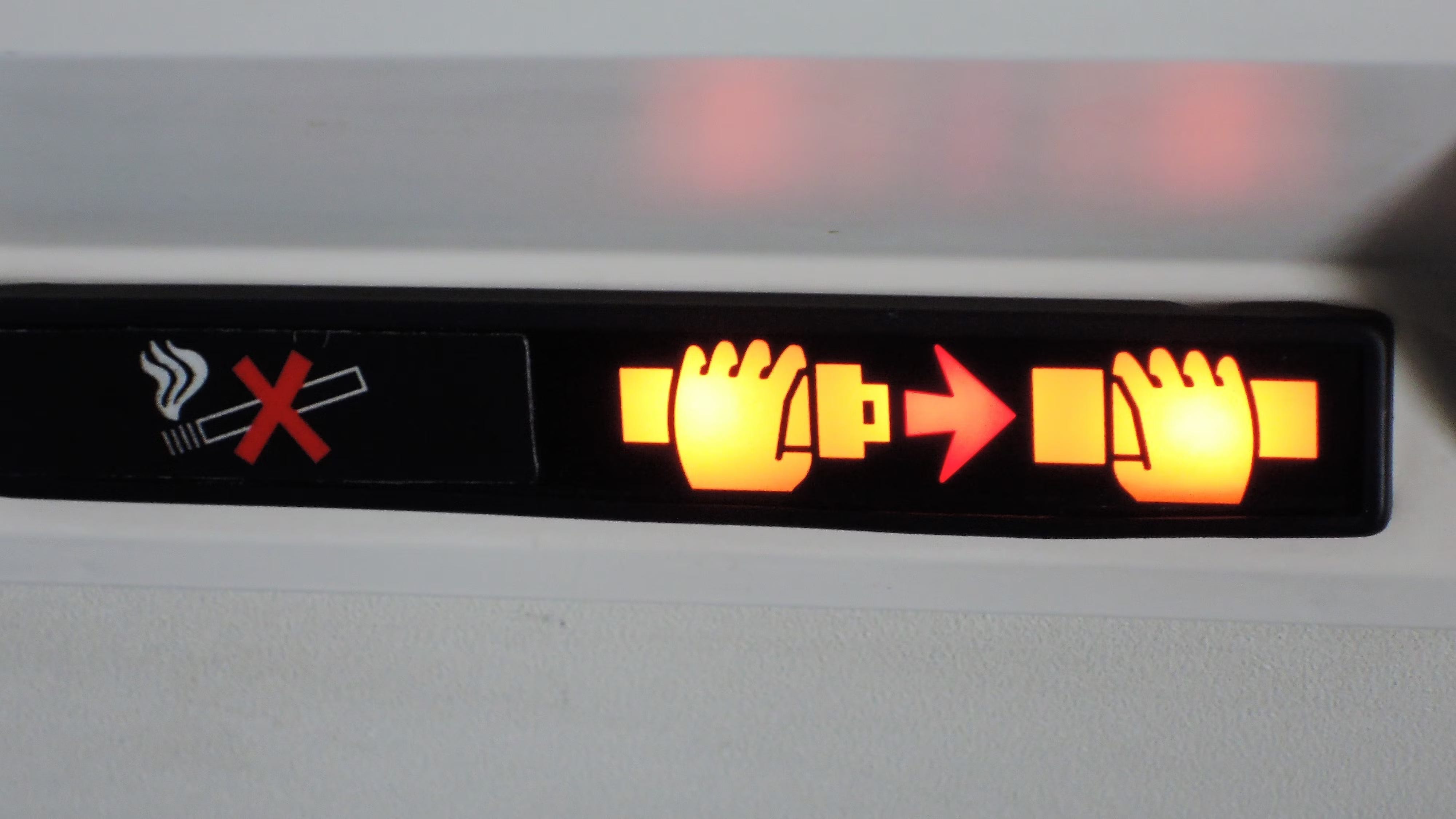
Turn it on too early and leave it on too long? Passengers ignore it. Cabin crew can’t do their service. The airline gets complaints. Turn it off too soon? Someone gets hurt and it’s a legal issue.
Every captain manages it differently. Some are conservative — sign on the moment there’s a whisper of bumps. Others wait until it’s clearly needed. Neither approach is wrong, but it creates an inconsistency that confuses passengers. You might fly one leg with the sign on for two hours and the next with it barely flickering.
My personal philosophy? I’d rather have it on ten minutes too early than ten seconds too late. Because the injuries that happen in turbulence and they do happen are almost exclusively to people who weren’t buckled up. Flight attendants reaching for overhead bins. Passengers walking to the lavatory. People who thought the bumps were over.
The single best piece of advice I can give any flyer: keep your seatbelt loosely fastened whenever you’re seated.
Always. Even when the sign is off. It costs you nothing and it could save you from a serious injury. A quick reminder most passengers don’t realize:
The single best protection against turbulence injuries isn’t where you sit or how smooth the flight feels. It’s simply keeping your seatbelt loosely fastened whenever you’re seated.
I explain why in this article 👇🏻
The One Habit That Prevents Almost All Turbulence Injuries (Pilots Wish Everyone Knew This)

The hidden flow of data and warnings your captain sees long before you ever feel a single bump.
What the instruments tell us
For the technically curious: when turbulence hits, here’s what’s happening on my flight deck displays.
The primary flight display (PFD) shows small, rapid deviations in pitch and altitude. In moderate turbulence, you might see the altitude bouncing around by 50 to 100 feet. The airspeed might fluctuate by 10 to 15 knots. These are numbers that look alarming on paper but are well within normal parameters.
The autopilot is constantly correcting making micro-adjustments to the control surfaces dozens of times per second. It’s doing a far better job than I would manually. In fact, in most turbulence, the worst thing a pilot could do is disconnect the autopilot and try to hand-fly. The automation smooths the ride. We let it work.
On the navigation display, if the turbulence is associated with weather, we’re painting it with our onboard radar. You’ll see returns in green, yellow, and red — with red and magenta being areas of heavy precipitation that we’ll deviate around, sometimes by 20 or 30 miles. We never fly through red returns if we can avoid it. That’s a hard rule.
“But what about that flight that dropped 1,000 feet?”
You’ve seen the headlines. “Plane drops 1,000 feet in seconds.” “Passengers thrown to ceiling.” “Flight from hell.”
Let me decode those for you.
First, the reported altitude drops are almost always exaggerated. What gets reported as “1,000 feet” was probably 100 to 200 feet. Human perception in an enclosed space without visual references is wildly unreliable. It feels like freefall. It isn’t.
Second, the injuries in those events and this is critical are almost always to unrestrained passengers and cabin crew. The aircraft lands safely. Every time. The structure is intact. The engines are fine. The wings didn’t come off. People got hurt because they weren’t strapped in.
Third, those events make the news precisely because they’re rare. You don’t see headlines about the tens of thousands of flights every single day that experience turbulence and land without incident. Because that’s not a story. That’s just Tuesday.
The future of turbulence forecasting
This one’s for the avgeeks and frequent flyers.
The industry is getting dramatically better at predicting and avoiding turbulence. LIDAR-based detection systems are in development that can sense clear air turbulence minutes before an aircraft encounters it — something radar can’t do. Airlines are sharing real-time turbulence data across fleets, creating a constantly updating map of atmospheric conditions.
Some newer aircraft have gust-load alleviation systems that actively sense turbulence and move the control surfaces to counteract it before you feel it. The ride on a modern widebody is already noticeably smoother than aircraft from twenty years ago.
And atmospheric modelling is improving every year. The forecasts I get in my pre-flight briefing pack are significantly more accurate than what we had even a decade ago. We know, within reasonable probability, where the rough air is and what altitude will give us the smoothest ride.
Turbulence isn’t going away if anything, some research suggests it may increase with climate change as jet stream patterns shift. But our ability to predict it, avoid it, and manage it when we can’t avoid it is better than it’s ever been.
So what do I want you to take away from this?
Three things.
One: Turbulence feels far worse than it is. The gap between passenger perception and cockpit reality is enormous. What terrifies you in the cabin is routine for us up front. That’s not dismissive, it’s reassuring.
Two: The aircraft can handle it. Full stop. These machines are over-engineered to an extraordinary degree. The wings flex because they’re designed to flex. The fuselage creaks because it’s built to move. Everything you hear and feel in turbulence is the aircraft doing its job exactly as intended.
Three: Wear your seatbelt. Always. The only real risk in turbulence is to unsecured humans. Be a secured human. It’s the simplest thing you can do to make turbulence a complete non-issue.
Next time you hit a bumpy patch at 37,000 feet, I want you to picture the cockpit. Two pilots, calm and composed. Autopilot doing its thing. A cup of coffee on the centre console. Maybe a conversation about the hotel restaurant.
That’s what turbulence looks like from up here.
Just another day at the office.
Fly Safe, Pilot Nick

Want to go deeper?
If this gave you a new perspective on what happens behind the cockpit door, there’s a lot more where this came from.
Grab my pilot guides on Gumroad — practical, insider resources covering everything from how pilots actually manage fear to the real procedures behind your flight. Perfect for nervous flyers and aviation enthusiasts alike. → captainnick.gumroad.com
Join my Masterclass — a structured, in-depth course that takes you inside the flight deck and gives you the knowledge that transforms how you experience flying. Whether you’re a nervous flyer looking for confidence or an avgeek who wants the real story, this is for you. → lessonsfromtheflightdeck.teachable.com
Book a Private Pilot Briefing — a one-on-one session with me where I answer your specific questions, walk you through your upcoming flight, or help you overcome flying anxiety with real cockpit knowledge. Personal, tailored, and genuinely reassuring. → Book your briefing here
If you found this useful, share it with someone who grips the armrest. They need to read this.
One of your best articles yet, Nick. Many thanks for this.
I hate turbulence with a passion, the same way I hate roller coasters. As soon as it starts I get this bizarre cold sweat on the soles of my feet. Go figure.
My stomach always needs to feel that it's at the bottom of my torso, not around my ears. I never worry about crashing or failure, I just can't get on with the sensation.
At the end of the day, I've learned to tough it out (because you can't exactly ask to get off) and I only get "worried" if I see the cabin crew buckle up. Then we are in for a bit of a ride.
Thank you so much for this post!! I’m an extremely nervous flier (turbulence makes me more uneasy than I can describe). I always find myself wishing the pilots would just talk to us the whole time and reassure nothing’s out of the ordinary 😅 Appreciate you taking the time to explain from your purview 🙏