


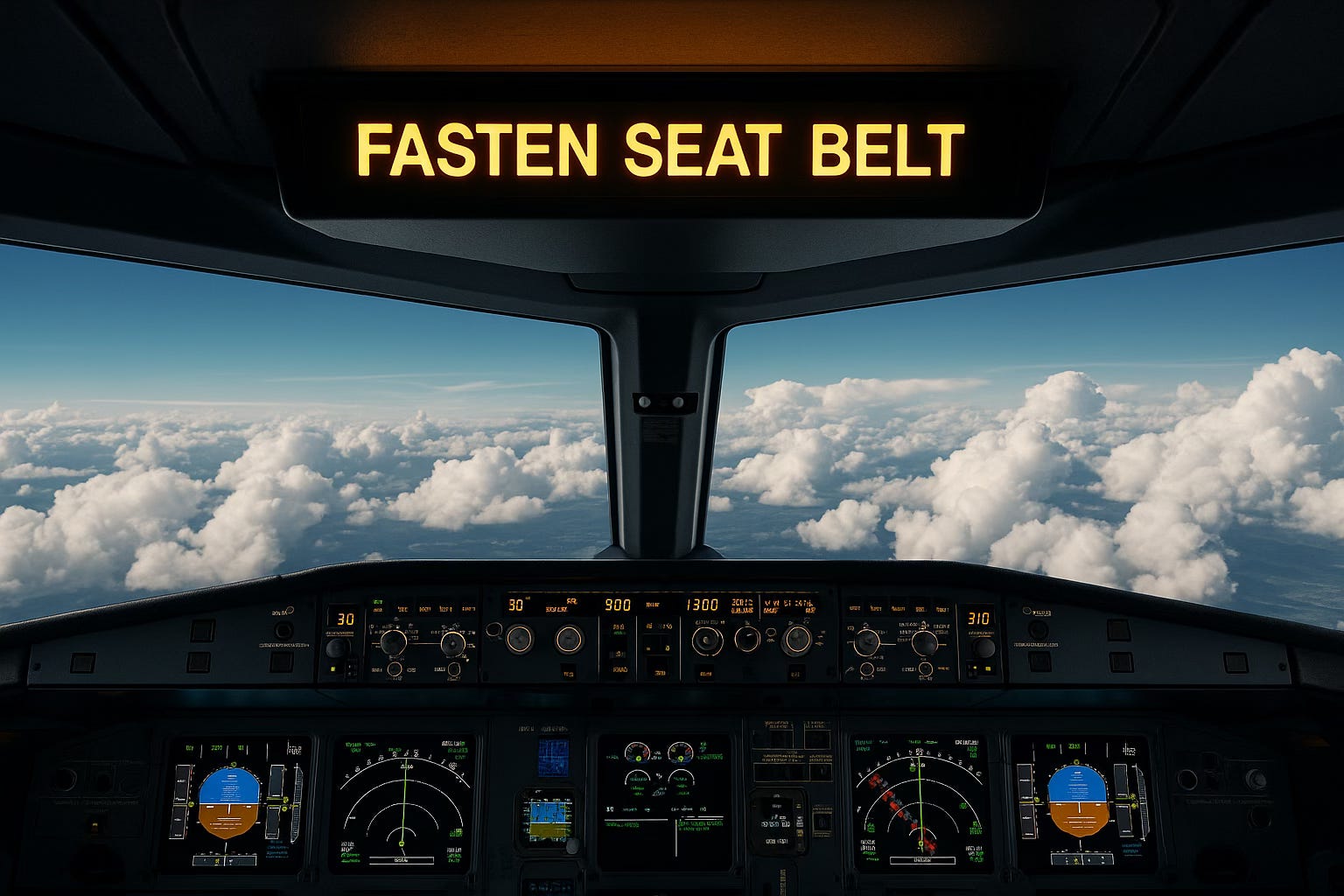
The hidden flow of data and warnings your captain sees long before you ever feel a single bump.
🛎️ DING
That familiar chime makes passengers look up from their book, pause their movie, or temporarily abandon a bathroom trip. Flight attendants secure carts instantly. And for many nervous flyers, that sound triggers one thought:
“Oh no… turbulence.”
But here’s the reality from someone who’s flown through everything the atmosphere can throw at us over 25 years and 10,000+ hours:
✅ Turbulence doesn’t break airplanes.
🚨 People getting up during turbulence… that is what causes injuries.
Modern airliners are certified to withstand forces multiple times stronger than what they’ll ever encounter in normal operations. Wings aren’t fragile, they are designed to bend, flex, and absorb energy. Engineers intentionally test them to the point of extreme deflection, far beyond anything in real flight.
But unbuckled human bodies? They’re not designed to fly around a cabin.
Dozens of flight attendants and passengers are injured every year, not because the airplane is in danger, but because someone wasn’t secured when turbulence hit.
And that seatbelt switch on my overhead panel?
It’s not random. It’s not based on “being cautious.”
It’s based on a real-time data stream you never get to see.
Let me show you exactly what we see up front that you don’t and why the seatbelt sign deserves more respect than most passengers give it.
