


📩 Inside this issue:
The Neuroscience Behind Your White Knuckles
Why Turbulence Feels So Terrifying (Even When It's Not)
Sarah's Story: From Panic to Peace at 35,000 Feet
3 Science-Backed Techniques to Calm Your Nervous System
Have you ever wondered why your typically rational brain seems to short-circuit the moment those cabin doors close? Why a little bump that would be nothing in a car suddenly feels like impending doom at cruising altitude?
You're not alone. According to the National Institute of Mental Health, about 25 million Americans experience some form of flight anxiety. But here's the fascinating part: understanding exactly what's happening in your brain can be the first step toward taking back control.
The Neuroscience of Flight Anxiety: Your Brain's Fear Circuit in Overdrive
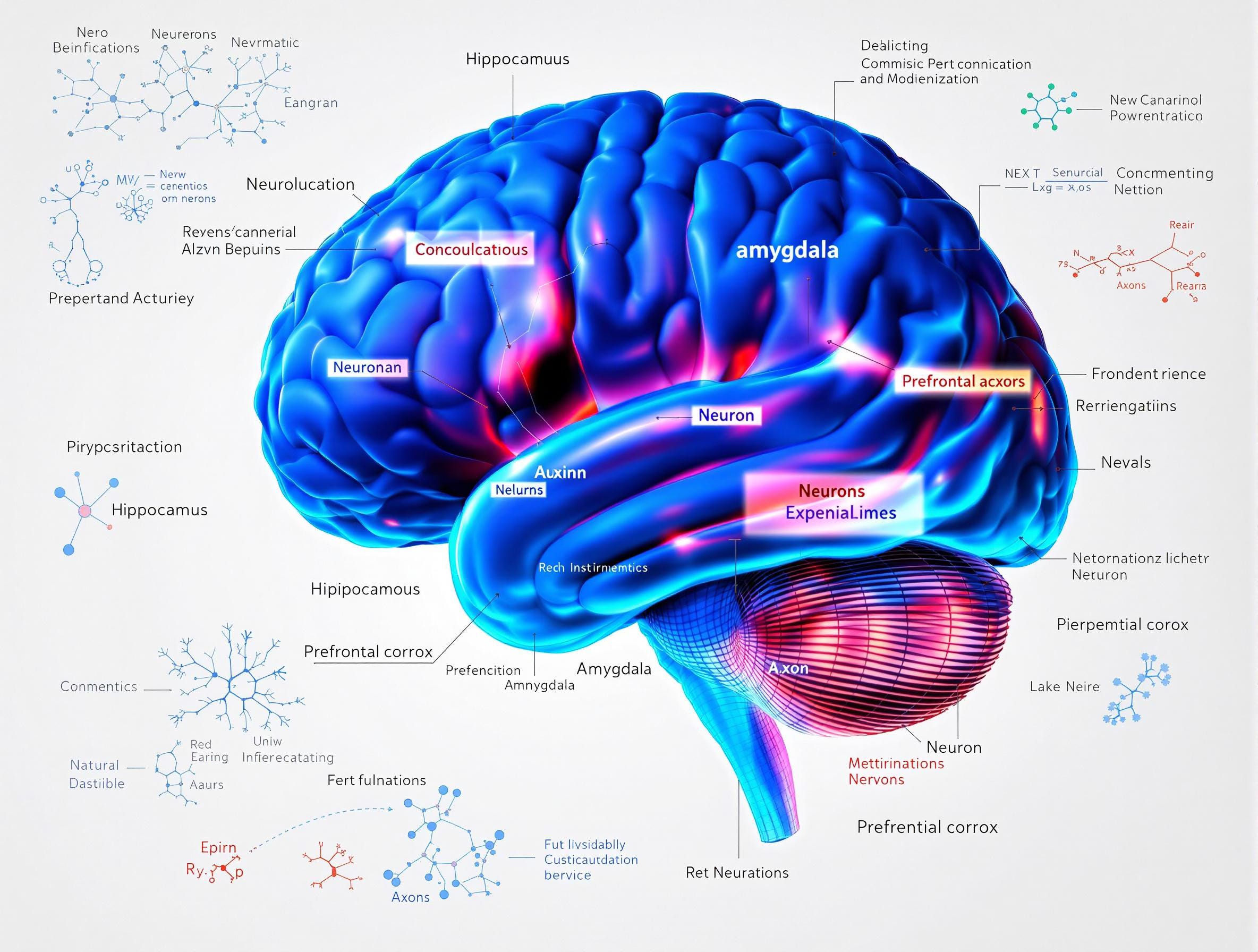
When you board an aircraft, you're not just taking your body on a journey—you're taking your ancient brain architecture into an environment it was never evolutionarily designed to handle. Let's take a deep dive into what's actually happening inside your skull at 35,000 feet
.
Your Brain's Fear 😨 Network: A Complex Symphony of Alarm 🚨
Flight anxiety triggers a sophisticated neural network involving multiple brain regions:
The Amygdala: Your Primitive Alarm System
Deep within your brain sits a small, almond-shaped structure called the amygdala. Think of it as your brain's security system—constantly scanning for threats and ready to trigger your fight-or-flight response at a moment's notice.
Neuroimaging studies show that in anxious flyers, the amygdala becomes hyperactive during flight-related scenarios. It essentially "lights up" on brain scans, consuming more oxygen and glucose as it works overtime processing potential threats.
The Hypothalamus: The Hormone Command Center
Connected directly to your amygdala is the hypothalamus, which serves as the control center for your autonomic nervous system. When your amygdala signals "danger," your hypothalamus immediately activates your sympathetic nervous system—the "accelerator pedal" of your stress response.
The HPA Axis: Your Body's Stress Circuit
Flight anxiety activates what neuroscientists call the Hypothalamic-Pituitary-Adrenal (HPA) axis:
Your hypothalamus releases Corticotropin-Releasing Hormone (CRH)
This triggers your pituitary gland to release Adrenocorticotropic Hormone (ACTH)
ACTH then signals your adrenal glands to flood your bloodstream with cortisol and adrenaline
The Prefrontal Cortex: Your Brain's CEO Goes Offline
Perhaps most fascinating is what happens to your prefrontal cortex (PFC)—the rational, thinking part of your brain responsible for logical analysis and decision-making. Under normal circumstances, the PFC helps regulate emotional responses by providing top-down control over the amygdala.
However, brain scans of people experiencing acute anxiety show decreased activity in the prefrontal cortex, particularly in the ventromedial region. This "executive dysfunction" means that precisely when you need your rational brain the most, it becomes impaired by the flood of stress hormones.
The Neural Cascade During Flight Anxiety:
Environmental triggers (turbulence, confinement, unusual sounds) activate your sensory cortex
Your amygdala interprets these sensations as potential threats
Within milliseconds, it activates your hypothalamus and brain stem
Stress hormones flood your system via the HPA axis
Your prefrontal cortex function diminishes, reducing your ability to rationally evaluate the situation
Your periaqueductal gray (PAG)—a primitive midbrain structure—triggers automatic defensive responses
Your insular cortex (which processes bodily sensations) becomes hyperactive, making you hyper-aware of every physical symptom
This creates a feedback loop where noticing symptoms (racing heart, shallow breathing) further convinces your brain you're in danger
This entire biological cascade happens faster than your conscious awareness can process it—your body is already responding before you've even had time to think "I'm afraid."
🌀 Why Turbulence Triggers Your Brain's Fear Centers (Even When It's Completely Safe)
Turbulence remains one of the top triggers for in-flight anxiety, despite being a normal part of air travel that pilots consider routine. But why does your brain process these routine bumps and drops as existential threats? The answer lies in several fascinating neurological mechanisms.
The Neuroscience of Control and Uncertainty
Humans are wired with a fundamental need for control—a trait governed by our anterior cingulate cortex (ACC) and lateral prefrontal regions. When you're driving a car and hit a bumpy road, your hands on the steering wheel provide a crucial sense of agency that keeps these brain regions calm.
In an airplane, however:
The dorsal anterior cingulate cortex (dACC) becomes hyperactive when you perceive a lack of control
The ventromedial prefrontal cortex, which normally helps regulate emotional responses, shows decreased activity
Your insula—responsible for monitoring your internal bodily state—becomes hypersensitive, amplifying every physical sensation
Your brain releases higher levels of the stress hormone cortisol in direct response to this sense of helplessness
Neuroimaging studies have shown that this exact pattern of brain activity occurs not just during genuine threats, but during situations where we simply perceive a lack of control over potential threats.
Your Brain's Sensory 🤖 Integration Crisis
At 35,000 feet, your nervous system faces a perfect storm of contradictory sensory information:
The Vestibular-Visual Mismatch
Your brain relies on three primary systems to understand your position in space:
Vestibular system (inner ear): Detects linear and angular acceleration
Visual system: Provides environmental context for movement
Proprioceptive system: Monitors body position through muscles and joints
During turbulence, these systems send conflicting signals:
Your vestibular system detects sudden drops, rises, or lateral movements
Your visual system sees only a stable cabin interior with few reference points
Your proprioceptive system feels the sudden pressure changes against your body
Your cerebellum—responsible for integrating these sensory inputs—struggles to create a coherent model of what's happening. This neural confusion activates the brain's locus coeruleus, triggering heightened alertness and anxiety.
Predictive Processing Gone Wrong
Modern neuroscience understands that your brain is constantly generating predictions about what should happen next. The theory of predictive processing suggests that anxiety emerges when there's a significant "prediction error"—the difference between what your brain expects and what actually occurs.
During turbulence:
Your brain can't predict the next movement or its intensity
Each unexpected drop or jolt creates a large
Sarah's Story 🙌 : From Panic to Peace at 35,000 Feet
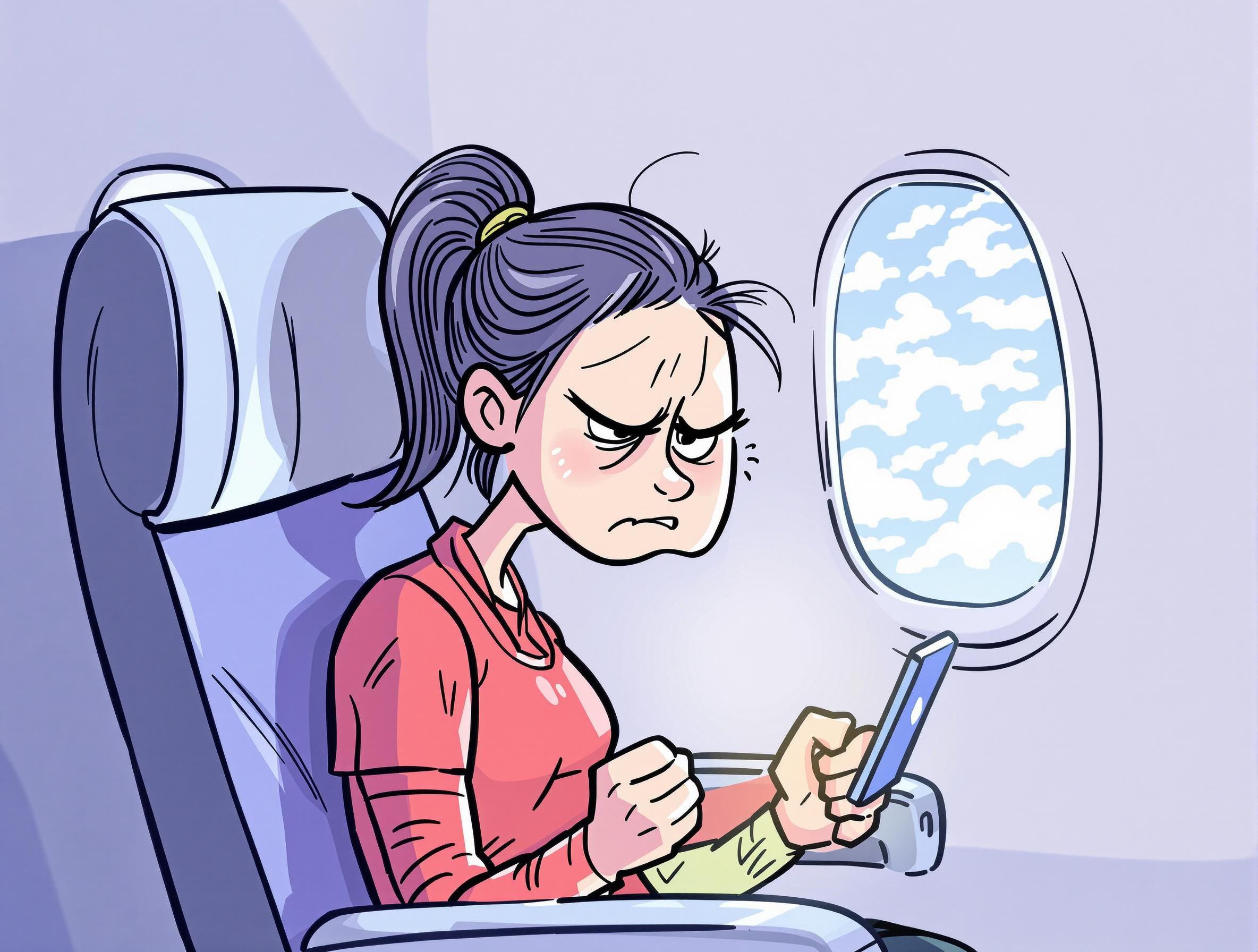
"I used to grip the armrests so tightly during flights that my knuckles would turn white and my hands would ache for hours afterward. My breathing would become shallow, and I'd find myself counting the seconds until landing."
Sarah, a 34-year-old marketing executive, had avoided flying whenever possible for nearly a decade. Her anxiety wasn't just psychological—it manifested physically with racing heart, sweating, and even nausea. Business requirements eventually forced her to confront her fear.
"What changed everything was understanding that my physical symptoms weren't signs of danger—they were just my amygdala doing exactly what it evolved to do. Once I stopped being afraid of my fear response itself, I could start to work with it rather than against it."
Sarah worked with a cognitive-behavioral therapist who specialized in flight anxiety. Together, they developed a toolkit of strategies that targeted the specific neural pathways involved in her fear response.
"Now I still feel some anxiety, especially during turbulence, but it no longer controls me. I can recognize what's happening in my brain, apply my techniques, and actually enjoy aspects of flying. My last flight, I even looked out the window during takeoff!”
3 Science-Backed Techniques to Reclaim Your Brain Mid-Flight
Based on the latest neuroscience research, these techniques specifically target the brain mechanisms that drive flight anxiety:
1. The 4-6-8 Breathing 😮💨 Reset
This breathing pattern activates your parasympathetic nervous system (the "rest and digest" mode) and counteracts the stress hormone cascade:
Inhale quietly through your nose for 4 seconds
Hold your breath for 6 seconds
Exhale completely through your mouth for 8 seconds
Repeat 5 times
The extended exhale is key—research shows it directly signals to your vagus nerve to lower heart rate and blood pressure, effectively telling your amygdala that you're safe.
2. Cognitive Defusion: The "Noting" Technique
When catastrophic thoughts arise ("We're going to crash!"), your prefrontal cortex can become overwhelmed. This technique helps create psychological distance:
Notice the anxious thought
Mentally label it: "I'm having the thought that we're going to crash"
Add: "My brain is trying to protect me by generating this thought"
This simple reframing activates your prefrontal cortex, reducing amygdala activation by up to 50% in neuroimaging studies.
3. Sensory Grounding: The 5-4-3-2-1 Exercise
When anxiety peaks, redirect your neural pathways with this sensory focus exercise:
Name 5 things you can see
Name 4 things you can feel (the texture of your clothing, the armrest, etc.)
Name 3 things you can hear
Name 2 things you can smell (or like the smell of)
Name 1 good thing about yourself
This systematic engagement of your senses helps shift activity from emotional brain centers to sensory processing regions, breaking the anxiety cycle.
🎯 Why These Strategies Work: It's Not Just Distraction
These techniques aren't merely distractions—they actively reshape your brain's response pattern. Neuroplasticity research shows that repeatedly engaging alternative neural pathways during anxiety-provoking situations eventually weakens the automatic fear response.
With consistent practice, you're essentially rewiring your brain's relationship with flying, creating new neural associations that compete with and eventually override the fear pathway.
✈️ Mind Tricks for Takeoff
Quick strategies to calm your brain before and during your flight
🧠 BEFORE THE FLIGHT:
✅ Arrive early to avoid rushing
🎧 Put on familiar music or a podcast you enjoy
📜 Read calming facts: Turbulence is normal. Aircraft are built to handle it.
🧴 Use a calming scent (like lavender) on your wrists or neck
✍️ Journal a short mantra: “I am safe. I trust the pilots. I can handle this.”
💺 DURING BOARDING:
🎒 Set up your seat area exactly how you want it
🎲 Bring a small grounding object (stone, worry ring, photo)
🫱 Let the crew know you're an anxious flyer – they’ll watch out for you
🌬️ DURING TAKEOFF OR TURBULENCE:
🟦 Box breathing: Inhale 4 – Hold 4 – Exhale 4 – Hold 4
🧩 Distract: Puzzle game, podcast, music, story
👀 Watch the crew — calm crew = safe flight
🧠 Repeat: This is uncomfortable, not dangerous.
🙋♀️ FAQ
Q1: Why does my anxiety spike right before boarding?
A: Anticipatory anxiety is normal. Your brain is preparing for something it sees as a threat — even if you know it's safe.
Q2: What if I panic mid-flight?
A: You won’t lose control — panic feels dangerous, but it passes. Breathing, distracting yourself, and speaking kindly to yourself can help.
Q3: Should I tell the crew I’m anxious?
A: Absolutely! They’ve heard it before and are happy to help. Just a quiet heads-up can make a difference.
Q4: Why do planes sometimes bank or turn sharply right after takeoff?
A: That’s completely normal! Pilots follow specific departure routes designed to keep aircraft safely separated. Turns after takeoff are usually for traffic flow or noise abatement — not because something is wrong.
Q5: What if I need help during the flight because I’m panicking?
A: Let a flight attendant know — they’re trained to help anxious passengers. They might move you to a quieter spot, offer reassurance, or simply check in periodically. You are never a burden.
Q6: Why do pilots sometimes change altitude mid-flight?
A: Pilots regularly request altitude changes to avoid turbulence or improve fuel efficiency. These changes are pre-approved by air traffic control and are part of normal flight operations.
Q7: Is night flying more dangerous than day flying?
A: Not at all. In fact, night flights are often smoother due to less traffic and cooler air. Cockpits are fully equipped with night vision tools, instruments, and lighting — pilots train extensively for all conditions.
✈️ Final Thought:
Your brain may scream “DANGER!” — but you now know that voice is just trying to protect you. With the right tools, you can fly with clarity, not fear.
You're not flying alone — I’m here, every step of the way.
Captain Nick 👨✈️