


“Aviate. Navigate. Communicate.”
The 3-step rule pilots rely on in crisis — and what leaders can learn from it.
In aviation, everything can change in an instant.
You can be cruising smoothly one second, and the next — a warning chime. A flashing light. A sudden system anomaly. You don’t panic. You don’t guess. You follow the priorities you’ve rehearsed countless times.
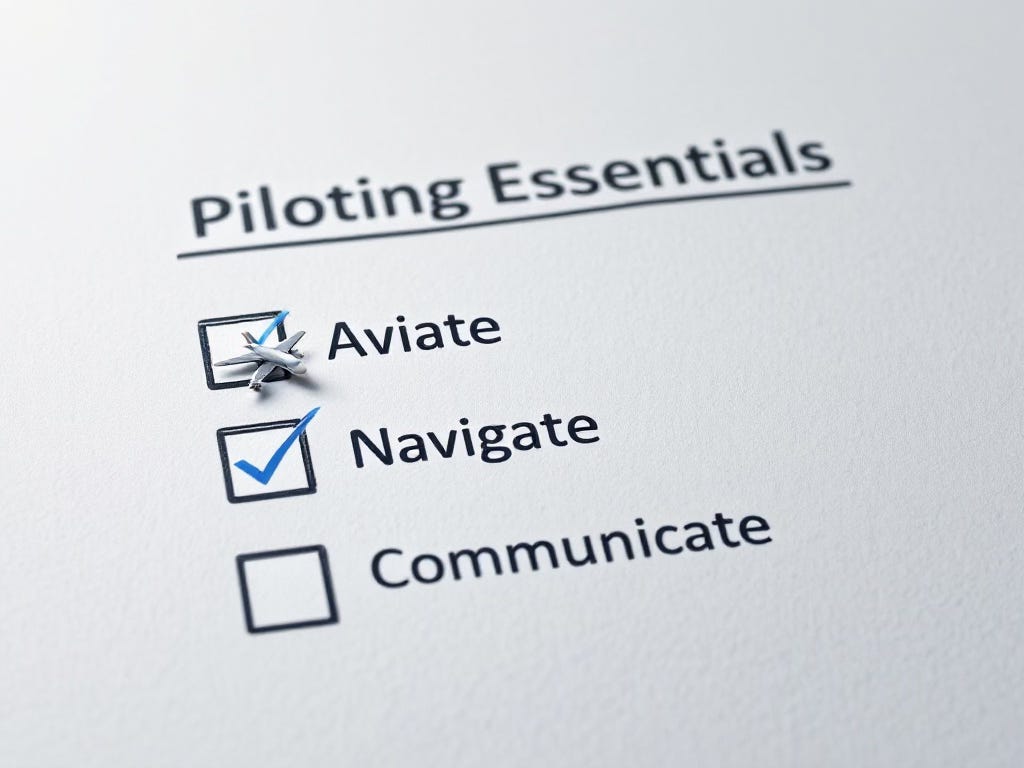
Aviate. Navigate. Communicate.
This isn’t just a catchy pilot mantra. It’s the golden rule of cockpit discipline under pressure — a literal lifesaver in high-stress, high-stakes moments.
And as I’ve learned over the years, this rule doesn’t just belong in the cockpit.
It belongs in every boardroom, team huddle, and executive decision-making moment.
Let’s dive in
.
🛫 What it Means in the Sky
1. Aviate – Fly the airplane.
Whatever is happening — smoke in the cabin, engine issue, loss of pressurization — your job is first and foremost to keep the airplane flying. That means maintaining control, altitude, and airspeed. Everything else comes second.
2. Navigate – Figure out where you're going.
Once the aircraft is under control, you shift to situational awareness. Where are you in space? What’s your safest option — continue, divert, return? You re-orient your flight path to fit the new reality.
3. Communicate – Only then, talk about it.
Once you're stable and pointed in the right direction, you communicate: with ATC, the cabin crew, your passengers. You inform and coordinate — but only after you’ve taken control and redefined your direction
.
🧠 The order matters. If you start communicating too early — while losing control or heading the wrong way — you’re just amplifying chaos.
✈️ A Real-World Flight Example
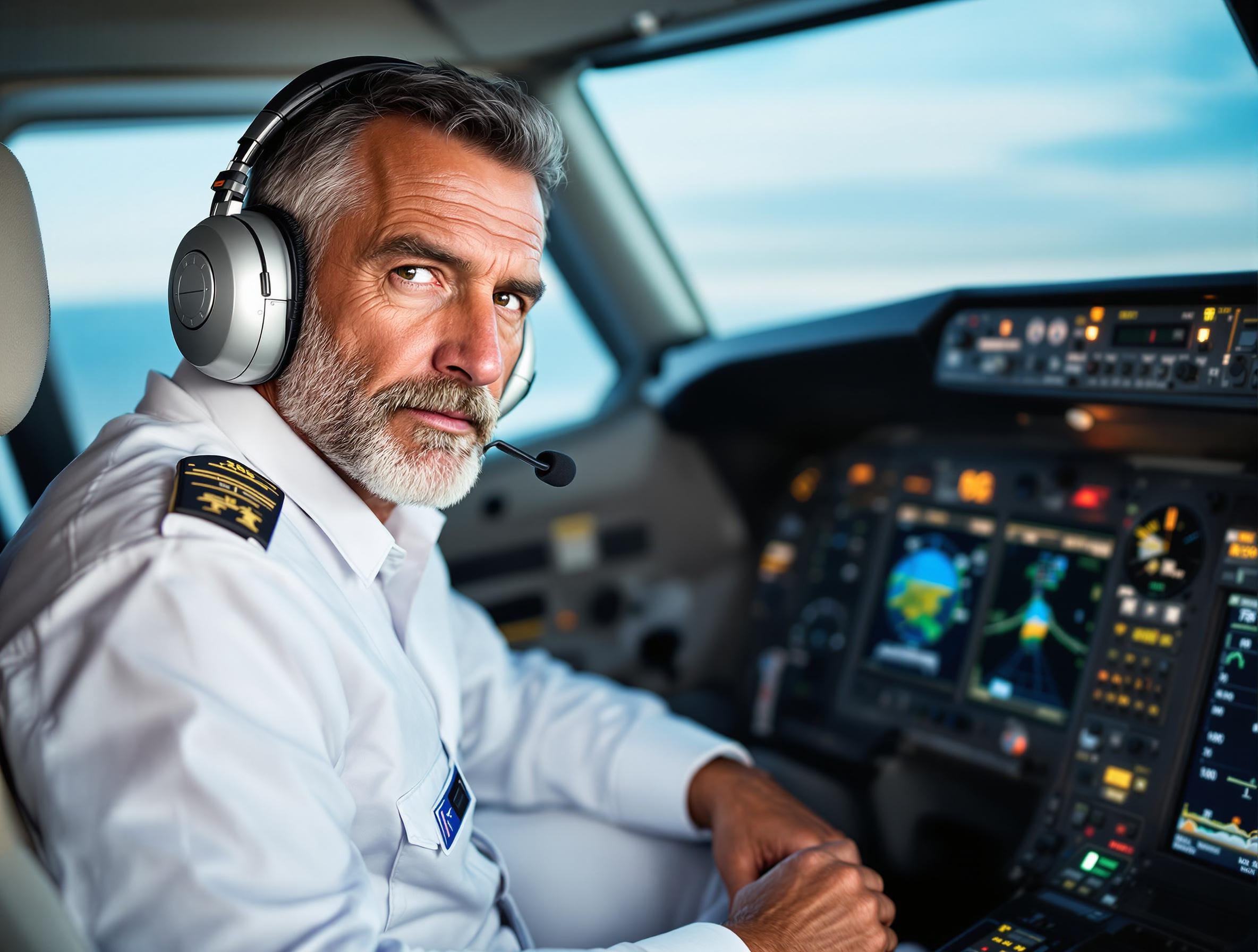
Years ago, I was flying a corporate Falcon out of San Francisco. Shortly after takeoff, we had a pressurization warning — not full failure, but an alert that if we climbed to cruise altitude, the cabin might not hold.
That kind of malfunction, at altitude, can turn into a life-threatening situation within minutes.
But we didn’t freak out. We didn’t call ATC immediately. We followed the rule.
Aviate – We kept the aircraft steady, hand-flying at a lower altitude. My co-pilot began pulling up the relevant checklist.
Navigate – We agreed to level off early and remain in safe airspace as we diagnosed the issue. We started planning a return to the departure airport if needed.
Communicate – Once the aircraft was under control and we had a plan, we called ATC to advise them of our situation and intentions.
We landed safely. Nobody onboard even noticed anything unusual.
The situation could’ve gone very differently if we had skipped to communication — or let panic override priority.

🧭 What it Means in the Office
Now let’s bring it back to earth.
Business leaders — especially in moments of high tension — tend to do the opposite of pilots.
A project goes sideways? They jump into a flurry of emails.
A deal breaks down? They schedule back-to-back meetings to “fix things.”
A public issue hits the press? They rush to post a statement before fully assessing the facts.
In short, they communicate first — and think later.
But in a corporate setting, just like in the sky, that’s a dangerous reversal.
🎯 Leadership Translation
Too many leaders reverse the order:
They start talking (communicate),
Then try to figure out a plan (navigate),
And only then realize their team or business is in a nosedive (aviate).
In moments of pressure — when a project derails, a client threatens to leave, or an internal crisis erupts — the best leaders go back to flight basics:
Stabilize the team. Get people calm. Reinforce the fundamentals. Don’t let things spiral.
Re-assess direction. Are we still heading where we need to? Do we need to reroute?
Communicate clearly. Only once you've stabilized and refocused, explain the path ahead.
When your startup burns through cash faster than forecast...
When a team member quits suddenly in the middle of a product sprint...
When a client threatens to walk away...
You’re in a version of a cockpit emergency

.
Most leaders default to the wrong order:
They communicate first — frantic emails, panicked calls, confused Slack messages.
Then they try to navigate — scrambling to come up with a plan.
Finally, they realize they forgot to aviate — and now the team is scared, directionless, or frozen.
But if you want to lead like a pilot, you flip that.
Aviate: Get control. Take a breath. Reassure your team. Make sure the people and the process aren’t spiraling.
Navigate: Once stable, re-evaluate your position. What’s changed? Where should you go from here?
Communicate: Only then do you explain the new plan — clearly, calmly, and confidently.
The cockpit teaches us: communication is not leadership if the plane is falling out of the sky.

🛠️ Let’s Translate It to Leadership
Here’s how to apply Aviate. Navigate. Communicate. to leadership situations:
✅ Your 3-Step Crisis Checklist
Next time the heat is on, ask yourself:
🛩️ 1. Aviate
What needs to be stabilized right now?
Who needs reassurance?
What systems or people must stay functional?
🗺️ 2. Navigate
Where are we actually headed?
What’s our updated goal?
Is there a course correction we need to make?
📡 3. Communicate
Who needs to be informed, and what do they need to know?
What tone will inspire calm and confidence?
Can I speak simply, without jargon or drama?
Stick to this checklist and you’ll lead your team like a captain under pressure — not a manager in a panic.
📌 Pro tip: If you’re overwhelmed, ask yourself: “What’s the airplane in this situation?” That’s what you need to focus on first.
📌 A Quick Crisis Checklist
Next time something unexpected hits:
🛩️ 1. Aviate:
→ Who/what needs immediate stabilization?
→ Can I calm the energy before anything else?
🗺️ 2. Navigate:
→ Are we still heading where we thought we were?
→ What’s our new route based on what we know now?
📡 3. Communicate:
→ What’s the message?
→ Who needs to hear it — and in what tone?
Write this down. Keep it nearby. Make it your emergency leadership SOP.
🎙️ Cabin Intercom (My Voice)
I’ve flown with brilliant pilots who could think three steps ahead under pressure — and with others who froze the moment a warning went off. The difference wasn’t talent.
It was training. It was mindset. And it was a deep understanding of what to do first.
I’ve also sat in boardrooms where leadership unraveled at the first sign of trouble — finger-pointing, panic, endless meetings.
What both environments taught me is this:
In leadership — like in aviation — your calm is your control.
Your priorities define your professionalism.
And your clarity is what earns you trust.
When in doubt: fly the plane.
❓ Briefing Room FAQs
Q: What if I don’t have time to think through all three steps?
Even in a split second, you can mentally run the order: Is everything stable? Where am I headed? Then what should I say?This isn't about slowing down — it's about thinking in the right order.
Q: Doesn’t communication calm people down? Shouldn’t I lead with that?
Only if you know what you're saying. Premature communication can create more panic. Calm leadership starts with internal clarity — then external words.
Q: Can I train my team to use this model too?
Absolutely. Start using it in your post-mortems, team huddles, and project reviews. Model it. Explain it. Soon, your people will start using it instinctively — even outside of crisis moments.
Q: What if someone else is panicking and communicating too early?
Remind them (gently) that “we need to stabilize before we communicate.” Your calm presence can anchor the room.
👋 Final Thoughts
Whether you're leading a company, managing a team, or navigating a personal challenge — the world rewards those who can stay composed under pressure.
Pilots don’t stay calm because they’re fearless.
They stay calm because they trust the process.
Use this briefing. Stick to the order. You’ll earn respect and make better decisions — no matter the altitude.
What are your leadership skills? Let’s talk about it, I am interested on your perspective!