


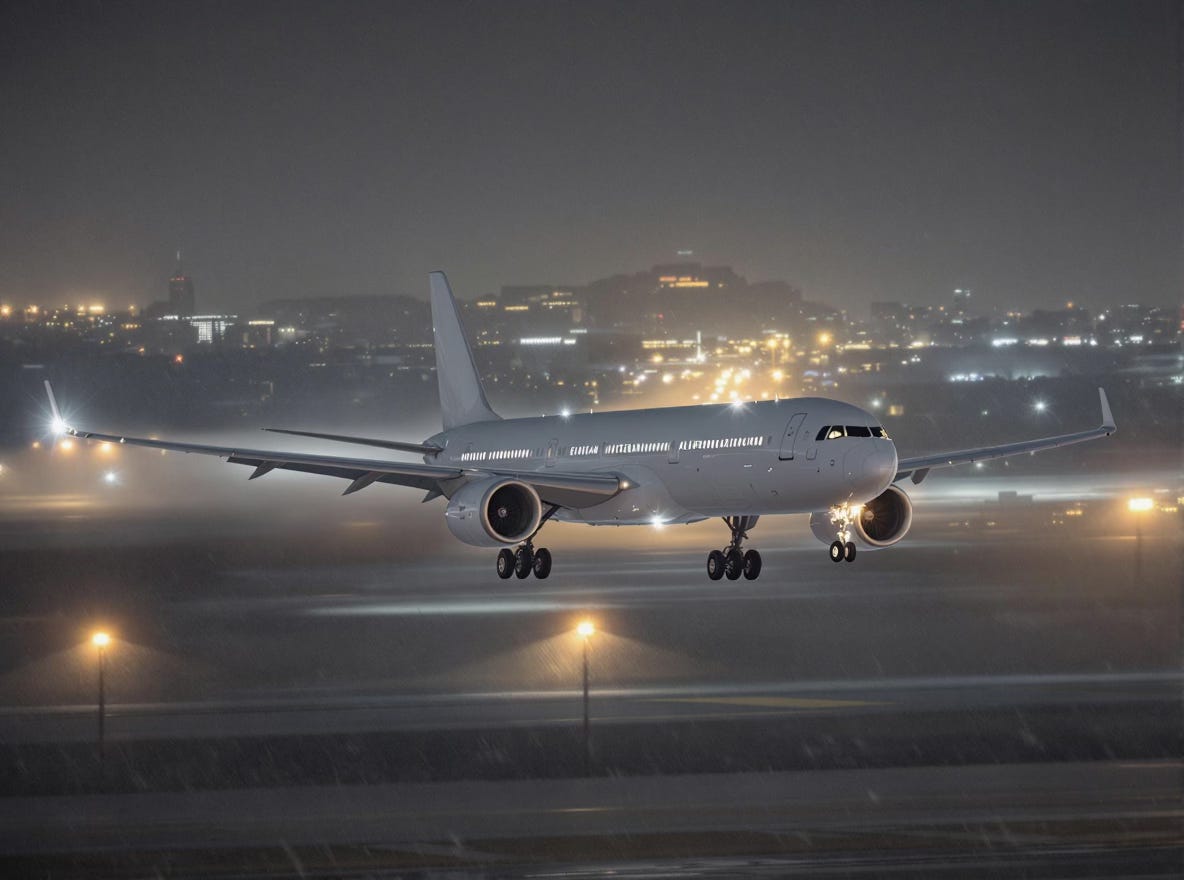
Setting Expectations from the Start
Before we even pushed back from the gate in Europe, I got on the PA with a message I knew would raise some eyebrows.
“Ladies and gentlemen, from the flight deck. We’re aware there’s a significant winter storm affecting the Boston area right now. I want to be upfront with you—this flight will be smooth for most of the journey, but expect moderate turbulence during the last 10 minutes of the approach.”
I paused, letting that sink in before continuing with the important part:
“Here’s why we’re absolutely comfortable proceeding: the winds are forecast at around 55 knots, but they’re blowing directly down the runway. That’s actually ideal for us. You’ll feel some bumps, it won’t be comfortable, but it’s completely safe. We’ve planned for this, we have plenty of extra fuel, and this is well within both our capabilities and the aircraft’s limits.”
The storm we were heading toward would later be dubbed the “Four’easter”the fourth major nor’easter to pummel New England that winter. We’d discussed it during preflight planning, watched the forecast models, and calculated our fuel with Baltimore as our alternate far enough south to be clear of the storm, with plenty of reserve fuel beyond that. This wasn’t a surprise we’d discovered mid-flight. We’d made the decision to go with full knowledge of what awaited us.
Briefing the Cabin Crew
Before we even boarded passengers, I had a detailed conversation with the lead flight attendant. This wasn’t a standard briefing, I wanted them to know exactly what to expect and when.
“The flight will be smooth until we start our descent into Boston. Once we’re about 20 minutes out, I need everyone seated and strapped in. No service, no walking around. The last portion is going to be bumpy moderate chop at minimum, possibly worse. The winds are strong but favorable for landing, so we’re going, but I don’t want anyone on their feet.”
I could see the lead FA processing this, already thinking through the logistics of wrapping up service early, securing the galleys, briefing the crew.
The cabin crew are my partners in this. If they understand what’s coming and why, they can project confidence to the passengers. And keeping them seated for those final 20 minutes? That was non-negotiable. I needed them safe and secure, not trying to help a nervous passenger or clean up a spilled drink while we were getting tossed around.
What I Knew (That My Passengers Didn’t)
Behind me, I’m sure anxiety levels spiked. But in the cockpit, my first officer and I were actually... calm. Not because we’re fearless, we’re not but because we had information that completely changed the equation.
The magic detail: 55-knot gusts aligned with Runway 04R.
Here’s the critical detail that changed everything for us but most passengers would never know why. Let me explain why this matters…
✨ Paid subscribers get the behind-the-scenes breakdown pilots use to assess storms like this — including what 55-knot winds actually mean for your safety, why headwinds are our best friend, and how we make the call to land or divert.
