


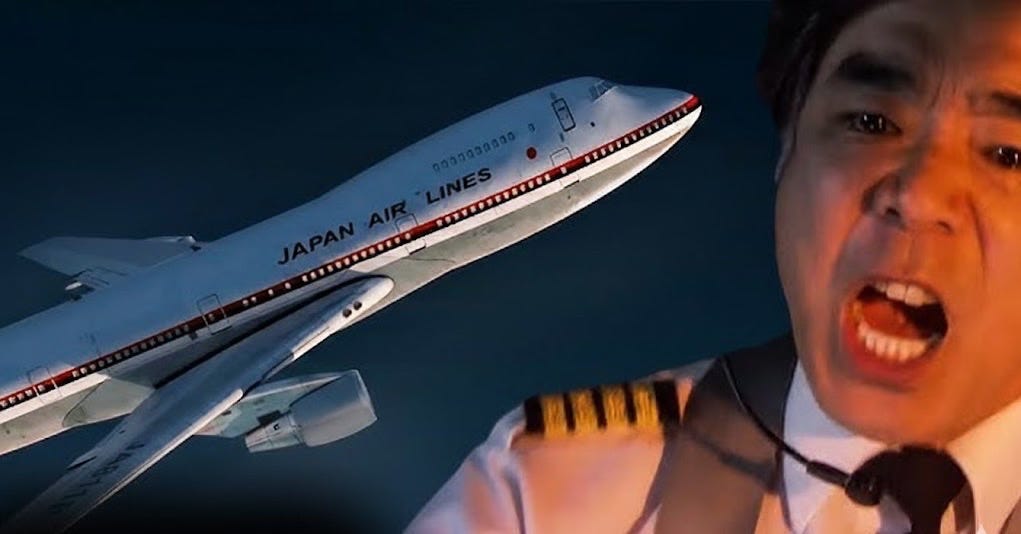
The Moment Everything Changed
It is 18:24, local time. August 12, 1985. You are the captain of Japan Airlines Flight 123, a Boeing 747SR-46, twelve minutes out of Tokyo’s Haneda Airport, climbing through 24,000 feet on a routine evening sector to Osaka. Five hundred and twenty-four souls on board. The summer sky is clear. The aircraft is behaving normally.
Then it isn’t.
A sharp, concussive bang from the rear of the aircraft. Your first officer flinches. The controls go strange in your hands, not fully dead, not fully alive, just wrong in a way that takes a half-second to register. A sound like tearing. The autopilot disconnects. The aircraft pitches upward, then begins to roll.
You reach for what you know. You have trained for this. But what the aircraft is telling you in the next few seconds is something no training syllabus had yet imagined: every hydraulic system is gone. All four. Simultaneously. The airplane a 747, one of the most redundant aircraft ever built has just become, in the most fundamental sense, unflying.
That was the reality faced by Captain Masami Takahama, First Officer Yutaka Sasaki, and Flight Engineer Hiroshi Fukuda on what should have been an unremarkable Monday evening flight over central Japan. What followed was thirty-two minutes that aviation professionals still study, argue about, and learn from forty years later.
How We Got There: The Repair That Wasn’t
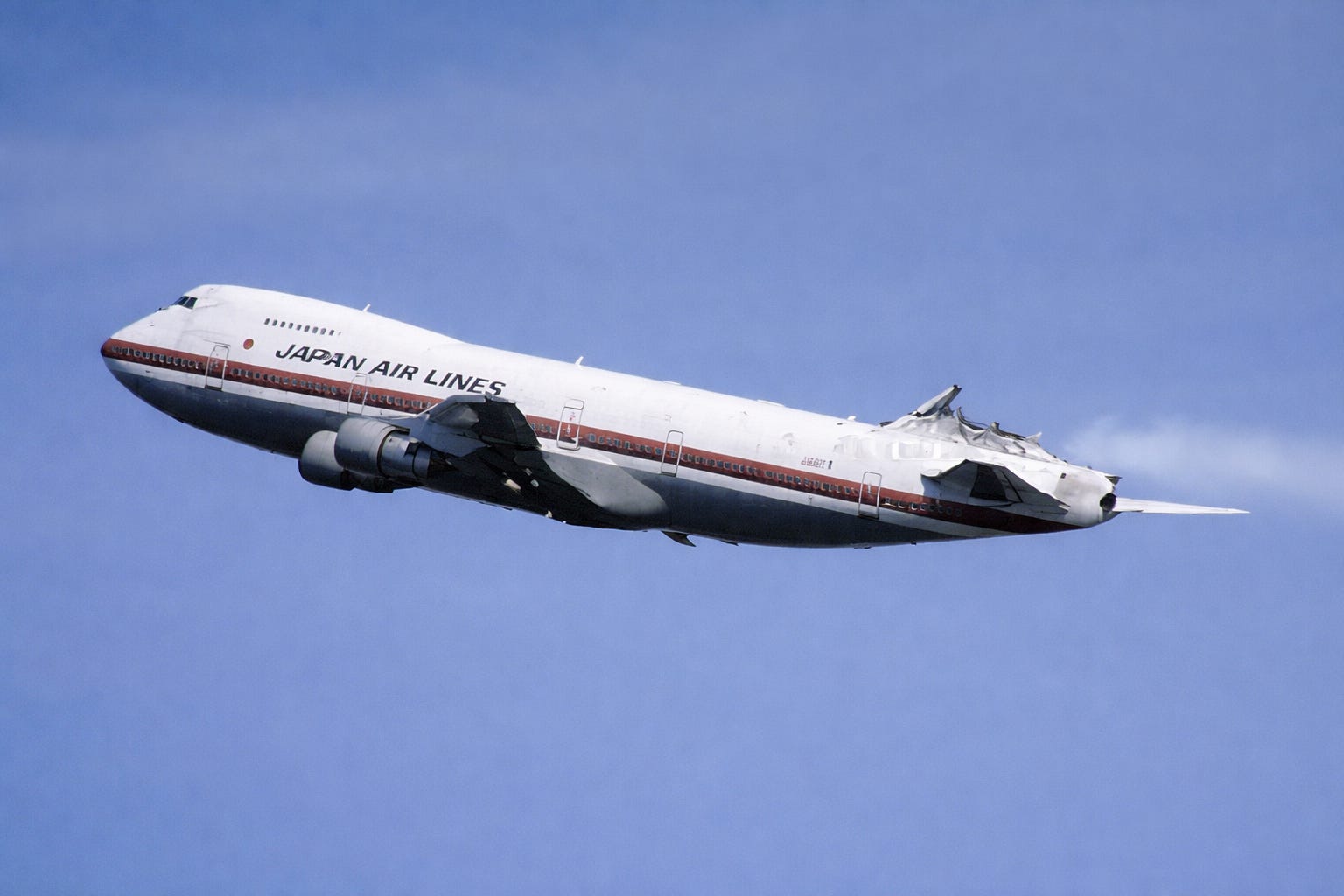
To understand the accident, you have to go back seven years to June 2, 1978. On that day, the same aircraft, registered JA8119, was on approach to Osaka’s Itami Airport when the tail struck the runway on landing. It was a tailstrike incident, not uncommon in heavy aircraft operations, and typically manageable with proper inspection and repair.
The damage to the aft pressure bulkhead was significant. This is the curved structural dome at the rear of the pressurized fuselage, the wall that holds back the roughly 8 psi differential between the cabin and the outside atmosphere at cruise altitude. Think of it as the bottom of a pressure vessel. Its structural integrity is not optional.
Boeing dispatched a repair team. The repair was performed. The aircraft was returned to service.
But the repair was wrong.
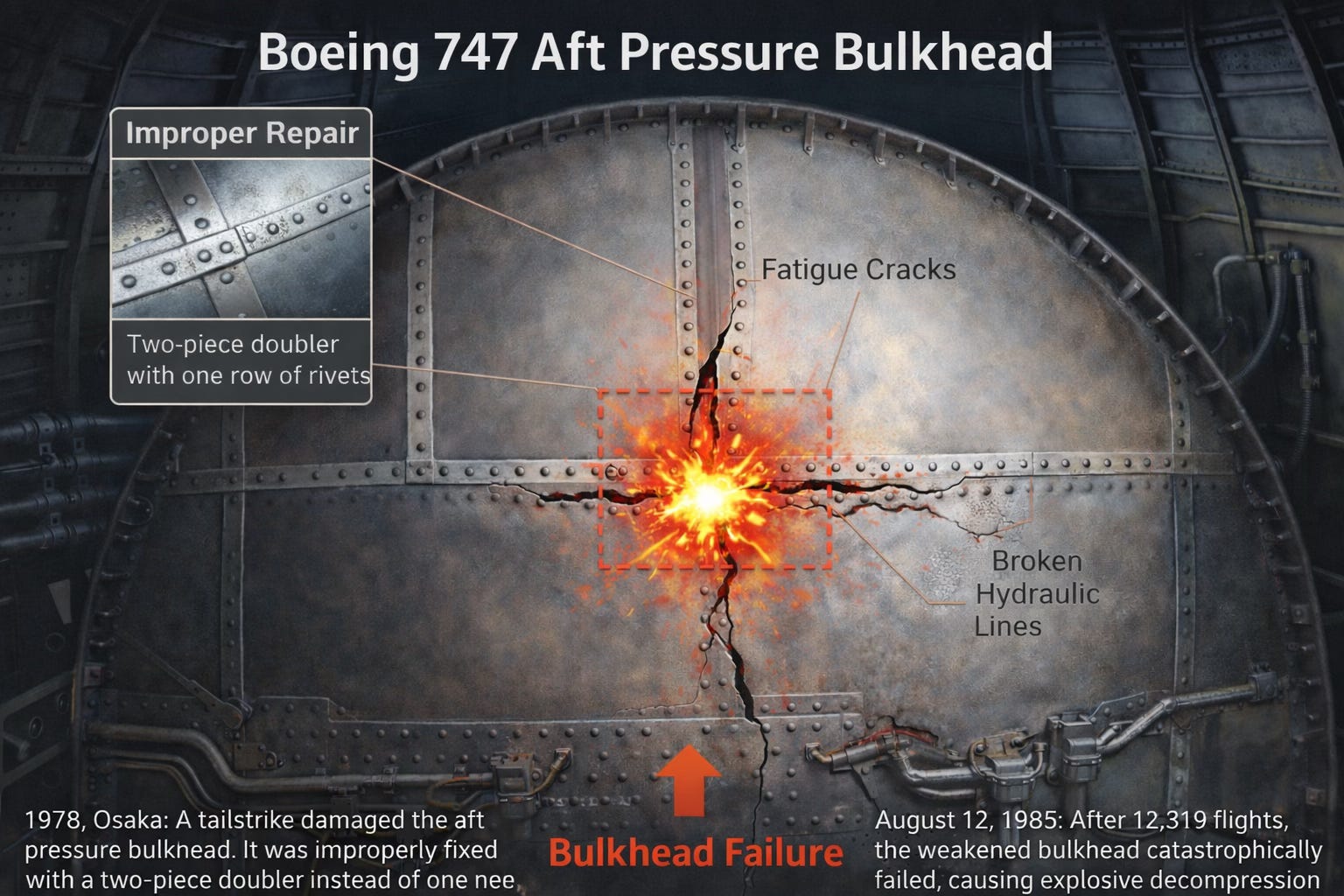
The approved procedure for patching a cracked pressure bulkhead called for a continuous doubler plate, a single piece of reinforcing metal fastened across the repaired area with two rows of rivets. What Boeing technicians actually installed was a two-piece doubler with only a single row of rivets spanning the splice between the two pieces. The investigation would later confirm this reduced the fatigue life of the repair to approximately one-quarter of the design value.
For seven years, JA8119 flew approximately 12,319 pressurization cycles. Each takeoff, each climb, each descent was a pressure cycle the bulkhead flexing, loading, unloading. Each cycle degraded the improper repair a little more. The metal was telling a story no one was reading.
On August 12, 1985, the story ended.
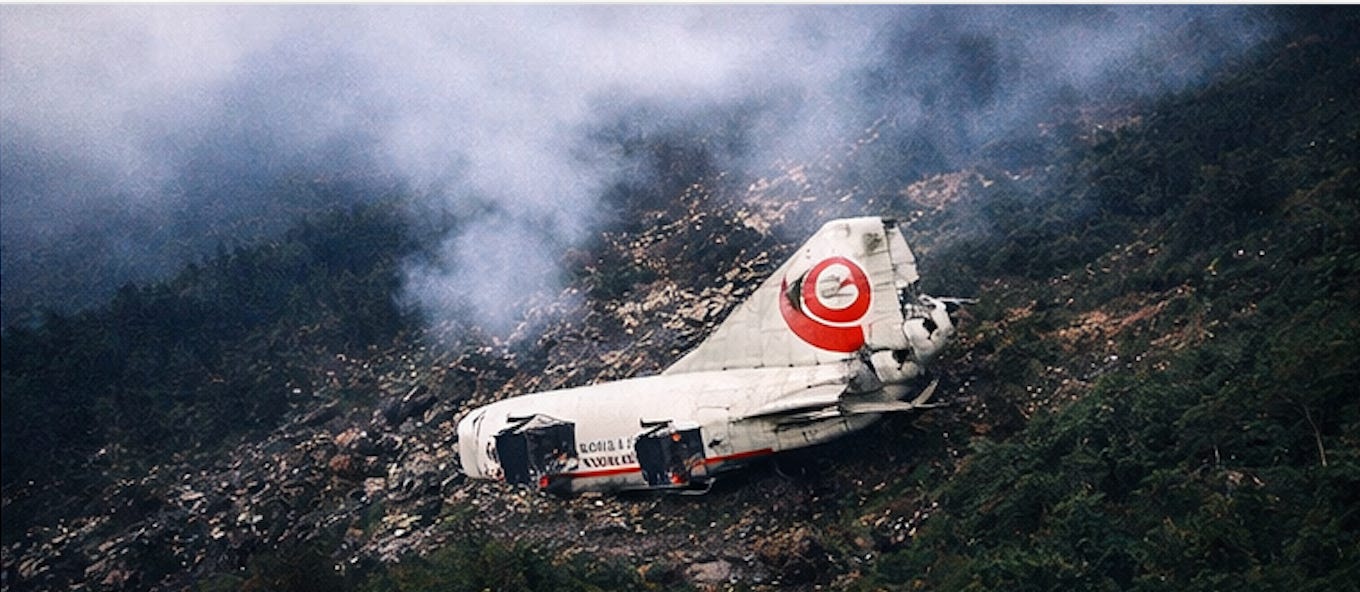

What failed next wasn’t supposed to be possible…
What happened in the next 32 minutes is something every pilot who flies a wide-body still studies today and what I'm about to walk you through is the part most articles get wrong. To keep reading the full breakdown of how four redundant hydraulic systems failed at once, and what every flyer should understand about it, become a Flight Deck Club below. It's the work I'm proudest of and it's how this publication keeps flying.
