


Pilot Nick - 8 min read
In 30 seconds
Friday’s FAA ground stop lasted a little over four hours, and all of the roughly 3,500 airplanes in the air at the time landed safely.
Flights kept canceling into Sunday even after the radar was back, mostly for a reason that comes from the rules pilots fly under.
If your flight is canceled, for any reason, you’re owed a full refund unless you accept a credit or another flight. Hotels and meals aren’t guaranteed.
If it happens to you before Thanksgiving, rebook from your phone first, ask for the first flight of the morning if the airplane is already at your airport, and book a refundable hotel early.
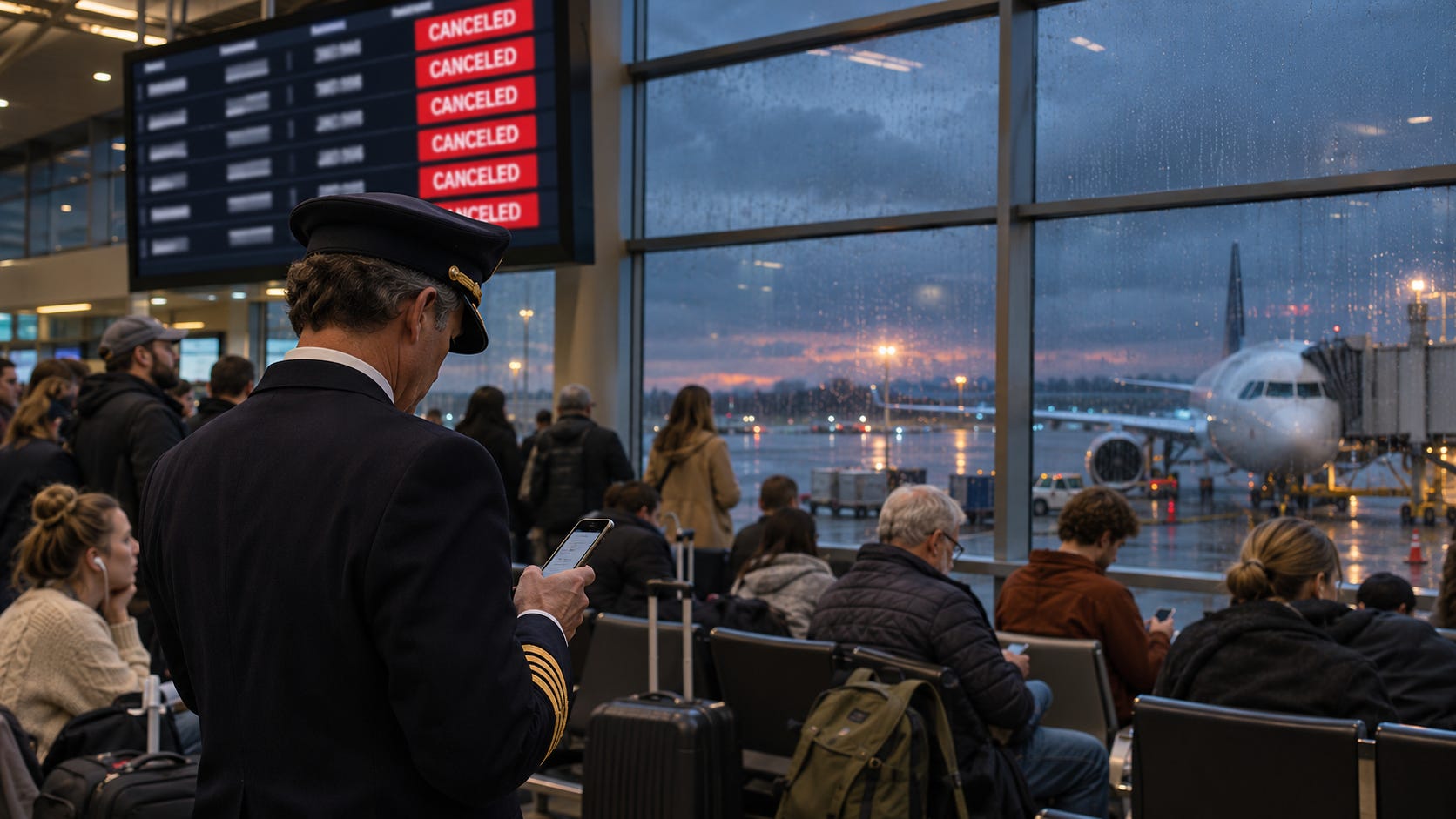
It’s Friday afternoon, a little before four on the East Coast. You’re at the gate with a coffee going cold and your boarding pass open on your phone. Then the agent picks up the microphone: every departure in the country is on hold, and nobody at the desk knows for how long.
Over the next hour the board turns red one line at a time. By Saturday morning, thousands more flights are canceled, on a day when the radar and the radios are working fine.
Pilots watched that board too, and Saturday is the part that tells you the most about how airlines really work.
A flooded network and a four-hour stop
On November 13, at about 3:30 p.m. Eastern, the FAA’s network that carries radar and radio feeds between air traffic facilities was flooded with connection attempts, roughly 1,000 every four to five seconds. The equipment became unstable at 17 of the 22 centers that handle airplanes at cruise altitude. The FAA’s initial investigation points to a radar site in Texas and a radio site in Arkansas, where a new router was being installed, and it says there’s no sign of a cyberattack.
At 3:54 p.m. the FAA stopped every departure in the country, and lifted the stop at about 8:15 p.m., the longest nationwide ground stop since 9/11. Operators canceled about 12,462 flights that day, by the FAA’s count (not all because of the stop), then more than 6,600 on Saturday and over 1,000 on Sunday, according to FlightAware.
Stopping departures was the right call, and from the left seat it’s the one I’d have wanted. When controllers can’t fully trust their screens and radios, you stop adding airplanes to the sky and bring down the ones already up there.
Every airplane in the air landed
About 3,500 aircraft were airborne when the stop began, and the FAA says every one of them landed safely.
It was never a total blackout, and even a full loss of contact is something every airline pilot trains for. Federal regulations spell out what route and altitude to fly, we set transponder code 7600 to tell every radar screen we’ve lost radio contact, and TCAS, the collision-avoidance system on board, talks directly to the airplanes around us with nobody on the ground in the loop. The controller keeps traffic in order, and the crew has its own layers of protection underneath.
Why the cancellations ran into Sunday
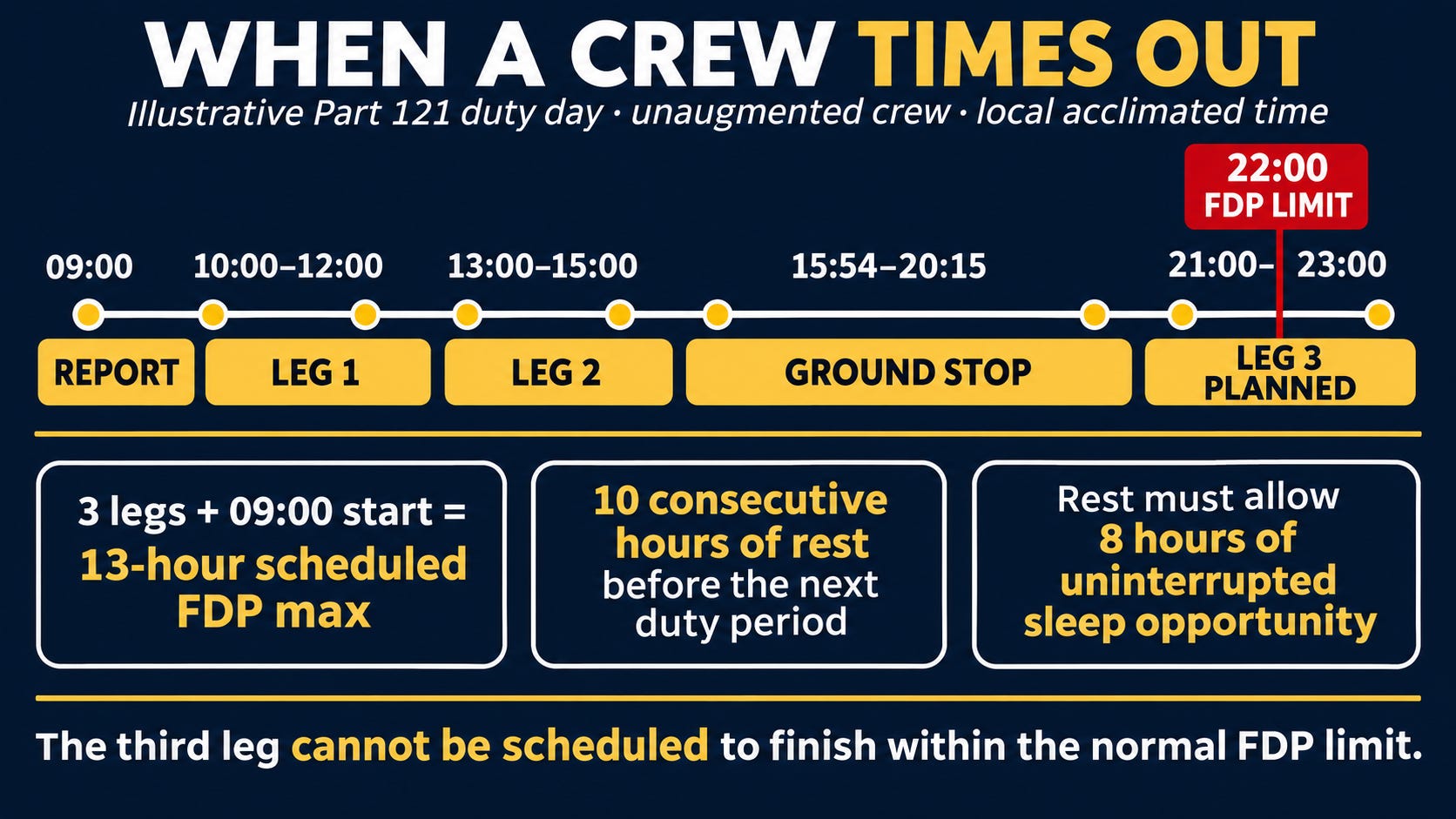
Once the radar is back, the airplanes are fairly easy to move around. The crews take longer. Under the FAA’s rest rules, an airline pilot’s duty day runs between 9 and 14 hours, depending on when it starts and how many flights are in it, with up to two more hours allowed for something unforeseen. Then comes at least 10 hours of rest, counted from release from duty, so the ride to the hotel comes out of it.
A crew that reported at noon on Friday and sat at a gate through the stop had burned most of its day by the time departures restarted. If the remaining flights didn’t fit, they couldn’t fly them.
We call that being timed out.
Their rest then pushed Saturday’s first flight late or off the schedule. Multiply that by thousands of crews, and you get a weekend of cancellations with the radar working fine.
I’d defend those rest rules on any night, Friday included. A tired crew is a much bigger risk to you than a canceled flight.
What the rules say you’re owed
If your flight is canceled, for any reason, and you decide not to take the new flight the airline offers, you’re owed a full refund to your original form of payment, taxes and fees included. It should happen automatically, within 7 business days on a credit card, or 20 calendar days otherwise. A “significant change” gets you the same deal: arriving 3 or more hours late on a domestic trip (6 on an international one), being moved to a different airport, or picking up an extra connection. Accepting a new flight or a travel credit ends that right, so think before you tap “accept”.
If you end up stuck on the tarmac, the airline has to give you water and a snack within two hours, working restrooms, and a chance to get off by the three-hour mark (four hours internationally), unless safety, security or air traffic control prevents it. If you do get off, the airplane may leave without you.
Federal law doesn’t require meals or hotels, and after an air traffic control failure there’s usually little on offer, though it’s still worth asking. The waivers airlines issued after Friday have their own fine print.
If someone you love is flying to Thanksgiving and gets nervous about delays, forward this to them.
On the other side of the paywall, I’ll go through when it’s worth pushing for a meal or a room, and the waiver fine print. I’ll also show you how I spot a delayed flight that’s about to cancel while you’re still at the gate, the phrase from the gate agent that tells me to add an hour or two, and the first thing I do after a cancellation.
Free subscribers get what happened. Paid subscribers sit up front with me: the crew’s view, my call from the left seat, and direct access to ask me anything. Below the line: hotels and waivers, how to read a delay, my five-step playbook, and the call I make on the taxiway. $11 a month, or $80 a year.
