



Updated May 9, 2026 · 10 min read
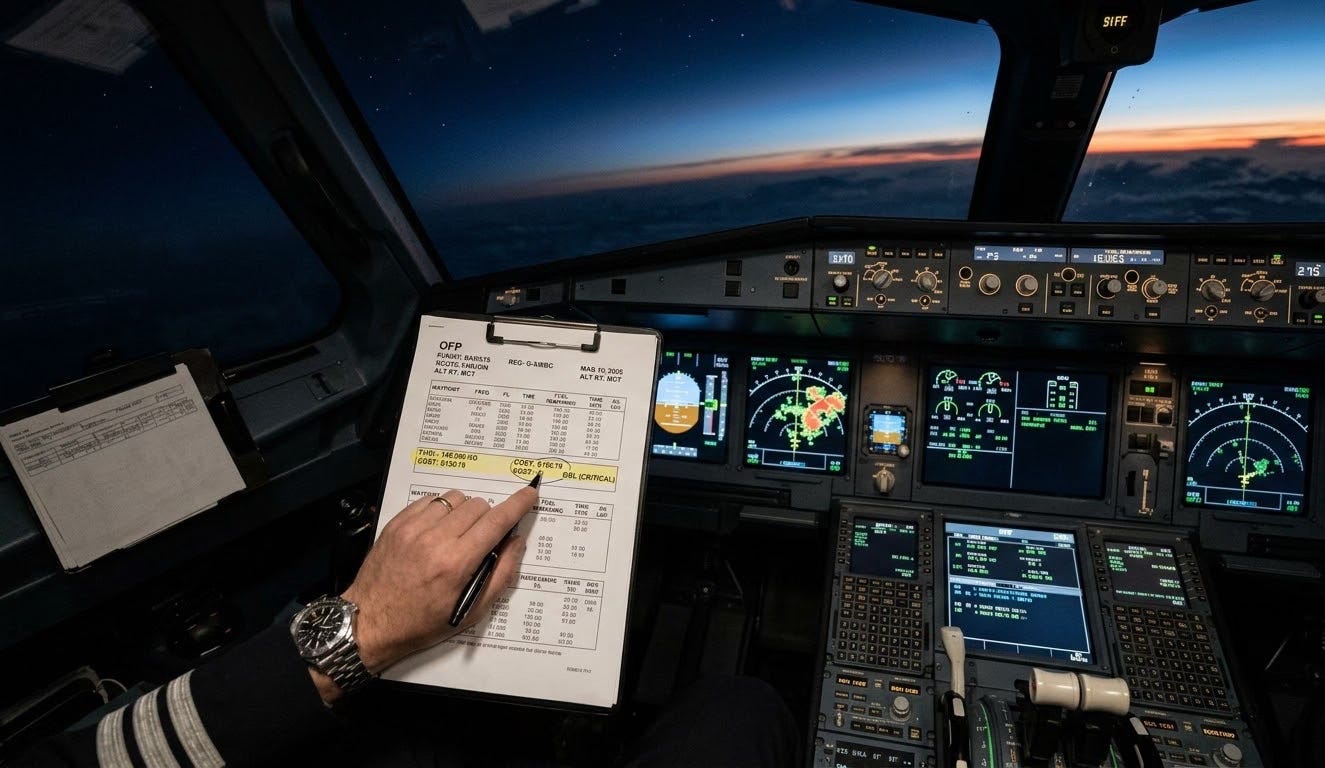
I fly on long-haul routes between continents the kind of flights that cross oceans and, until a few weeks ago, crossed the Middle East. Before every flight, I sign a document called the Operational Flight Plan. It tells me how much fuel we’re carrying, how much that fuel weighs, what it costs, and what route we’re taking. It’s the first thing I look at and the last thing I think about before I push back from the gate.
I’m telling you this because right now, those flight plans look nothing like they did a month ago. The routes are longer. The fuel loads are heavier. And the cost column the number my airline is paying to put kerosene in my tanks has roughly doubled.
A few weeks ago, jet fuel cost airlines about $60 to $80 a barrel.
Today it’s somewhere above $100+. Brent crude (that’s the global benchmark for oil — think of it as the price tag the whole world watches).
The Strait is still effectively shut, and until tankers are actually sailing through it again, fuel prices will keep swinging in ways I’ve never seen in my career.
What does this mean for the price of your next plane ticket?
Everything. And nothing if you know how to play it.
This article is the guide I’d give a friend sitting next to me in the cockpit. No jargon, no finance-speak just what’s actually happening to fuel, why it matters for your wallet, and exactly how to find the best deal in the middle of it.
First, Let Me Explain How Fuel Affects Your Ticket Price
If you’re not in aviation, you might not realize how central fuel is to the cost of flying you from A to B. Let me put it simply: fuel is to an airline what ingredients are to a restaurant. It’s typically the second-biggest expense after paying the pilots, flight attendants, and ground staff — somewhere between 20% and 30% of what it costs to operate a flight. When fuel doubles in price, it’s like a restaurant seeing the cost of every dish on its menu suddenly spike. The restaurant has to raise prices, shrink portions, or lose money on every plate. Airlines face the exact same choice.
Right now, three things are hitting the industry at the same time, and all of them push your ticket price up.
The Strait of Hormuz Is Closed and That Matters More Than You Think
Let me paint the picture. The Strait of Hormuz is a narrow waterway just 21 miles wide at its tightest point between Iran and Oman. About 20% of the world’s oil supply passes through it every day on tanker ships. Think of it as a single-lane bridge that a fifth of the planet’s energy has to cross.
On March 2, Iran’s military declared it closed. They threatened to attack any ship that tried to pass through. And they’ve followed through at least five tankers have been hit, crew members have been killed, and roughly 200 commercial tankers are now anchored outside the Strait, engines off, waiting. The only ships getting through are a handful flying Iranian or Chinese flags.
This has sent fuel prices to genuine record highs. According to S&P Global’s Platts (the industry’s most trusted pricing service), jet fuel has spiked harder than gasoline, diesel, or crude oil — surpassing even the peaks we saw after Russia invaded Ukraine in 2022. The last time jet fuel was anywhere near this expensive, I remember our dispatchers sending us messages mid-flight asking us to slow down to save fuel. We’re back in that territory.
Here’s a detail that most people outside the industry don’t know: roughly half of Europe’s jet fuel imports come from the Middle East. European refineries have been closing in recent years, so the continent has become increasingly dependent on Gulf supply for the actual kerosene that goes into airplane tanks. That supply is now cut off. And there’s no quick substitute other regions of the world are scrambling to protect their own fuel supplies, so Europe can’t just buy its way out of this shortage from somewhere else.
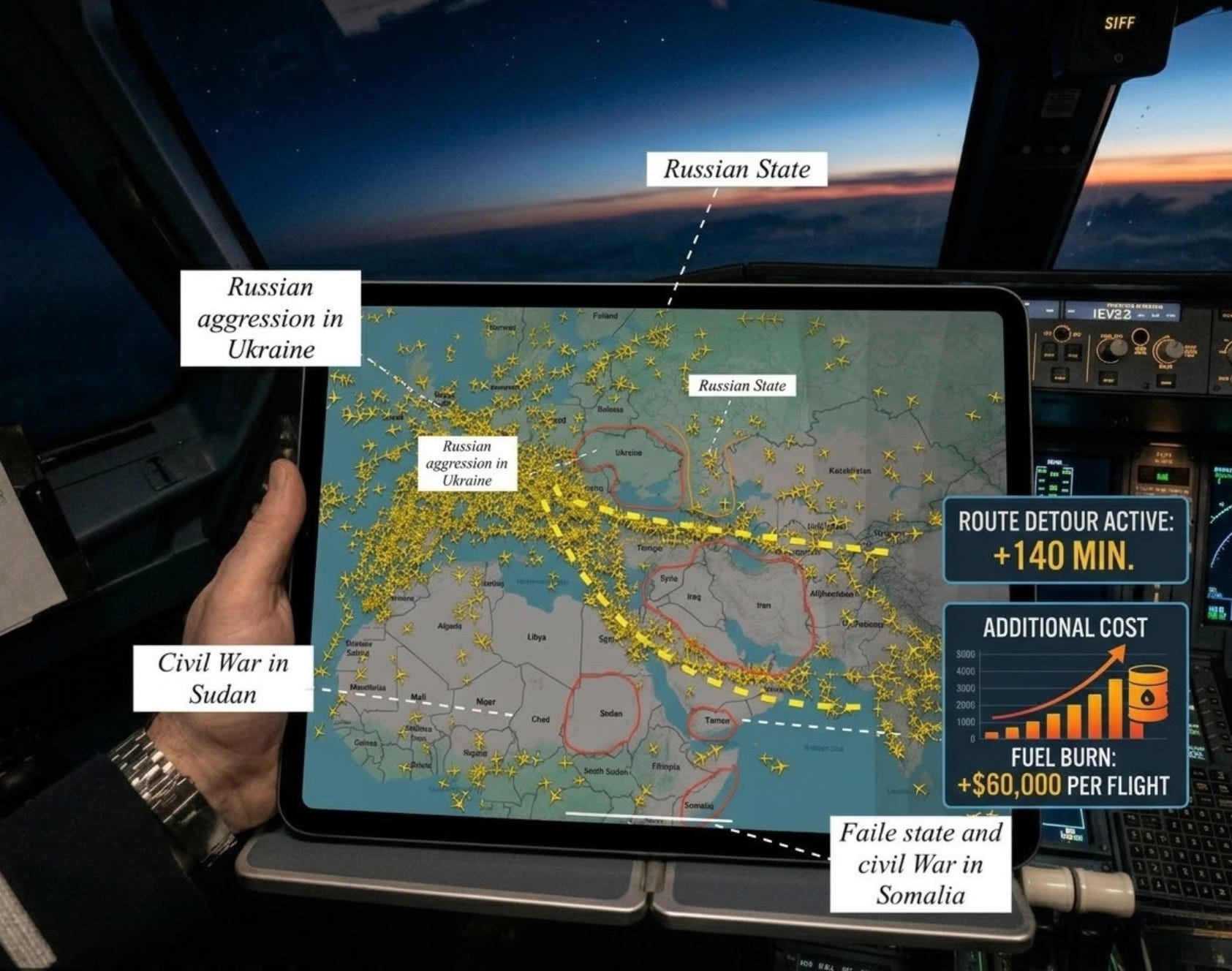
What this means for you: the fuel that powers your flight is more expensive than it’s ever been, and that cost will eventually land in your ticket price.
Below is exactly how I’d book flights today based on what we’re seeing from the cockpit, not the headlines.
