


Flying overnight should be a convenient way to maximize vacation time and wake up refreshed in a new city. Instead, most of us arrive feeling like we’ve been through a tumble dryer cramped, groggy, and vaguely resentful of everyone who somehow managed to sleep through the turbulence.
But here’s the thing: sleeping on a plane isn’t just about luck or having the magical ability to doze off anywhere. It’s actually a science, and there are real strategies that can help you arrive less zombie-like.
The Sleep Banking Controversy: To Deprive or Not to Deprive? 🤔
This is where the experts disagree, and honestly, it might depend on your body. Some sleep specialists recommend showing up to the flight already tired staying up late the night before and waking extra early on departure day. The theory? Your exhaustion might overpower the discomfort of economy class.
But other sleep experts caution against flying on a sleep debt, which can increase stress, fatigue and grogginess during travel. Instead, they recommend banking extra sleep in the nights before you leave to help cope with travel stresses.
So which approach is right? Probably somewhere in the middle. Don’t show up completely wrecked, but being slightly tired when you board—especially on an east-bound red-eye where you’re trying to fall asleep earlier than normal—can actually help.
Skip the In-Flight Meal Service (Yes, Really) 🍽️
Here’s one of the biggest mistakes red-eye passengers make: staying awake for the meal service. You’ve just settled in, the cabin lights are dimmed, your body is ready to sleep and then the carts come rumbling down the aisle with trays of mediocre pasta and the unmistakable sound of a hundred plastic wrappers being opened simultaneously.
Eating right before trying to sleep makes it harder to fall asleep and stay asleep. But beyond that, meal service is disruptive. The lights come on, there’s noise everywhere, you’re being asked whether you want chicken or beef at a time when you should already be unconscious.
The smarter move? Eat a proper meal at the airport before boarding. Pack some snacks like nuts or granola bars in your bag for after you land or if you wake up genuinely hungry mid-flight. Then, when everyone else is fumbling with their tray tables, you’re already asleep.
Pilot Pro Tip: Avoid the ‘Meal Service Trap’ 🍽️
Most passengers miss their best sleep window by staying awake for meal service. Pilots often eat before boarding or skip the first meal altogether, putting on an eye mask as soon as the seat belt sign goes off. This lets them fall asleep before the noise and light of the cabin meal rush begin, giving them a solid extra hour or two of rest.
When the flight attendant comes by offering food, a polite “No thank you, I’m sleeping” works wonders. They’ll leave you alone, and you’ll wake up hours later having actually slept instead of having eaten a forgettable meal you didn’t really want.
Think About Time Zones Before You Even Board ⏰
Here’s a question most people don’t ask: should you even be sleeping on this flight? Before you pop that eye mask on, set your watch to your destination’s time zone the moment you board. If it’s 2 AM where you’re headed, it’s bedtime. If it’s noon, staying awake might actually help you adjust faster.
This applies to eating too. Research shows that aligning your meals with your new time zone can speed up adjustment. So if it’s nighttime at your destination, skip that airplane dinner even if it’s “free.” Eat at the airport a couple hours before your flight so you have time to digest before trying to sleep. Choose something low in salt to prevent water retention, avoid alcohol, and drink water to stay hydrated.
And here’s a wild tip: if you land at night or find yourself awake during the night in your new location, resist eating until breakfast time. Studies suggest high-calorie meals might actually prevent your body from adapting to the new time zone, so keep it light.
The Big Sleep Aid Question: Just Don’t 💊❌
I know what you’re thinking: why not just take an Ambien and knock yourself out for eight hours? Because it’s almost certainly a bad idea.
Most sleeping pills last about eight hours, which means you might be very groggy when you land. If your flight is 10 hours or less, there’s a good chance you’ll still be feeling the effects while trying to get through customs and navigate an unfamiliar airport in a foreign city.
Over-the-counter sleep aids? Same problem. Most are sedating antihistamines that stay in your system for at least eight hours.
And here’s the kicker: some people can have bad reactions to sleep medications including sleepwalking or restlessness. Imagine discovering you’re one of those people while trapped at 35,000 feet.
If you absolutely must take something, talk to your doctor first and test it at home before your trip. Never try any sleep aid for the first time on a plane.
The exception? Melatonin can be helpful, but timing matters. Taking a low dose of melatonin (0.5 to 3 milligrams) a couple hours before bed may help shift your circadian rhythms but save it for after you arrive, not during the flight.
Build Your Own Sleep Kit 🎒✨
This is where you get to play pretend business class. Create your own amenity kit with everything you need for decent sleep. The essentials:
✅ Eye mask and noise-canceling headphones: These help close out the world around you as much as possible. EarPlanes earplugs are particularly good because they also help regulate cabin pressure and reduce ear pain. Layer noise-canceling headphones over them for maximum isolation.
✅ Lavender essential oil: A small vial rubbed on your temples can trigger relaxation. It’s the olfactory equivalent of dimming the lights. 🌿
✅ Compression socks and travel slippers: Kick off your shoes after takeoff, slip on compression socks to reduce swelling, and add foldable slippers. This simple costume change tricks your brain into thinking you’re settling in at home, not trapped in a metal tube.
✅ A blanket scarf and layers: Oversized, soft, and versatile. Dress in comfortable clothes, including something warm in case the plane is chilly. The ideal sleep environment is cool, dark, and quiet, so layer up so you can adjust as needed.
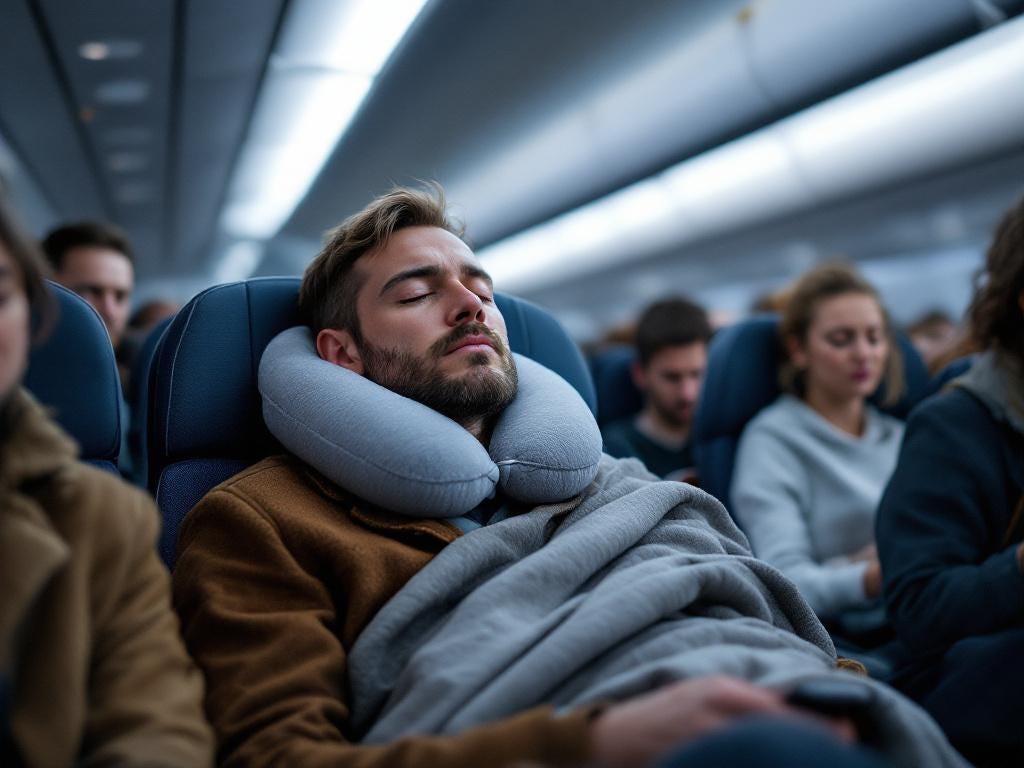
✅ Magnesium: If you’re prone to restless legs or muscle tension from sitting, consider a topical magnesium spray or supplement. Some travelers swear by magnesium foot pads that stick to your skin and work for six to eight hours.
Watch What You Drink (…Don’t Drink) 🍷➡️💧
I know, I know the free wine is tempting, and that pre-flight coffee seems necessary. But both will sabotage your sleep. Alcohol might help you relax initially, but it’ll dehydrate you and wreck your sleep quality. And caffeine, well, that one’s obvious.
Pilot Pro tip: Cockpit humidity often hovers around 10–15%—drier than most deserts. I aim to drink at least 250 ml of water per hour inflight. This isn’t just about avoiding dehydration; it also keeps headaches and jet lag symptoms lower. Bring your own bottle and refill after security so you can sip consistently, not just rely on drink service.
Instead, opt for herbal tea. Many airlines offer chamomile or mint, but bring your own tea bags if you’re picky. And drink tons of water. Dehydration makes you feel awful, impacts your mood, causes headaches, and makes jet lag symptoms worse. The dry cabin air is already working against you, so hydrate aggressively.
Recreate Your Bedtime Routine (Yes, Really) 🧖♀️
Your brain responds to familiar patterns, so go through the motions: brush your teeth in that tiny lavatory, take out your contacts, do a simplified skincare routine. Taking a few minutes to apply moisturizer and under-eye patches signals to your brain that it’s wind-down time. Plus, you’ll arrive looking slightly less haggard.
Pilot Pro Tip: Move Before You Sleep Pilots don’t just collapse into their crew bunks — we do a short walk or light stretch before resting.
A quick lap down the aisle, ankle circles, or calf stretches increase circulation and lower the chance of that “buzzing legs” feeling that can keep you awake. Think of it as your in-flight warm-up for rest.
Put your phone away. Change into pajama-like clothes—yes, wear actual comfortable clothes, not just jeans with the button undone. Get properly cozy. Apply your lavender oil, slip on your eye mask, pop in your earplugs, and commit to the bit. You’ll look ridiculous. You won’t care when you’re asleep.
Pick Your Seat Strategically 💺
Window seats are prime real estate because you can lean against the wall and control the shade.
You've got the basics.
Now unlock the pro👨🏻✈️tipsAlready a paid subscriber? Scroll down 👇
