

Flying high doesn't mean you have to be stressed. To relax in the air, start with simple steps. Try deep breathing, use mindfulness apps, and more to make your flight calm.
Learn how to handle flight stress with seat stretches, calming music, and meditation. These tips are made for your flight.
🛠️ Key Takeaways
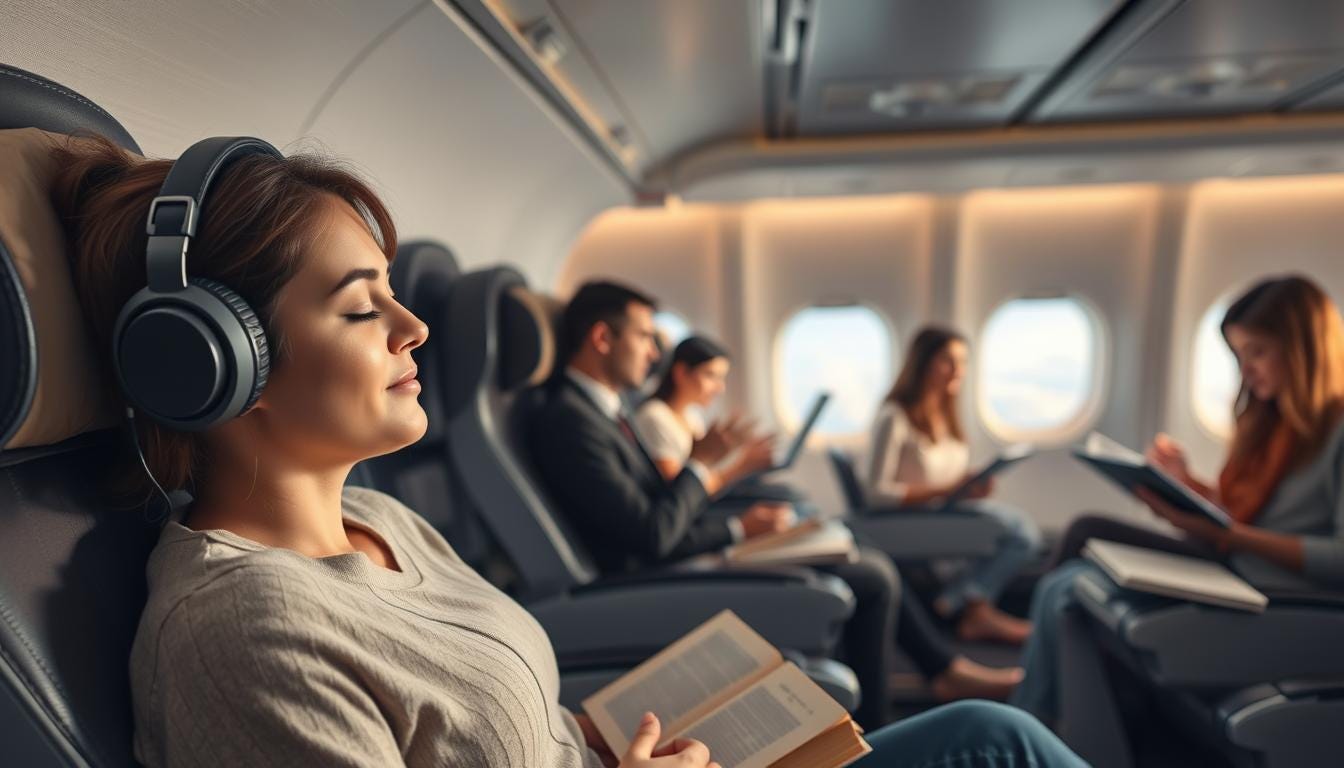
Deep breathing techniques reduce anxiety during takeoff and turbulence.
Mindfulness apps like Calm or Headspace offer in-flight calm through guided sessions.
Seat-friendly stretches improve circulation without leaving your seat.
Calm playlists with nature sounds or classical music ease flight stress relief.
Combining practical flight tools creates a personalized relaxation plan.
🧠 Understanding In-Flight Anxiety
Feeling uneasy on flights is common. Recognizing stress symptoms and mind triggers on flights is key to feeling calm. Many people experience flight nervousness or physical tension. These are normal reactions to new situations.
👨🏼⚕️ Physical Signs of Stress
Common stress symptoms include:
Rapid breathing or shallow breaths
Increased heart rate or sweating
Stiffness in neck or back (physical tension)
💭 Triggers During Air Travel
Mind triggers on flights often come from:
Uncertainty about turbulence
Past negative flight experiences
Feeling isolated in crowds
“Anxiety arises when our brain perceives danger—even when no threat exists.”
Knowing these patterns helps find solutions. Tools like mindfulness apps or seat stretches can help. Stay tuned for more on addressing these triggers.
🔑 Key Physiological Responses to Flight Stress
Flight-induced anxiety leads to physiological flight stress that shows in our bodies. Bodily responses like a fast heartbeat, shallow breathing, or tight muscles aren't just annoying. They're our body's way of getting ready to react quickly.
When we feel stressed about flying, our brain sends out stress hormones like cortisol and adrenaline in air travel. This gets our body ready to either fight or flee.
Increased heart rate: The heart pumps faster to deliver oxygen to muscles.
Shallow breathing: Chest tightness limits deep breaths needed for calmness.
Muscle tension: Arms and legs stiffen in anticipation of physical action.
“The body’s stress response is automatic, but awareness turns it manageable,” says aviation health researcher Dr. Emily Carter.
These stress hormones can make anxiety worse, making small things like turbulence or delays seem huge. But, we can fight this with tools like mindful breathing or simple stretches. For example, deep breathing can lower adrenaline in air travel levels. Mindful apps can also help us stay focused.
Understanding these bodily responses isn't about being scared. It's about taking control. The next parts will show you how to deal with these signs with simple steps. From choosing the right music to doing some stretches in your seat, you can keep your body and mind calm.
😮💨 Exercises for Air Travel
"Your breath is your anchor. Use it to stay grounded even at 30,000 feet."
Stressful flights don’t stand a chance against mindful breathing. These stress reduction techniques use your breath to create calm. Try these methods anywhere, even in a narrow seat. Let’s dive into two proven practices.
Deep Breathing Techniques
Deep breathing activates your body’s relaxation response. Follow these steps:
Inhale slowly through your nose for 4 counts.
Hold the breath for 4 seconds.
Exhale fully through pursed lips for 6 counts.
Repeat 5-10 times. This method lowers heart rate and eases tension during boarding or turbulence.
🎼 Breathing Patterns
Rhythmic breathing uses consistent patterns to steady your mind. Try the 4-7-8 method:
Inhale quietly through your nose for 4 seconds.
Hold your breath for 7 seconds.
Exhale forcefully through your mouth for 8 counts.
Repeat 3-4 cycles. This balances oxygen flow and reduces anxiety during long flights or delays.
Pair these techniques with seat-friendly stretches or mindfulness apps for deeper air travel relaxation. Practice before takeoff and revisit them anytime nerves rise.
⚙️ Mindfulness Apps on Board
Modern mindfulness apps are a great way to stay calm in the air. They offer guided sessions and soothing sounds. These apps can turn any flight into a moment of peace.
Top App Recommendations
Here are some top picks for staying calm on the go:
Calm: Offers short in-flight meditation guides and breathing exercises.
Headspace: Features "Flying Calm" programs targeting travel stress.
Insight Timer: Free guided sessions and ambient sounds to block engine noise.
How to Effectively Use Mindfulness Tools
Here's how to get the most out of meditation apps:
Download sessions before boarding to avoid data issues.
Use noise-canceling headphones with the app’s relaxation tracks.
Set reminders for 10-minute breaks mid-flight.
Combine these relaxation apps with deep breathing for even more calm. Apps like Simply Being even sync with flight schedules. This way, you can turn any seat into a peaceful space.
💺 Seat-Friendly Stretches to Ease Tension
Long flights don’t have to leave you stiff. Simple seat-friendly stretches and in-flight exercises can ease muscle tightness and boost blood flow. These airplane stretches require no extra space, making them perfect for economy seats.
Shoulder Rolls: Lift shoulders toward ears, then roll them backward in slow circles. Repeat 10 times to release tension relief in upper back.
Ankle Pumps: Lift toes toward shins while pressing heels into the floor. Hold 3 seconds, release. Improves circulation in legs.
Seated Spine Twist: Twist torso gently to one side, holding the armrest. Hold 5 seconds, then repeat on the other side. Eases lower back strain.
Practice moves every hour to maintain physical relaxation on flights. Pair stretches with deep breathing from earlier sections for full-body relief. Small movements add up, keeping you comfortable mile after mile.
🧘🏻 Playlists to Soothe Nerves

Music can turn flight time into a peaceful moment. Calming playlists and soothing in-flight music help ignore turbulence and tight spaces. They naturally lower stress. You can find great flight music recommendations on Spotify or Apple Music.
🎧 the Perfect Playlist
Look for songs with steady beats and few words. Jazz, piano solos, or nature sounds are good choices. Apps like Calm or Pandora have relaxing genres ready for travelers. Stay away from loud or upbeat songs, as they can increase tension.
Choose 60-80 BPM tracks to match heartbeats
Test songs in advance to avoid surprises mid-flight
Pair with noise-canceling headphones for better immersion
😌 Relaxing Genres for the Sky
Stress-relief through music is best with genres that slow brainwaves. Try these:
Classical compositions (think Mozart or Debussy)
Lo-fi hip-hop for ambient background noise
Acoustic folk tracks with soft vocals
Rain or ocean waves for natural soundscapes
Try playlists like "Zen in the Sky" on Apple Music or "Cloud Nine" from Spotify’s wellness section. Keep the volume at 50% for the best relaxation. Let the music guide you through any bumps or delays.
🎯 Guided Meditations for a Peaceful Journey
Guided meditations are a great way for travelers to enjoy flight meditation during flights. Sites like Insight Timer and Calm offer sessions made just for meditation for travelers. They have short 10-minute sessions for quick layovers or longer ones for long trips.
These audio guides help you stay focused, even with the sounds of the plane.
“Even 5 minutes of guided practice can lower stress hormones like cortisol, making turbulence feel less disruptive,” notes Dr. Emily Chen, a travel wellness expert.
Begin with in-flight mindfulness exercises that help you focus on your breath or the surroundings. Many apps mix ambient sounds with voice guidance. This helps block out the plane noise and keeps your focus inside.
For beginners, follow these steps:
1. Use noise-canceling headphones to create a personal space.
2. Pick sessions called “airplane mode” or “short-haul focus.”
3. Close your eyes to avoid distractions.
Try out peaceful journey techniques that work with seat-back screens or phone apps. Look for 5-10 minute sessions called “flight meditation” to relax between meals or during boarding. Remember, doing the same meditation on different trips can make it even more calming.
🔁 Share practical tools like breathing exercises, mindfulness apps, seat-friendly
Travel stress fades with a multi-tool approach. Mix deep breathing with seat-friendly stretches for holistic relaxation. Discover how combining methods boosts effective anxiety reduction.
“The brain responds best when sensory and physical methods work together,” says Dr. Linda Tran, a travel wellness expert. “Layering techniques amplifies calm.”
Here’s how to blend strategies:
Start with a 2-minute deep breathing exercise (from Section 4) to reset your rhythm.
Use a mindfulness app like Headspace (Section 5) during takeoff, then add shoulder rolls (Section 6) to deepen focus.
Pair calming playlists (Section 7) with guided meditations (Section 8) during turbulence for integrated flight calm.
Think of this as a multi-tool approach. Try:
Headphones on + arm stretches = instant tension release
Breathing rhythm + ambient sounds = mental reset
Customize your mix. Need more focus? Add guided audio. Feeling stiff? Prioritize movement. The goal? A personalized blend that works for you—every flight.
Maintaining a Calm Mind in Turbulence
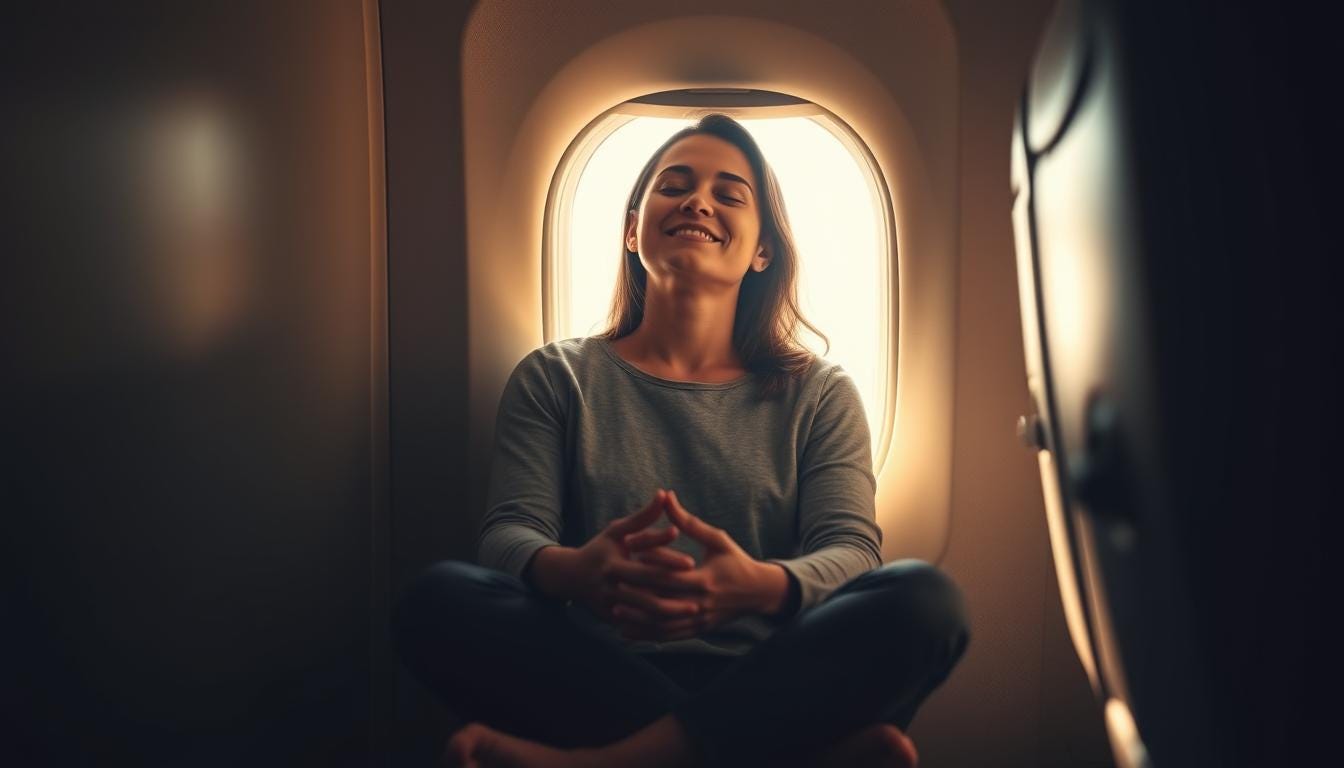
Sudden turbulence can upset even the calmest traveler. These tools turn chaos into calm in turbulence. They use techniques for unexpected moments.
Mindfulness in Unexpected Conditions
Stay focused with these steps during turbulence:
Breathe deeply with 4-7-8 breathing to reduce turbulence stress relief. Inhale 4, hold 7, exhale 8.
Use apps like Insight Timer or Headspace for guided meditations designed for mindfulness on turbulent flights.
Quick Relaxation Strategies
React quickly with these steps when turbulence hits:
Practice quick flight relaxation by focusing on your breath and naming 3 objects in view.
Stretch your neck gently while repeating calming mantras for unexpected anxiety management.
Small actions like these create a buffer between panic and peace. They help you regain control during turbulence. Pre-flight practice builds resilience, making these techniques automatic when needed most.
🏋️ Practical Pre-Flight Preparation for a Stress-Free Journey
Learning pre-flight preparation makes your trip smoother. Begin by organizing your calm travel packing to avoid last-minute stress. These travel stress tips help you face any challenge before you board.
✅ Packing Essentials for Calm
Getting ready for your flight starts with smart packing. Here's a quick list of must-haves:
Comfortable Clothing: Wear loose clothes and supportive shoes to reduce tension.
Mindfulness Tools: Bring noise-canceling headphones and a phone with apps like Headspace or Calm for calm sessions.
Health Kit: Carry motion sickness remedies, a water bottle, and stress toys like fidget spinners.
Entertainment Mix: Make a playlist with nature sounds or ambient music to block out noise.
ItemPurposeWhy It HelpsEye MaskBlocks lightAids sleep and anxiety preventionSnack PackHealthy bitesKeeps energy and mood stableBackup ChargersPower for devicesReduces tech stress
Check your list 24 hours before flying. A tidy bag and a calm mind turn pre-flight worries into confidence. These small steps make your journey from gate to destination more relaxed.
🥇Expert Tips for Long Haul Flight Tranquility
Travel experts say the key to a good long haul flight is staying hydrated and getting enough sleep. These tips can make your long flight feel like a restful break.
💧Staying Hydrated and Relaxed
Drinking water is crucial to feeling good on a flight. Here's how to keep up:
Drink 8-oz of water every 90 minutes to counter dry cabin air.
Avoid soda and alcohol—they worsen dehydration. Ask crew for refills.
Keep a reusable bottle visible as a reminder.
😴Managing Sleep While On Board
Improving sleep on a flight is all about small changes. Try these:
Use a neck pillow and eye mask to block light/noise.
Set a 30-minute wind-down routine with dimmed screens.
Wear loose clothing and adjust blankets to stay comfortable.
TipWhy It WorksUse lavender-scented eye maskCalms senses and signals bedtimeRequest blackout curtainsCreates dark environment for natural sleep cycles
Combine these tips with a pre-flight skincare routine for total comfort. Small changes can make a big difference in your flight experience.
🏁 Conclusion
A calm journey starts with a flight relaxation summary. Using breathing, meditations, and stretches helps. Apps like Calm or Spotify’s playlists add to the calm.
Remember to stay hydrated and use noise-canceling headphones. These steps help turn turbulence into calm.
Next time you fly, try deep breathing or a stretch. Small actions can make a big difference. Use these strategies for a calmer trip. Your next flight can be peaceful with the right tools. Let these methods guide you to a smoother journey.
📌 FAQ
What are some effective breathing exercises to do on a flight?
Try the 4-7-8 method for breathing. Breathe in for 4 seconds, hold for 7, and breathe out for 8. Deep belly breathing also helps calm your nerves and reduce anxiety.
Are there any recommended mindfulness apps for travel?
Yes! Headspace, Calm, and Insight Timer are great. They offer guided meditations and exercises for in-flight use. These apps can help you relax and enjoy your flight.
What are some seat-friendly stretches I can do to ease tension?
Neck rotations, shoulder rolls, and seated forward bends can ease tension. Wrist and ankle rotations also improve circulation during your flight.
How can calming playlists help during air travel?
Calming playlists can set a peaceful mood and reduce anxiety. Ambient, classical, and nature sounds create a serene atmosphere. This makes your flight more enjoyable and relaxed.
What should I include in my pre-flight preparation for a stress-free journey?
Pack comfortable clothes, a neck pillow, and noise-canceling headphones. Bring meditation aids like essential oils or soothing teas for a calm flight.
How can I manage anxiety during turbulence?
Focus on your breathing or listen to a guided meditation during turbulence. Remember, turbulence is normal. Positive visualization can help you stay calm.
Are there specific techniques to enhance sleep during long-haul flights?
Yes! Stay hydrated with water breaks. Use an eye mask and earplugs for a sleep-friendly environment. A lightweight blanket and melatonin can also help you sleep better.
Can I combine different relaxation methods for better results?
Absolutely! Mix breathwork, mindfulness, stretches, and calming music for a holistic approach. Experimenting with these methods can help you find what works best for you.