



Welcome back! Each week, I answer real questions from nervous flyers because the more you understand about flying, the less there is to fear. Whether it's a weird sound, a sudden turn, or a light that came on mid-flight, I'm here to explain it calmly and clearly.
👇 This Week's Questions:
💬 Question #1: "Why does the plane bank so steeply when turning, and could it flip over?"
✈️ Those sharp banking turns can feel alarming, especially when you're looking out the window and the ground seems tilted at a crazy angle. But here's what's really happening: the plane is doing exactly what it's designed to do.
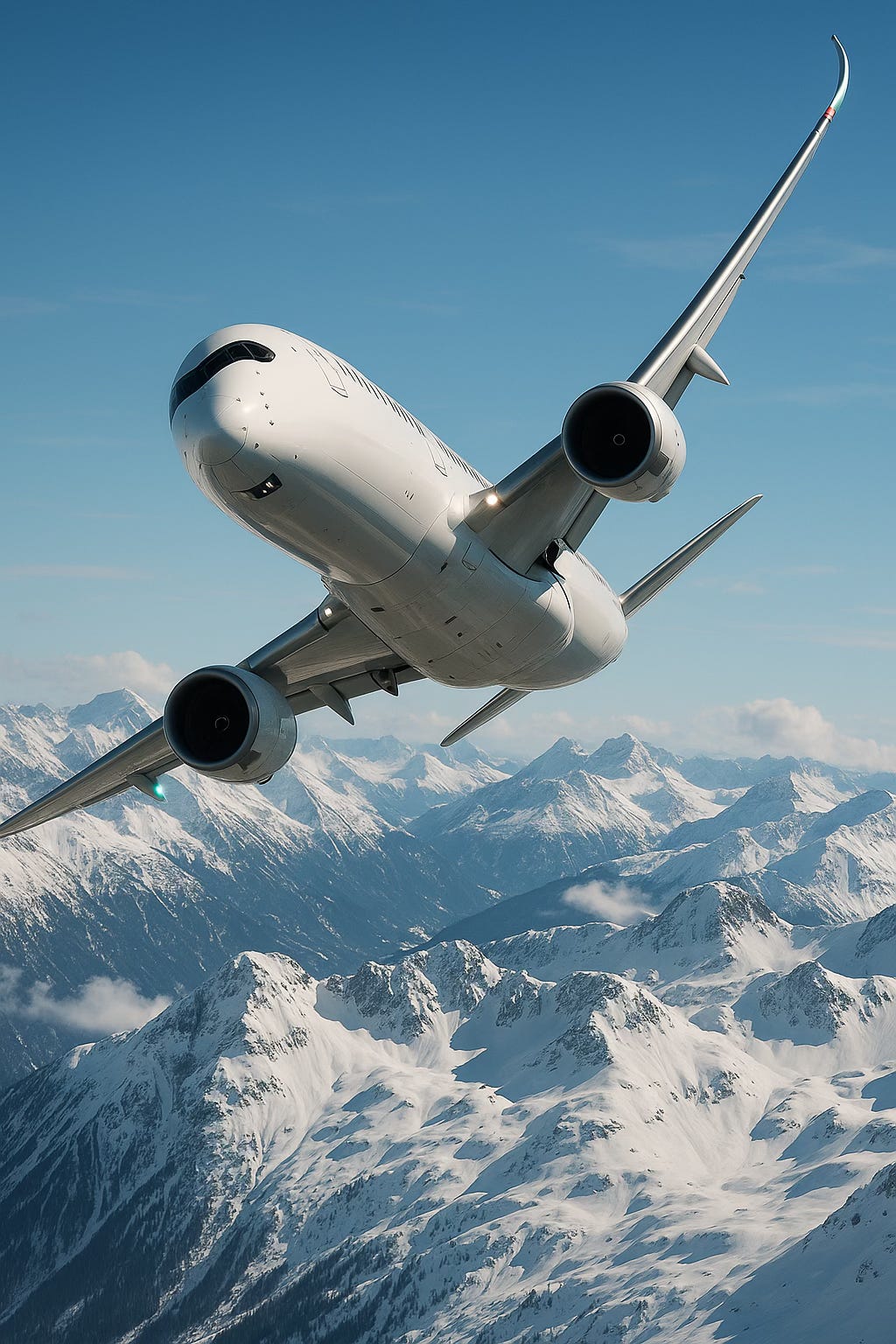
When we turn, we need to "bank" the aircraft to redirect the lift force. Think of it like riding a bicycle around a corner — you naturally lean into the turn. The plane does the same thing, but in three dimensions.
Here's why those turns feel so dramatic:
Standard turns are typically 15-25 degrees of bank, but can feel much steeper from inside
Your inner ear isn't great at judging angles when you can't see the horizon clearly
Window seats make turns appear more extreme because you're looking "down" at an angle
The reality about airplane stability:
Commercial aircraft are designed to naturally return to level flight if left alone
It takes deliberate, sustained control inputs to maintain any bank angle
The plane literally wants to fly straight and level, it's aerodynamically stable
Even steep emergency turns (45+ degrees) are within the aircraft's capabilities, though they require precise pilot technique and are practiced extensively in simulator training with strict tolerances
Could it flip over? Not in normal operations. Modern fly-by-wire aircraft have built-in bank protection that prevents the plane from rolling beyond a safe threshold (typically around 67 degrees) unless the flight computers are in a degraded emergency mode. The flight control system literally won't let it happen, even if a pilot tried.
You might notice the engines sound different during turns, that's just because we sometimes adjust power slightly to maintain speed and altitude through the maneuver. Completely normal.
💬 Question #2: "Why does the plane feel like it's sliding sideways during landing?"
✈️ That sideways sliding sensation during approach and landing can be genuinely alarming. You're looking out the window and the runway seems to be at an angle, or you feel like you're drifting sideways toward the terminal. But this isn't a sign that something's wrong, it's actually skillful flying in action.
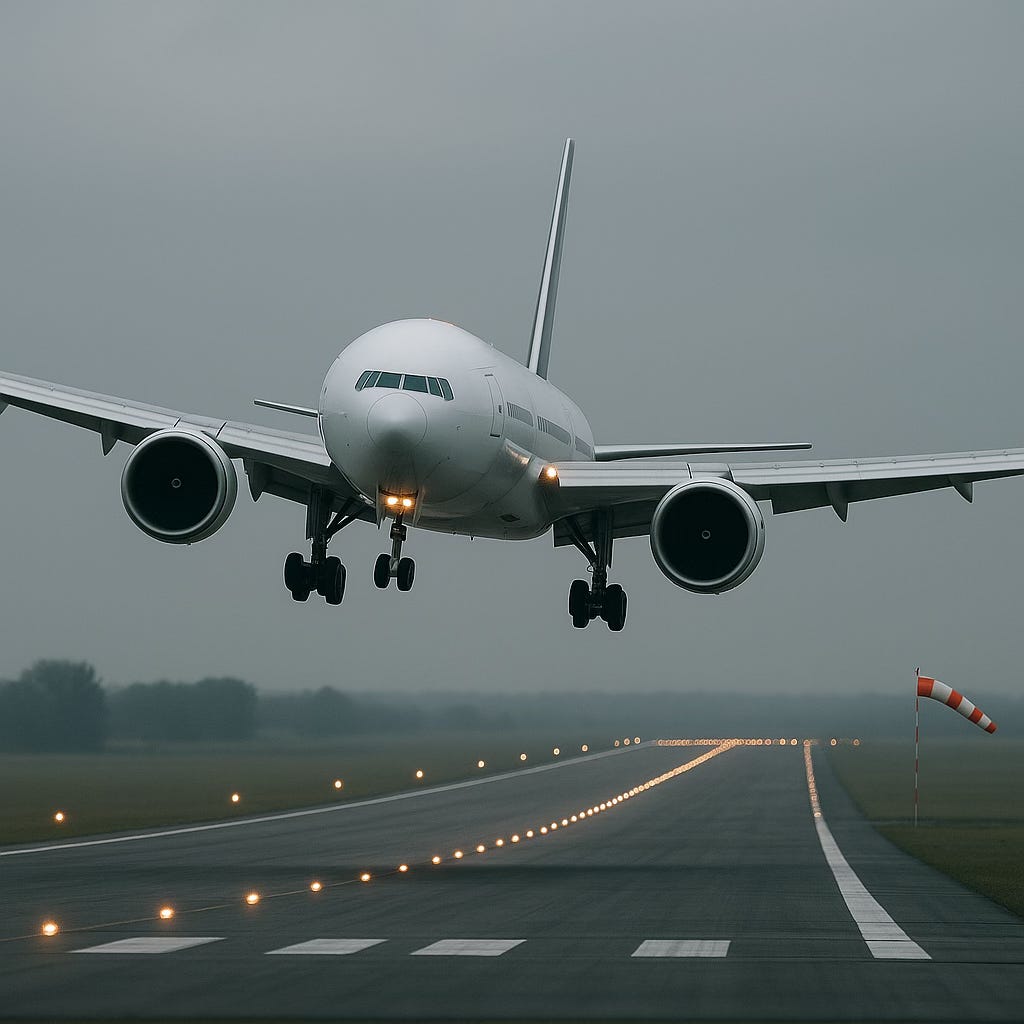
What you're experiencing is called a "crab" or crosswind landing:
Why we fly sideways:
Winds rarely blow straight down the runway
Crosswinds can be 20-30+ mph, pushing the aircraft sideways
We point the nose into the wind to maintain our desired ground track
From inside, it feels like we're flying crooked, but we're actually flying straight toward the runway
What's happening during the approach:
The plane's nose points into the wind (this is the "crab angle")
We're tracking straight toward the runway centerline despite the sideways appearance
Your inner ear detects this sideways motion and interprets it as sliding
The runway might look like it's approaching at an angle through the window
The landing technique:
Just before touchdown, we "kick out" the crab with the rudder pedals
We align the aircraft with the runway centerline at the last moment
You might feel a subtle straightening motion right before we touch down
Sometimes we land still slightly angled if the crosswind is strong
Different techniques you might experience:
Crab landing: Stay angled until just before touchdown, then straighten
Wing-low approach: Drop one wing into the wind and use opposite rudder
Combination method: A bit of both techniques depending on conditions
What pilots are managing:
Wind direction and speed (which can change during the approach)
Aircraft drift and ground track
Keeping the aircraft centered on the runway
Ensuring we touch down smoothly despite the crosswind
Why it feels unsettling:
Your brain expects to approach straight-on, like driving down a road
The angled approach conflicts with your visual expectation
You can see the terminal or other aircraft appearing to move sideways
The sensation is unfamiliar compared to ground transportation
The bottom line: That sideways feeling is evidence of precise pilot technique. We're not sliding out of control — we're actively compensating for wind to ensure a safe, centered landing. The stronger the crosswind, the more dramatic this technique becomes, but it's completely normal and exactly what we're trained to do.
💬 Question #3: "What are those creaking and groaning sounds I hear during flight?"
✈️ Those ominous creaking, groaning, and flexing sounds can be genuinely unsettling, especially when you're trying to relax during cruise. It sounds like the plane is complaining or struggling, but here's the reality: you're hearing the aircraft doing exactly what it's designed to do.
What you're actually hearing:
Thermal expansion and contraction:
The aircraft structure expands and contracts as it moves between different temperatures
Going from ground level to -60°F at altitude creates significant temperature changes
Metal components shift and settle, creating creaking sounds
This is completely normal and accounted for in the design
Wing flex during turbulence:
Wings are designed to flex up to 26 feet at the tips on some aircraft
During turbulence, you're hearing the wing structure working as intended
Those groaning sounds are the wing absorbing and dissipating energy
Rigid wings would actually be more dangerous — flexibility prevents structural failure
Pressurization effects:
The fuselage expands slightly when pressurized, like inflating a balloon
During climb and descent, pressure changes create settling sounds
Interior panels and fixtures adjust to these pressure differences
You might hear periodic "pops" or creaks as things equalize
Normal structural sounds:
Seat tracks and floor panels shifting under load
Overhead bins settling as the aircraft attitude changes
Cargo shifting slightly in the holds below
Even the galley equipment and lavatories make structural sounds
What should actually concern you vs. normal sounds:
Normal: Gradual creaking, periodic groaning, gentle flexing sounds
Concerning: Sharp cracking, sudden loud bangs, or sounds that seem to be getting worse
Reality check: If the flight attendants aren't concerned, neither should you be
The engineering perspective: Modern aircraft are tested to handle forces far beyond anything encountered in normal flight. Those sounds you're hearing are proof that the aircraft structure is working properly — absorbing, flexing, and adapting to the forces of flight exactly as designed.
Bottom line: The plane isn't falling apart — it's demonstrating the incredible engineering that keeps it safely in the air. Those "concerning" sounds are actually reassuring evidence that everything is working as intended.
💬 Question #4: "What happens if we lose cabin pressure? Will I be able to breathe?"
✈️ The oxygen mask scenario is probably one of the most anxiety-inducing "what-ifs" for nervous flyers. Movies make it look terrifying, but the reality is much more manageable than Hollywood suggests.
First, let's understand what cabin pressurization actually is:
At 35,000 feet, the air is too thin to breathe normally
The cabin is pressurized to feel like you're at about 6,000-8,000 feet elevation
It's like being in Denver or Mexico City — perfectly breathable
Multiple backup systems maintain this pressure
If we lose cabin pressure, here's what actually happens:
Immediate response (first 10-15 seconds):
Oxygen masks drop automatically, but we verify and can manually deploy them as backup if the automatic system fails
Put your mask on immediately, then help others
You have about 15 seconds of useful consciousness at altitude
The masks provide plenty of oxygen — more than you need
What we're doing in the cockpit:
Execute immediate memory items: don oxygen masks (we have better ones than passengers) communicate with each other, begin emergency descent, declare emergency
The non-flying pilot will run the emergency descent checklist followed by the decompression checklist
The flying pilot will begin an immediate emergency descent to 10,000 feet or the minimum safe altitude (MSA) if flying over higher terrain
The descent:
We descend rapidly but safely — typically 3,000-5,000 feet per minute (this is called an emergency descent)
This feels steep but is well within the aircraft's capabilities
Within 3-4 minutes, we're at an altitude where you can breathe normally
You can remove the oxygen mask once we level off below 10,000 feet

Key facts that should reassure you:
Cabin pressure loss is extremely rare and can occur in three ways: gradual decompression (slow leak), rapid decompression (faster pressure loss), or explosive decompression (sudden catastrophic failure) - with gradual being the most common
The oxygen masks provide 12-15 minutes of oxygen — more than enough time to descend
We practice this scenario regularly in simulator training
The reality: This is a serious but completely manageable emergency. The systems work exactly as designed, and we train for it constantly.
🛬 Final Thought:
Every strange sound, unusual motion, or "what if" scenario you can imagine has been encountered, analyzed, and planned for by thousands of pilots over decades of commercial aviation. The procedures exist, the training is thorough, and the equipment is redundant. What feels unpredictable to passengers is actually highly predictable to your flight crew.
Your job as a passenger? Sit back, relax, and trust that we've got this handled.
Got a question for next week's edition? Hit reply or drop it in the comments.

Pilot Nick
✈️ Lessons from the Flight Deck
📬 Get more cockpit insights and travel tips, subscribe free to Lessons From the Flight Deck for weekly updates that help you fly calm and confident or visit:
https://www.skycalm.org
Esme, fantastic question, Lukla and Paro are absolutely on the shortlist of the most challenging airports in the world. As a pilot, I can tell you that mountain airports like Aspen, Eagle (Colorado), and Innsbruck (Austria) all challenging airports. London City is another one that keeps you sharp with its steep approach, and Madeira often tests your crosswind skills. The Druk Air crews flying into Paro really do earn their stripes!
I have a question: what do pilots today consider the most challenging airports in the world? We passengers would use the word “frightening”. Personally I have flown into Lukla airport in Nepal (very short runway, steep drop thereafter, lots of accidents) and Paro airport in Bhutan (flying in a narrow mountain range). I don’t like them but the Druk Air pilots of Bhutan are really good.