


Welcome aboard!
Each week, I answer questions from anxious flyers, real people just like you who are curious, nervous, or just wondering “What is that sound during landing?
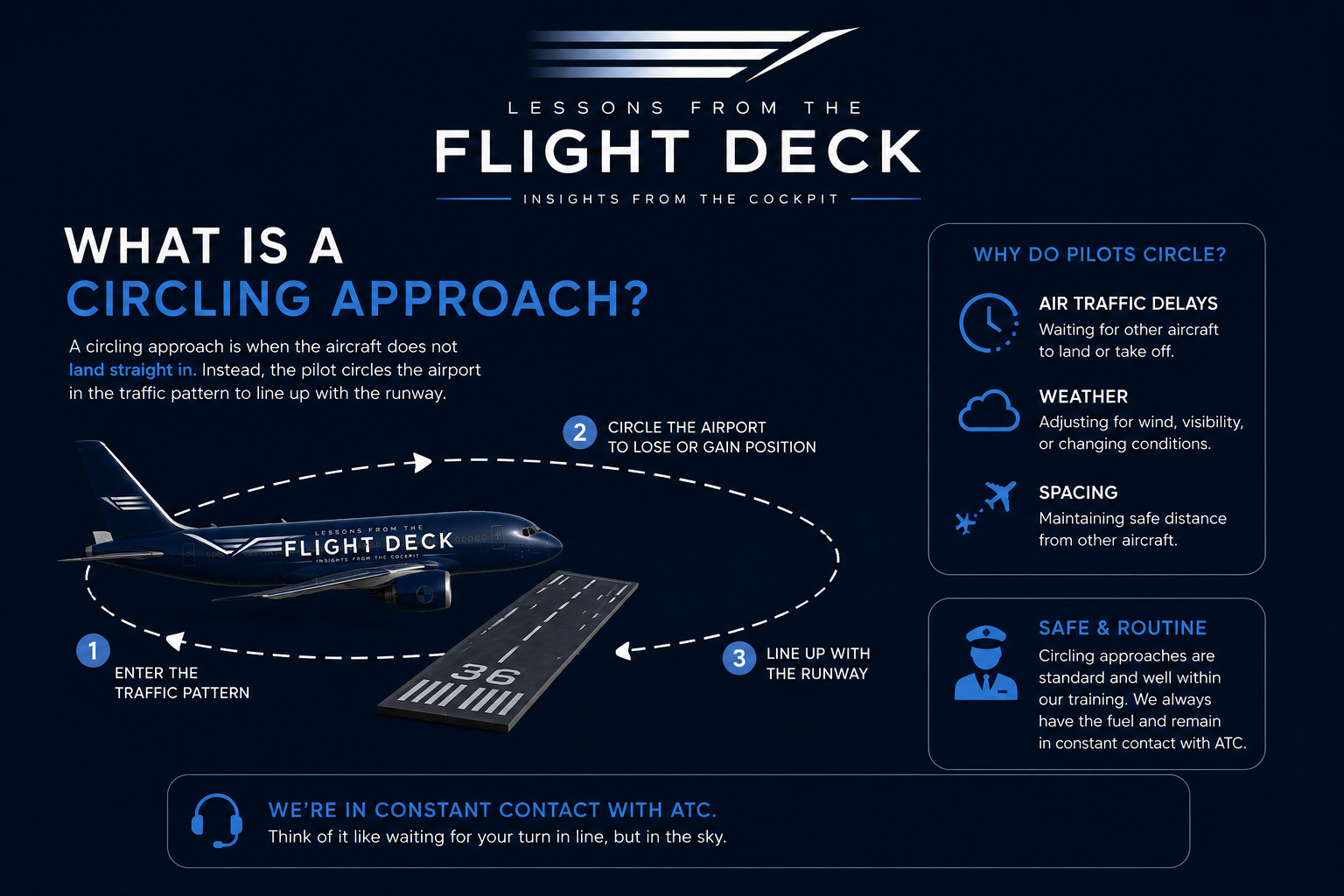
💬 Question #1: “Why do we sometimes circle before landing? Is it dangerous?”
✈️ Answer:
Not at all. Sometimes what passengers see as “circling” is actually part of a circling approach — a normal maneuver used during certain instrument approaches.
In some airports, terrain, weather, runway layout, or wind conditions may require pilots to approach the airport aligned with one runway first, then visually maneuver to land on another runway.
Pilots are specifically trained and certified for these procedures. The aircraft always remains within safe operating limits, and the maneuver is carefully planned, briefed, and monitored from the cockpit.
A circling approach can feel unusual from the cabin because passengers may notice turns close to the airport or changes in bank angle, but from a pilot’s perspective, it’s a standard and controlled procedure.
Think of it like taking an exit ramp before lining up perfectly with your destination.
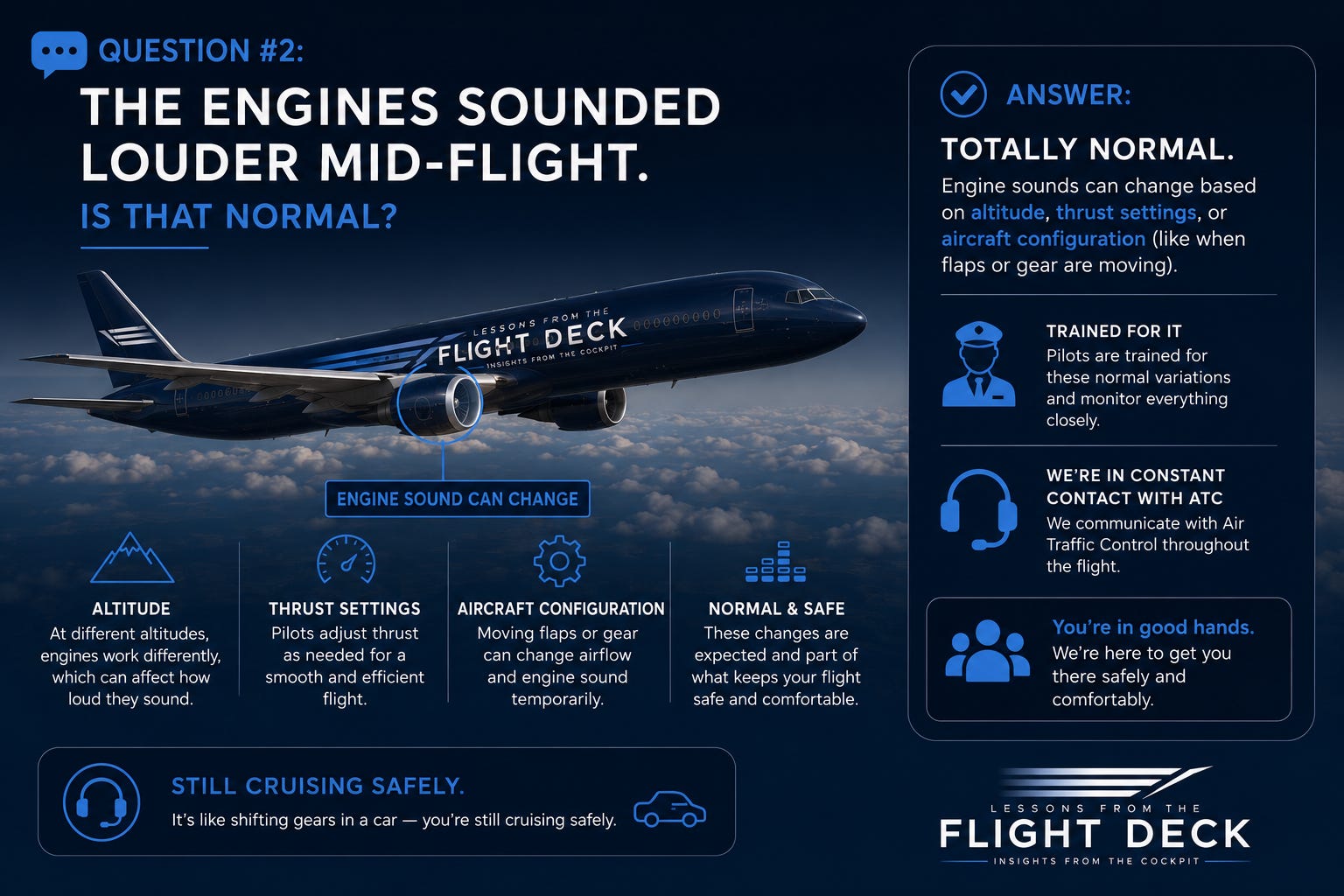
💬 Question #2: “The engines sounded louder mid-flight. Is that normal?”
✈️ Answer:
Yes — completely normal.
Airplane engine sounds naturally change throughout the flight depending on altitude, wind, speed, thrust settings, and aircraft configuration. Sometimes pilots increase power slightly for climbs, turbulence, or route adjustments, which can make the engines sound louder for a few minutes.
You may also hear changes when flaps, spoilers, landing gear, or airflow around the aircraft changes.
Modern jet engines are constantly adjusting automatically to optimize efficiency and performance. What passengers hear inside the cabin is often simply the sound of the aircraft adapting to different phases of flight.
It’s very similar to a car changing gears while driving uphill or accelerating onto a highway — noticeable, but completely normal.
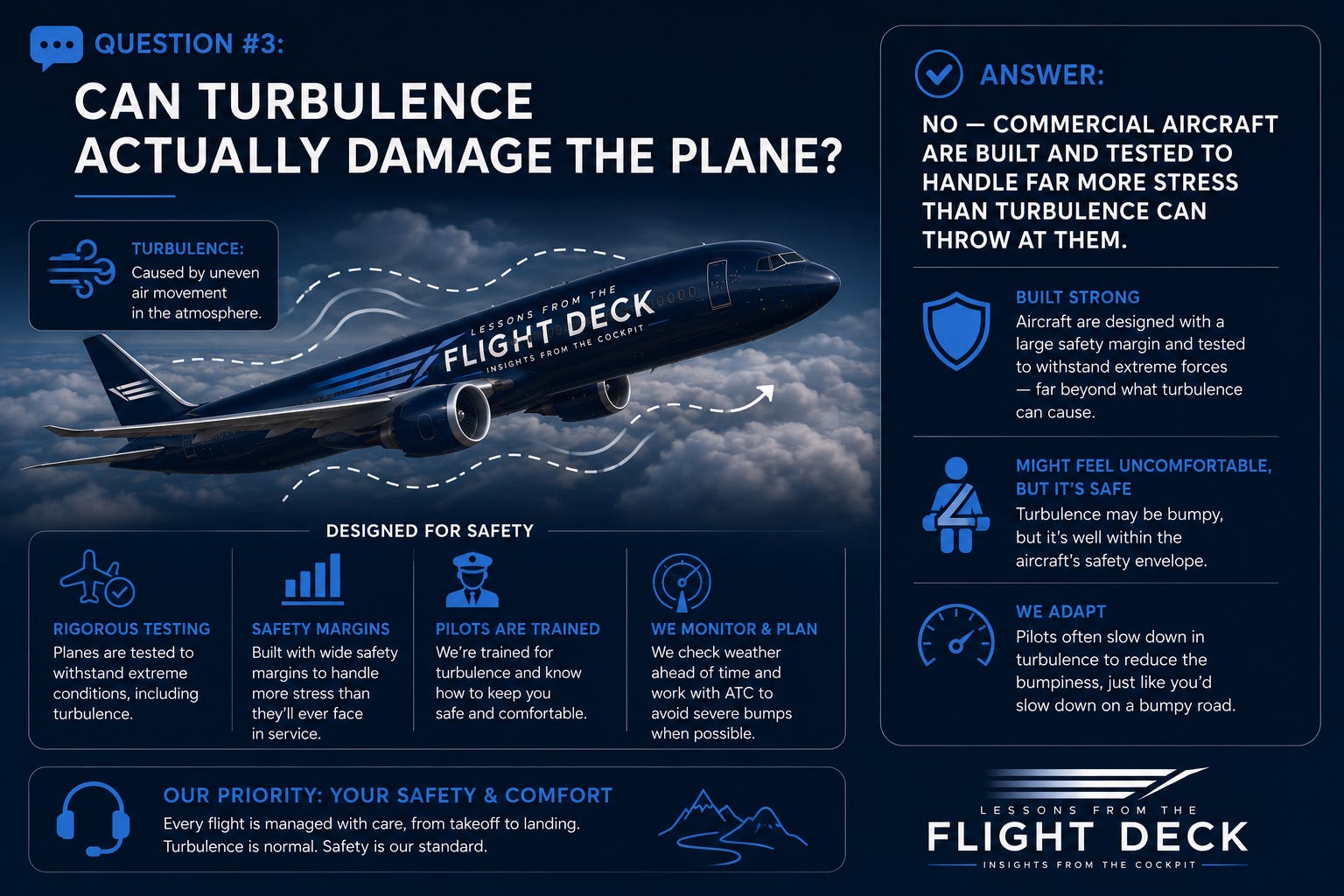
💬 Question #3: “Can turbulence actually damage the plane?”
✈️ Answer:
Commercial airplanes are built to handle far more stress than normal turbulence could ever produce.
Before entering service, aircraft go through extremely demanding structural testing, including wing flex tests, severe load simulations, and certification standards designed with very large safety margins.
While turbulence can feel uncomfortable inside the cabin, the airplane itself is operating well within its designed limits. Pilots also have weather radar, reports from other aircraft, and turbulence procedures to help avoid the roughest areas whenever possible.
When pilots slow down during turbulence, it’s usually to improve comfort and reduce stress on the aircraft — similar to slowing down on a rough road in a car.
The biggest risk during turbulence is actually passengers not wearing their seatbelts.
That’s why we always recommend keeping it fastened whenever you’re seated — even when the seatbelt sign is off.
📬 Enjoyed this edition?
If this helped you understand what’s really happening up there share it with someone who needs it. You probably know at least one person who white-knuckles every flight. Forward this to them. It might just change how they feel about their next trip.
And if you’re not subscribed yet, join thousands of nervous flyers and avgeeks who get these answers delivered every month — free.
Got a question you’ve always wanted answered?
Hit reply or drop it in the comments below — your question could be featured in the next edition.
Pilot Nick ✈️ Lessons from the Flight Deck