


Introduction: Your Safety is Our Priority
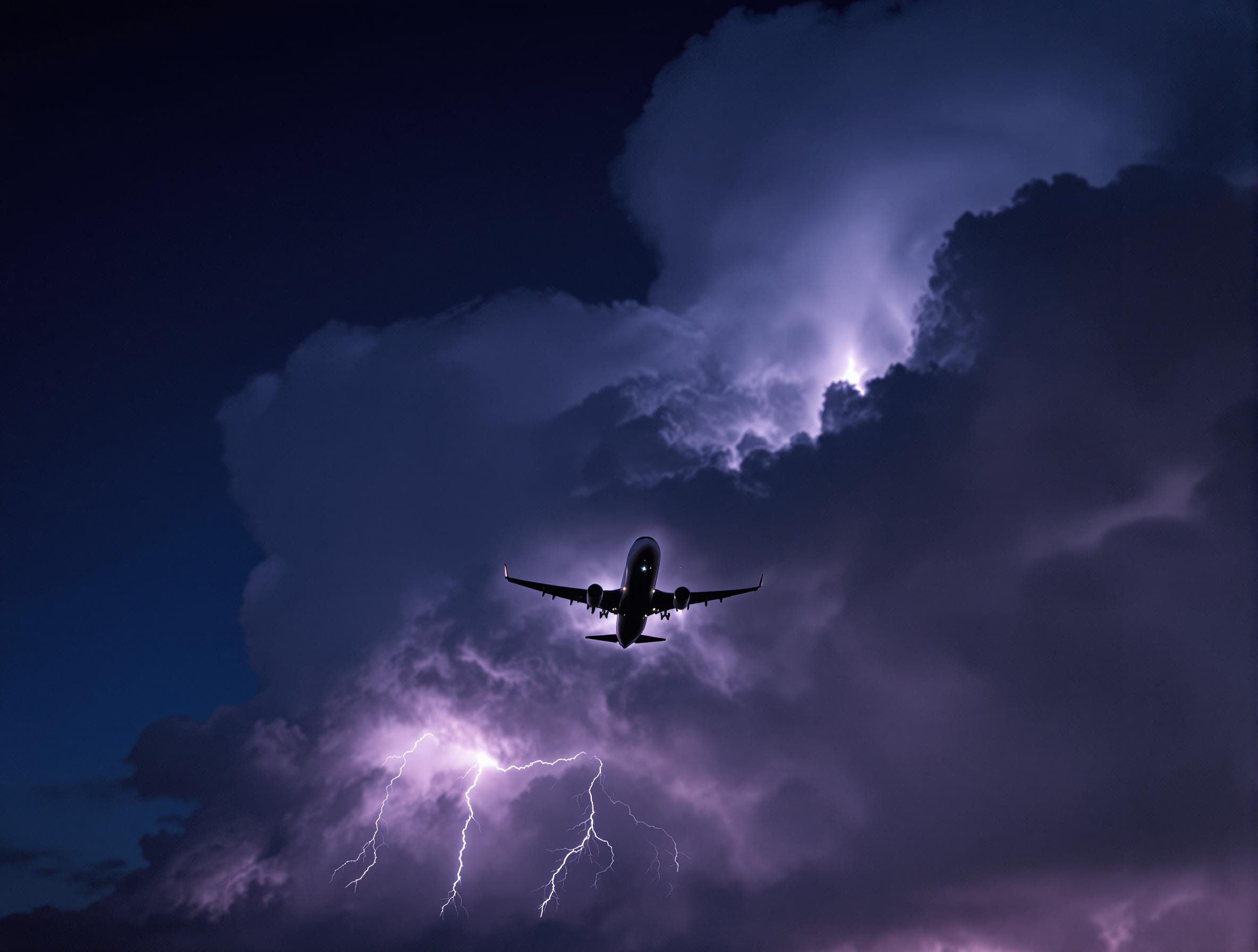
If you've ever looked out an airplane window and seen towering storm clouds or watched lightning flash in the distance, you might have wondered: "How do pilots know where it's safe to fly?" The answer lies in one of aviation's most important safety tools weather radar.
Every day, pilots around the world use sophisticated weather detection technology to guide aircraft safely around dangerous storms. This isn't guesswork or hoping for the best, it's precise, scientific navigation that has made flying incredibly safe, even in challenging weather conditions.
This guide will help you understand how pilots detect storms, why they make the decisions they do, and how the aviation system works together to keep you safe. You'll discover that what might seem scary from a passenger's perspective is actually a well orchestrated safety process that pilots train for extensively.
How Pilots "See" Weather
The Magic of Weather Radar
Think of weather radar like a flashlight that can see through clouds. The airplane sends out invisible radio waves that bounce off raindrops and return to the aircraft. Just like how you can see objects when light bounces off them, pilots can "see" rain and storms by reading these returning signals.
The radar creates a colorful map on a screen in the cockpit, similar to the weather maps you see on TV. Different colors tell pilots different things:
🟩 Green means light rain usually smooth flying with maybe a gentle bump or two, like driving over a small pothole.
🟨 Yellow means moderate rain expect some bumps, similar to a boat crossing small waves.
🟥 Red means heavy rain and turbulence this is where pilots will steer around, just like you'd drive around a large pothole.
🟪 Magenta (bright purple-red) means severe weather—pilots stay far away from these areas, like avoiding a major construction zone on the highway.

What Pilots Can See That You Can't
From your window seat, you might see dark clouds and think they all look equally threatening. But pilots have a much clearer picture.
Their radar can look inside clouds and see exactly where the heaviest rain is, how tall the storms are, and which direction they're moving.
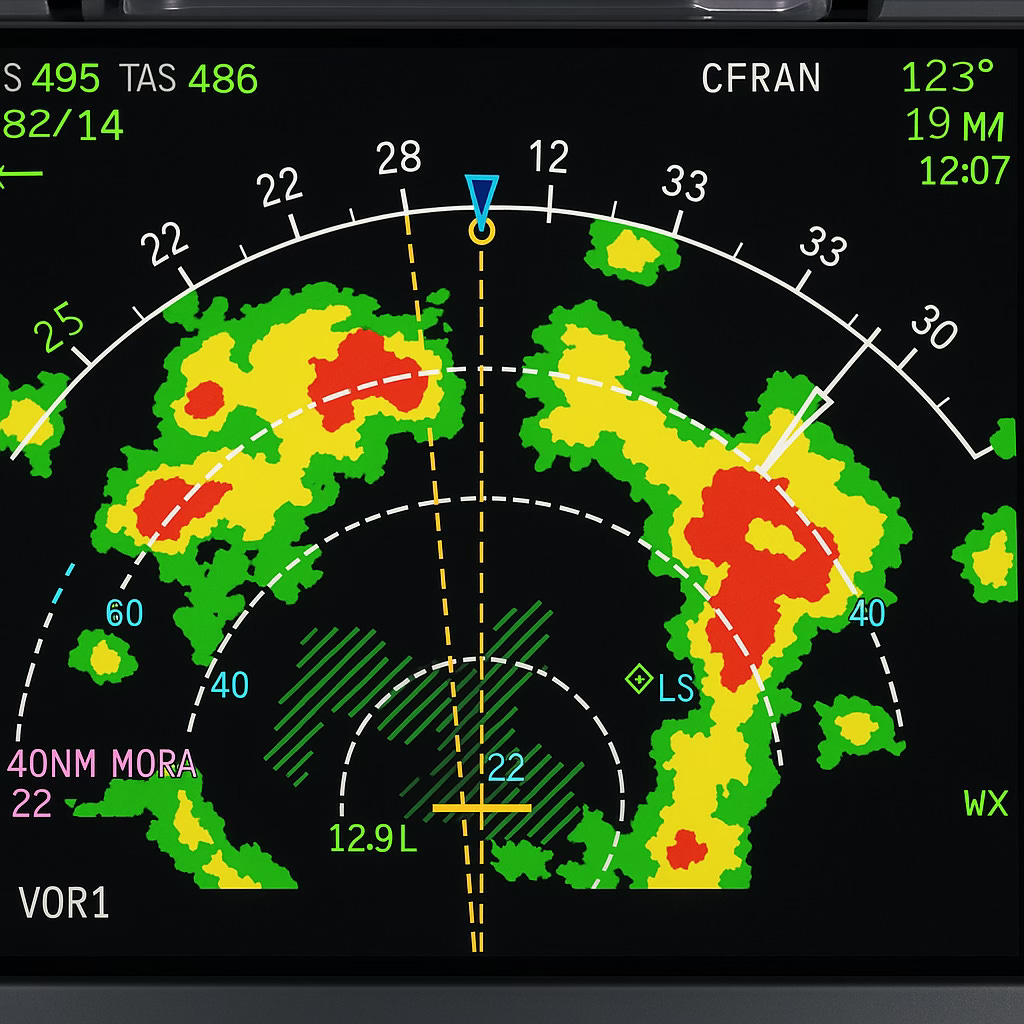
It's like having X-ray vision for weather. While you see a wall of clouds, pilots see the gaps, the lighter areas, and the safe paths through or around the storms.
A Complete Weather Picture: Multiple Information Sources
Modern pilots don't rely on just one source of weather information—they have access to an incredible array of tools that work together to create a complete picture of weather conditions:
