


🕒 12 min read · Black Box Series · Episode 01 · Pilot Nick
At 37,000 feet over the Indian Ocean, on a clear June night in 1982, 247 passengers were finishing dinner.
Then the windows began to glow.
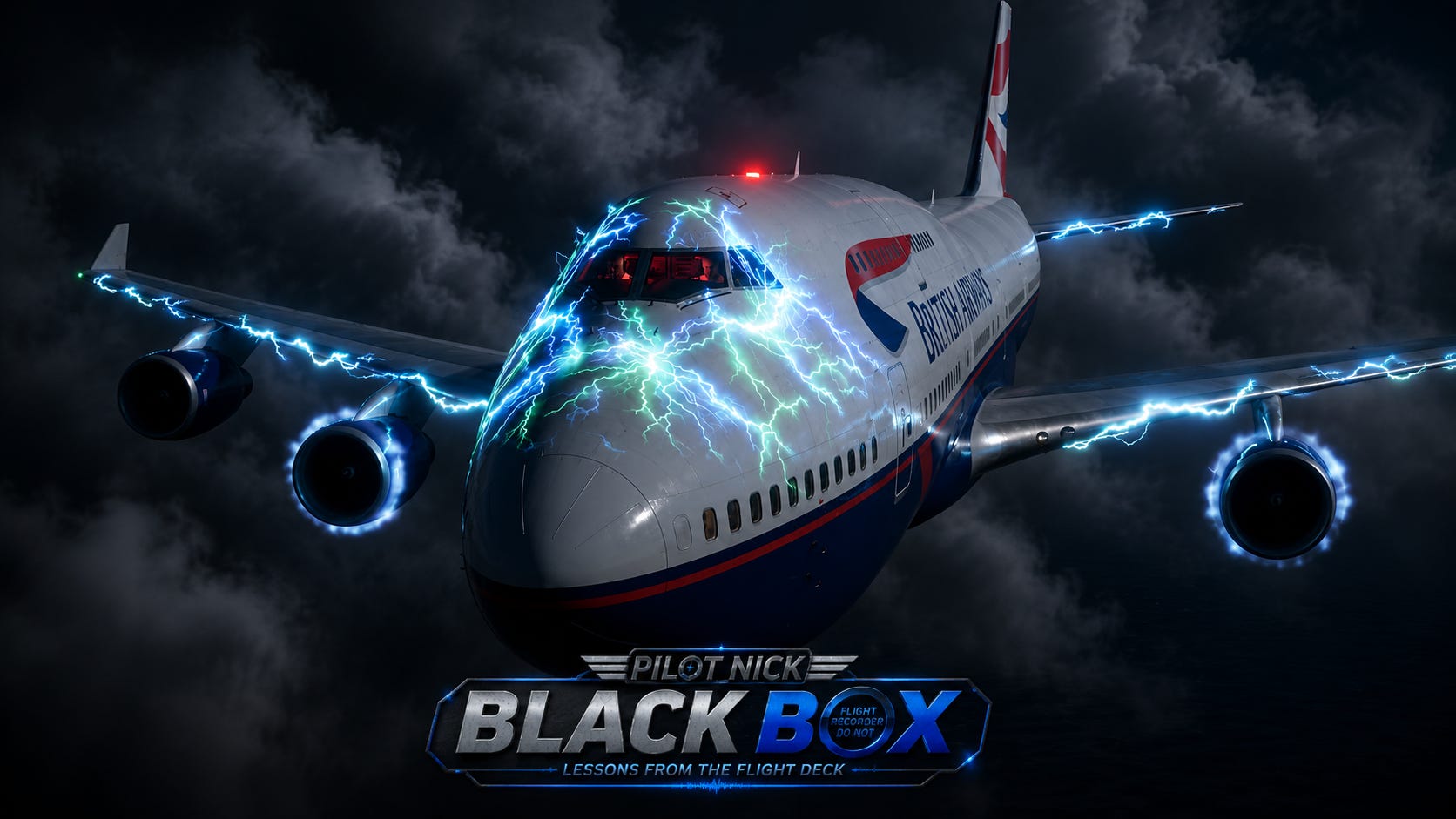
Not the soft glow of a sunset. A strange, electric blue shimmer dancing along the leading edge of the wings. Inside the cabin, a smoky haze began drifting down the aisles. It smelled oddly like sulfur.
Captain Eric Moody was in the cockpit of British Airways Flight 009, a Boeing 747 en route from Kuala Lumpur to Perth. He’d been flying for decades. He had never seen anything like this.
And in the next 90 seconds, every single one of his four engines would quietly shut down.
One. By. One.
Welcome to Black Box Series
You voted for it, so here it is.
Black Box is a new series inside Lessons From The Flight Deck where I take real aviation incidents, the ones that made history and break them down the way a pilot actually thinks about them.
Not the dramatized version. Not the Wikipedia summary.
The cockpit view.
What the crew saw. What they decided. What they felt. And most importantly what it teaches us about how modern aviation became one of the safest things you can do on this planet.
We’re starting with BA009. Because if you’ve ever worried about something going wrong at cruise altitude, this story will change how you think about it forever.
Let’s go back to that night.
The Strangest Warning in Aviation
The first clue something was wrong wasn’t an alarm.
It was the smell.
The flight engineer, Barry Townley-Freeman, noticed it first — that faint, sharp, sulfuric scent. Then the haze. Then a passenger sitting near the window looked out and saw something impossible: the engines were glowing.
Not on fire. Glowing.
Long streams of luminous blue-white light were streaming backward from all four engine cowlings, like the plane was flying through a thunderstorm made of stars. The leading edges of the wings shimmered with the same eerie light.
This is a phenomenon called St. Elmo’s Fire, an electrical discharge that happens when an aircraft flies through particles that build up a static charge on the airframe. Pilots see it occasionally in thunderstorms. It’s harmless.
But there were no thunderstorms that night. The radar was clean. The sky was clear.
So what were they flying through?
At 13:42 UTC, they got their answer.
4️⃣ Engine four flamed out.
Moody and his first officer, Roger Greaves, ran the shutdown drill. A single engine failure on a 747 is serious, but manageable. The aircraft can fly comfortably on three.
Then, less than a minute later:
2️⃣ Engine two flamed out.
Then almost simultaneously:
1️⃣ + 3️⃣ Engines one and three.
All four. Gone.
The most powerful commercial jet in the world had just become the world’s largest, heaviest, and least aerodynamic glider — 180 tons of metal, 247 souls on board, 37,000 feet above the black Indian Ocean.
“Ladies and Gentlemen, This Is Your Captain Speaking...”
What Captain Moody said next became one of the most famous PAs in aviation history.
He keyed the mic. His voice was calm. Almost casual.
“Ladies and gentlemen, this is your captain speaking. We have a small problem. All four engines have stopped. We are doing our damnedest to get them going again. I trust you are not in too much distress.”
Read that again.
A small problem.
That line is studied in pilot training to this day not because it was clever, but because it reveals something fundamental about how pilots are trained to think in a crisis.
Here’s what most people don’t understand about that moment:
What Was Actually Happening Behind the Scenes
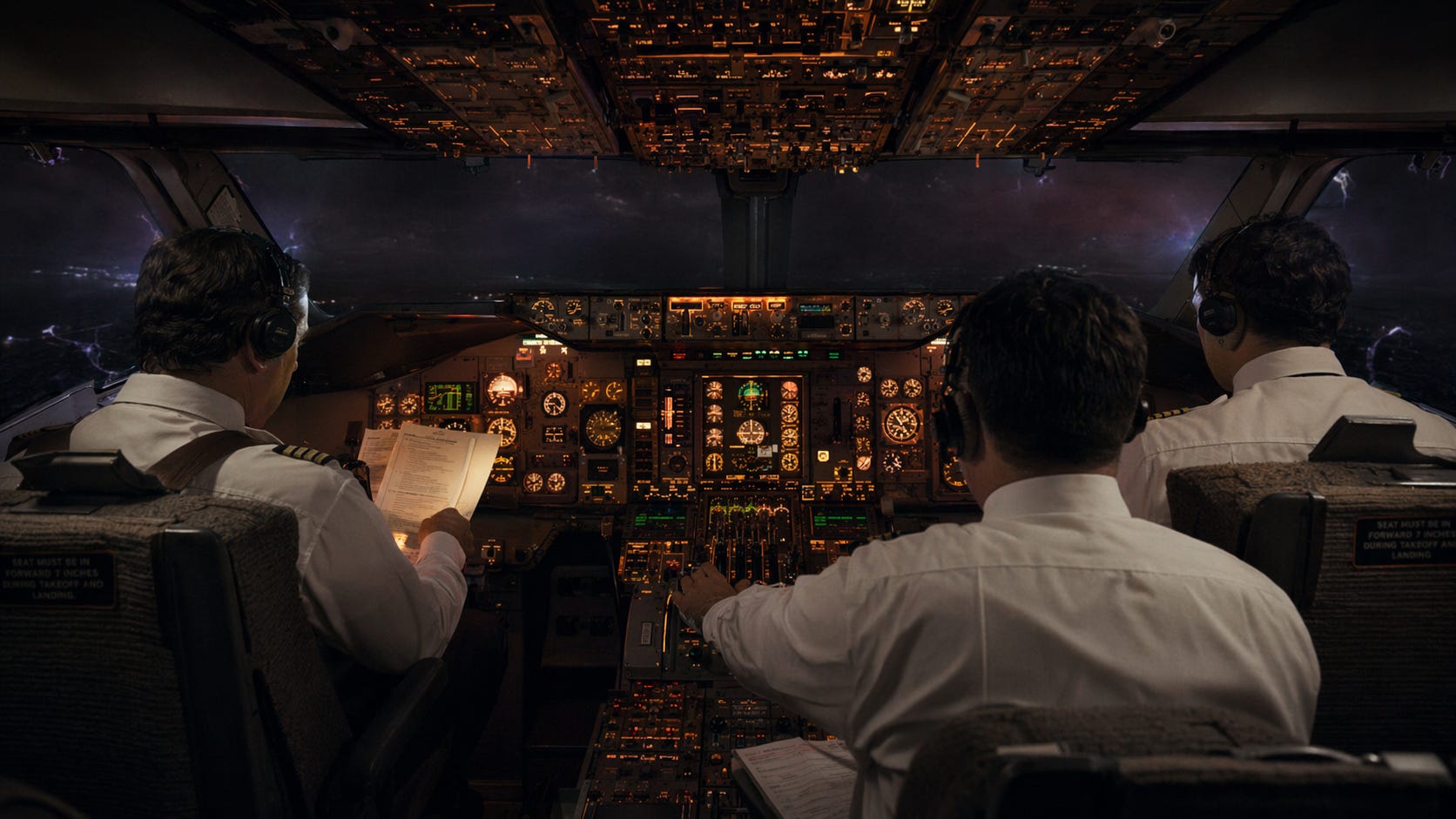
While passengers stared at glowing wings and wondered if they were about to die, the flight deck was a masterclass in disciplined problem-solving.
Moody and his crew were doing three things at once, all from memory:
1. Flying the aircraft. This sounds obvious, but it’s the first rule drilled into every pilot: Aviate. Navigate then Communicate.In that order. Always. No matter what’s on fire, screaming, or failing, fly the plane first. Moody trimmed the 747 for its best glide speed, a figure he knew cold: roughly 250 knots, giving them a glide ratio of about 15:1. For every foot they descended, they’d travel 15 feet forward.
From 37,000 feet, that gave them roughly 23 minutes of airtime. And about 141 miles of horizontal distance.
2. Running the restart drill. The 747’s engines can be relit in flight — but only within a specific envelope of altitude and airspeed. Too high and the air is too thin for combustion. Too slow and the windmilling turbines won’t spin fast enough. The crew had to descend into the restart window while still trying to clear whatever mountains lay between them and Jakarta.
3. Solving a mystery. Nothing about this made sense. Four simultaneous engine failures on a modern jet is statistically almost impossible. The checklists didn’t have an answer. The weather radar showed clear skies. Whatever had caused this, they were still flying through it.
The next part is where this story becomes extraordinary and where it stops being just a historical curiosity and starts being something that genuinely changed how modern aviation protects you every time you fly.
What the crew of BA009 discovered in the next 14 minutes rewrote the safety rules of the entire industry. It’s the reason a threat that was invisible to pilots in 1982 is now tracked by satellites, monitored by nine dedicated centers around the world, and briefed to every captain before every flight.
But to understand why, you have to understand what Moody did next and the single decision that saved 247 lives.
🔒 The rest of this story is for paid subscribers.
What Townley-Freeman figured out in the next 4 minutes saved 247 lives and it’s the opposite of what the checklist told him to do.
Inside the paid section:
→ The counterintuitive move that finally restarted the engines
→ What they were actually flying through (and why no radar could see it)
→ The landing — through a windscreen sandblasted opaque, on an airport they’d never seen, at night
→ The nine invisible systems protecting your next flight, built entirely because of BA009
→ Why this story should make you feel safer, not more afraid
