


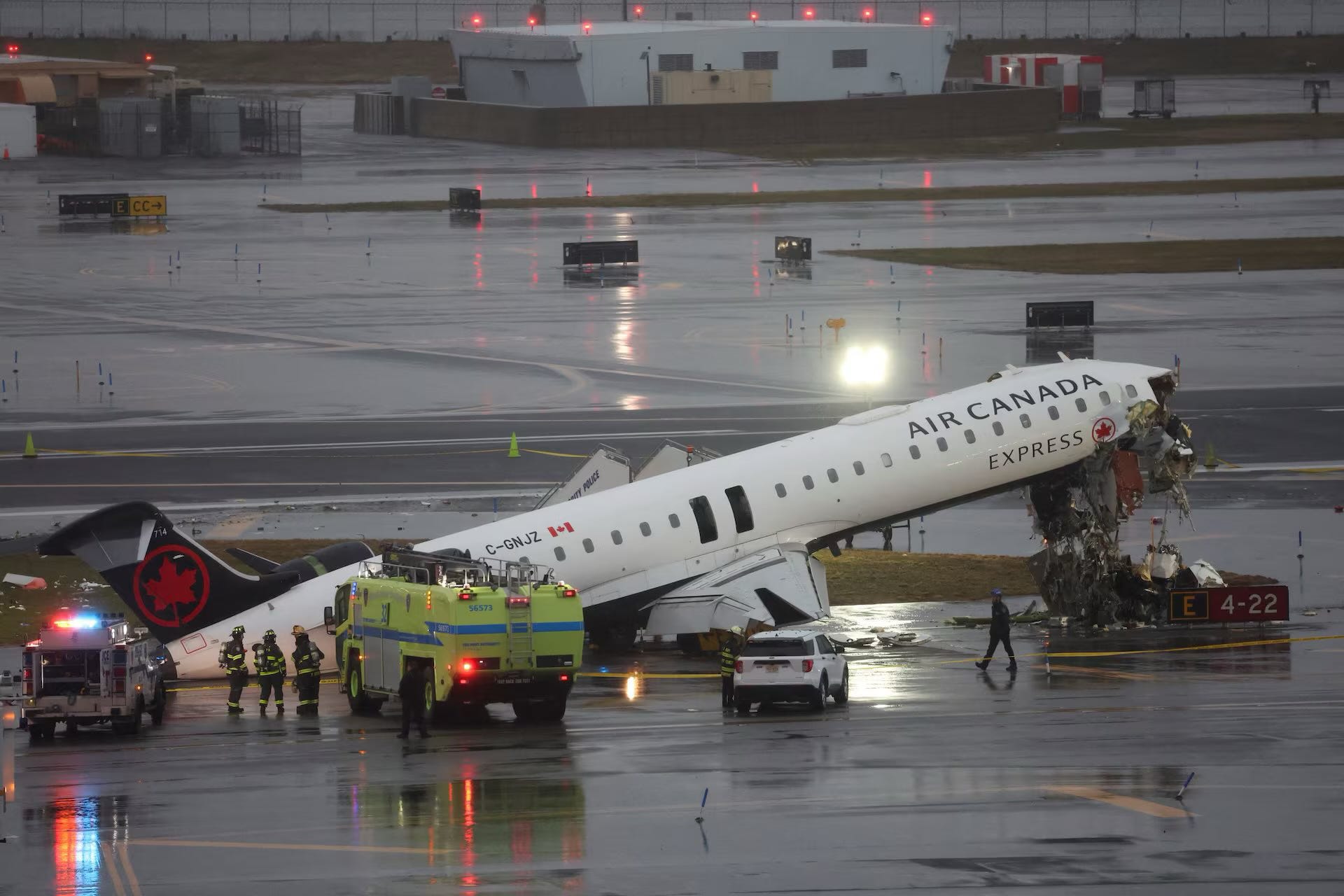
Sunday night, 11:45 PM. Runway 4 at LaGuardia. Mist. Fog. A CRJ-900 on short final, carrying 72 passengers home from Montreal.
In the cockpit, First Officer Mackenzie Gunther was flying the approach. Everything was routine. The plane was cleared to land. At a thousand feet, five hundred, a hundred — the standard altitude callouts ticked down, one by one, the way they do on every flight I’ve ever worked.
The wheels touched the runway. Two seconds later, Captain Antoine Forest took the controls. He had four seconds.
Let me explain what that means — because the news coverage is oversimplifying it.
In airline operations, pilots alternate roles on each leg — one is the Pilot Flying, the other is the Pilot Monitoring. On this leg, First Officer Gunther was flying and Captain Forest was monitoring. That's completely normal.
The NTSB confirmed that the plane touched down eight seconds before the end of the cockpit recording, and Forest took the controls six seconds before the end — meaning two seconds after landing.
Here’s why that matters: normally, after the first officer lands, they complete the rollout and hand control to the captain below 30 knots — because the tiller, the device that steers the nose wheel on the ground, is only on the captain’s side in the CRJ-900. That’s a calm, routine handoff at taxi speed.
This wasn’t that. Two seconds after touchdown, the aircraft was still rolling at close to a hundred miles per hour. That’s not a tiller handoff.
Something made Forest take the controls almost immediately.
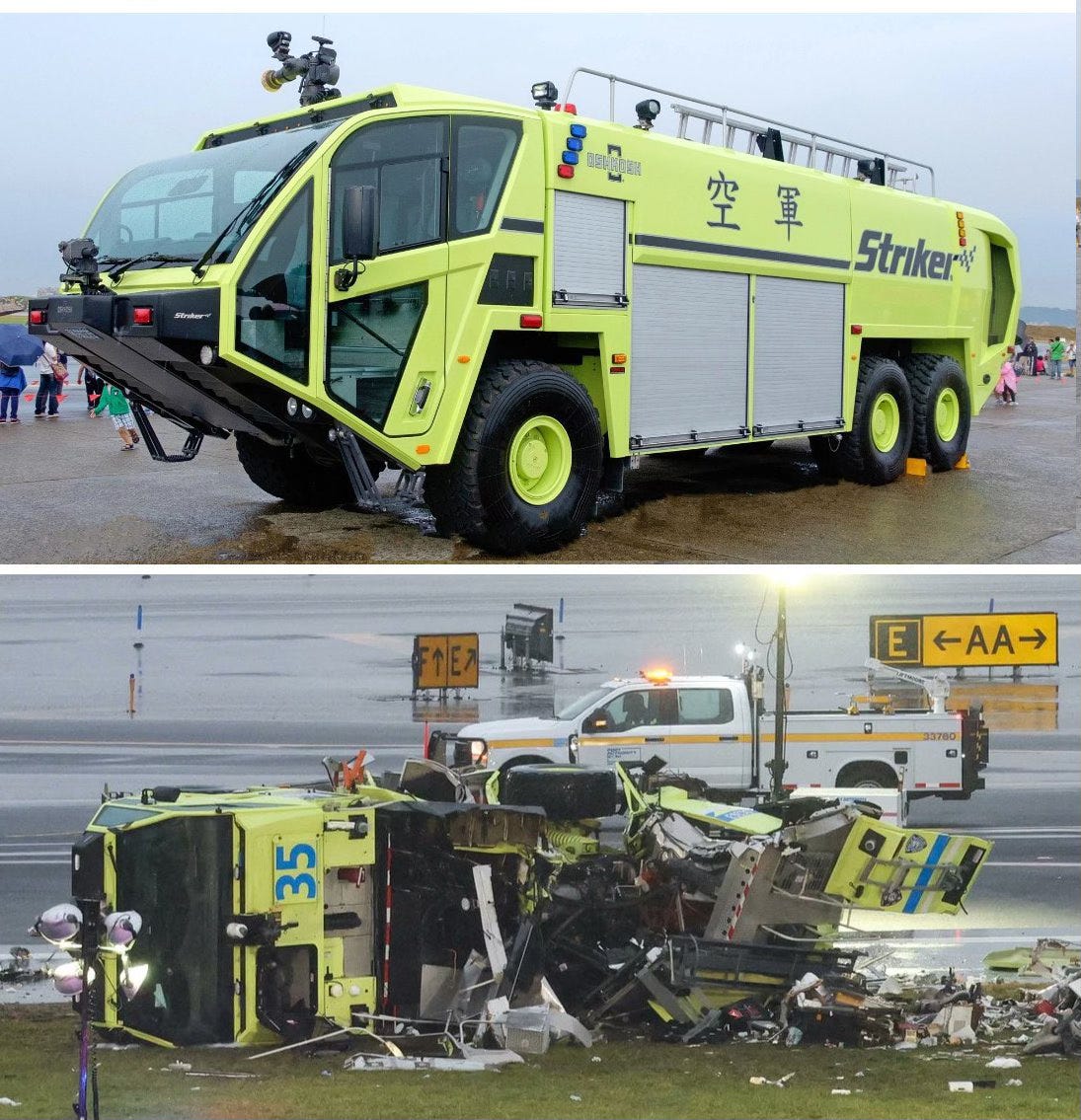
The most likely explanation: the crew saw the fire truck on the runway just after touchdown, and the first officer handed control to the captain — because he’s the only one who can steer at low speed.
Forest had four seconds to try to avoid a head-on collision.
Only the investigation will tell us exactly what happened in those final moments.
Passengers reported heavy braking just before impact. The aircraft struck the truck dead center — not the wing, not the fuel cells, not the engines. An aviation safety analyst said that if the point of impact had been forty feet in either direction, the outcome could have been catastrophically worse. Whether Forest managed to steer in those final seconds, we don’t know yet. The NTSB will be looking closely at the flight data to reconstruct exactly what happened between touchdown and impact.
✈ I write this newsletter because I believe the gap between what pilots know and what passengers feel shouldn’t be this wide. Every edition is built to close that gap — honestly, from the left seat, without sugarcoating.
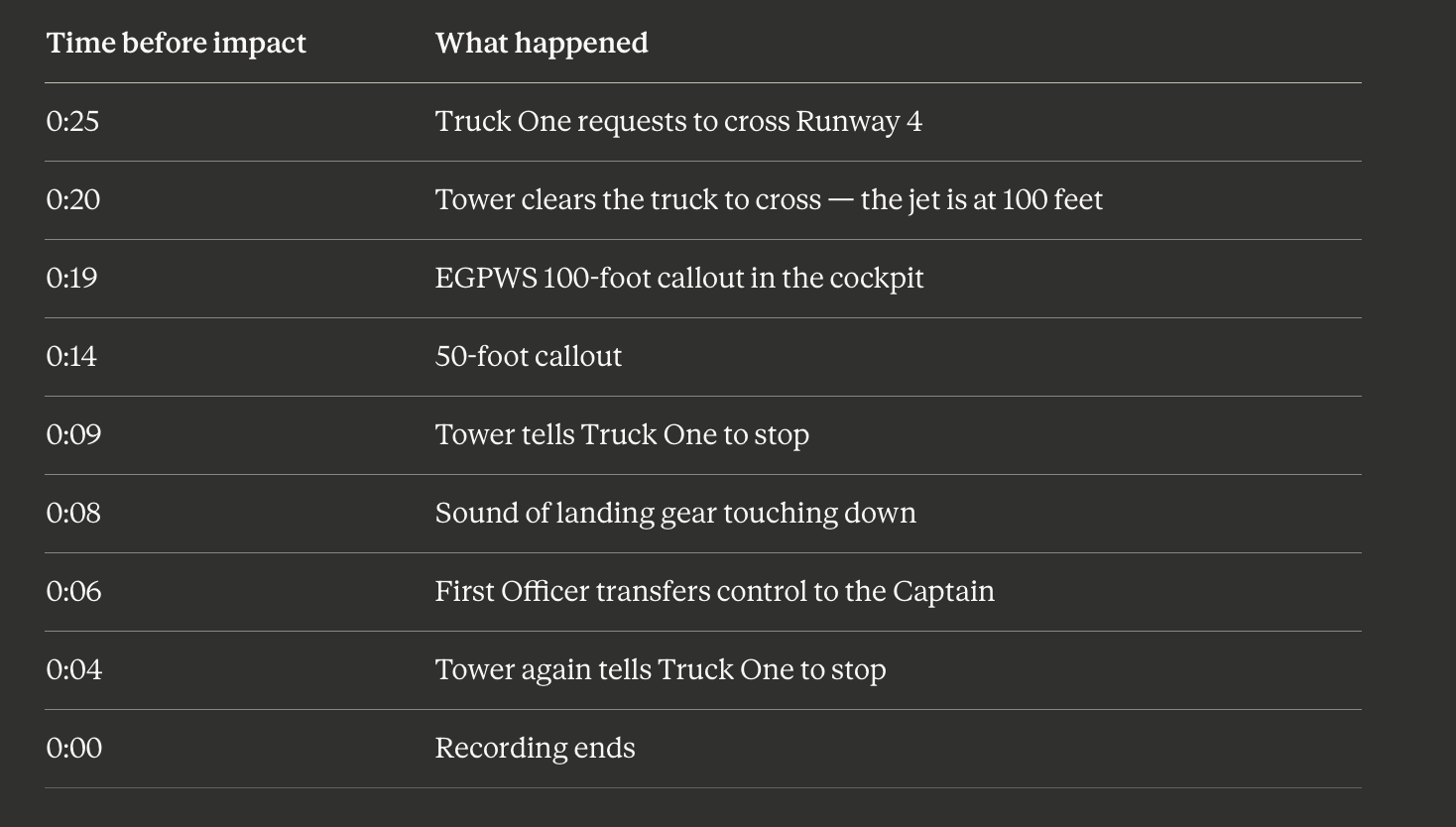
Here’s what the last 25 seconds looked like, based on the NTSB’s preliminary CVR timeline:
The runway safety system at LaGuardia — designed to prevent exactly this — didn’t alert. The fire truck had no transponder. On the controller’s screen, it showed up as what investigators called a vague “blob.”
The controller saw something was wrong but too late…
Nine seconds out: “Stop. Stop. Stop. Truck One, stop. Truck One, STOP.”
Four seconds out, again. The recording ends there.
What It's Like to Land at LaGuardia
I’m a pilot. I’ve landed at LaGuardia more times than I can count. And what I need you to understand is this: the airplane did everything right. The pilots did everything right. What failed was the ground — the coordination, the technology, the infrastructure that’s supposed to keep a fire truck and a landing aircraft from ever being in the same place.
What Actually Failed
LaGuardia has a system called ASDE-X — Airport Surface Detection Equipment. It tracks aircraft and vehicles on the ground and alerts controllers if something is about to cross an active runway. Thirty-five US airports have it. It’s the safety net for exactly this scenario.
Sunday night, it didn’t make a sound.
The system reads transponder signals. If a vehicle doesn’t have one, it relies on radar returns — bouncing signals off the metal body and trying to create a track. The fire truck had no transponder. There were multiple vehicles near the runway. The system couldn’t distinguish a clear target from the noise. So it stayed silent.
A fire truck at one of the busiest airports in the United States was invisible to the safety system designed to prevent runway collisions
The NTSB chair told reporters: “This is 2026.” She called the system “old” and said none of the fire trucks responding that night had transponders.
Here’s what matters for you as a passenger: this wasn’t a mechanical failure. The airplane didn’t malfunction. No turbulence, no wind shear, no emergency in the air. The CRJ-900 flew a textbook approach. What broke was the choreography on the ground. And that’s fixable — transponders aren’t expensive, and upgrading the system is well within the FAA’s capability. This is an infrastructure problem, not an aviation safety problem. There’s a meaningful difference.
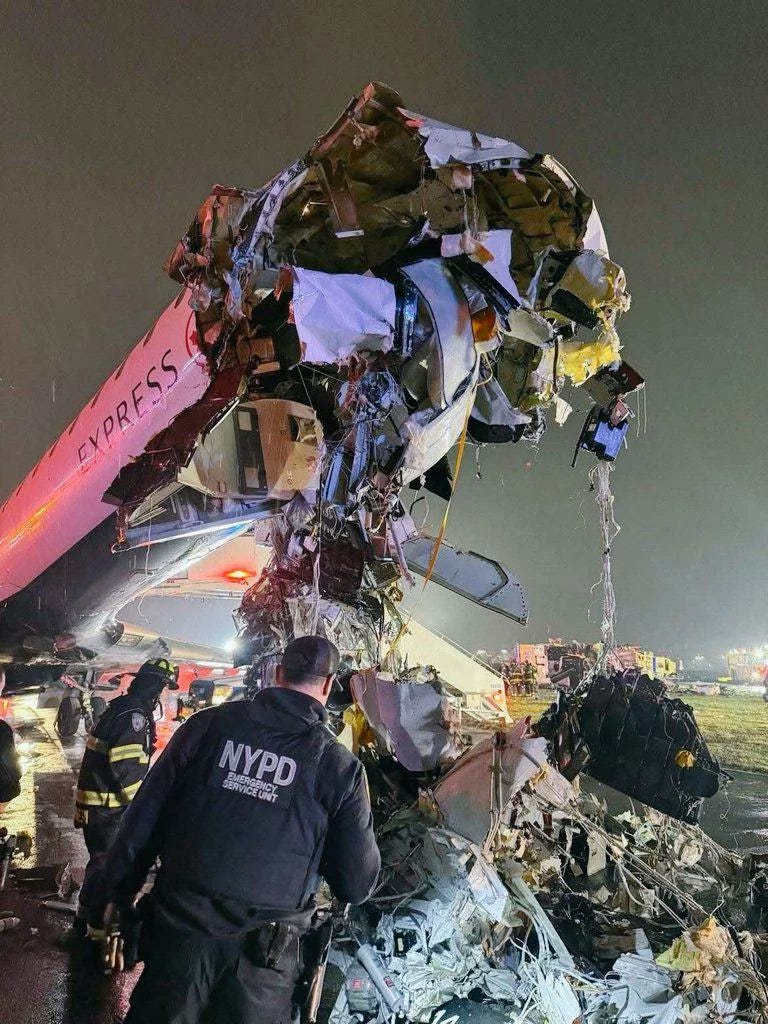
What It’s Like to Land at LaGuardia KLGA
I want to give you something no news report can: what it feels like to fly into LGA.
LaGuardia is tight. Short runways. Taxiways that run close to the runways. Vehicles constantly crossing active movement areas — tugs, de-icing trucks, fire and rescue. The coordination between the tower and ground control is nonstop.
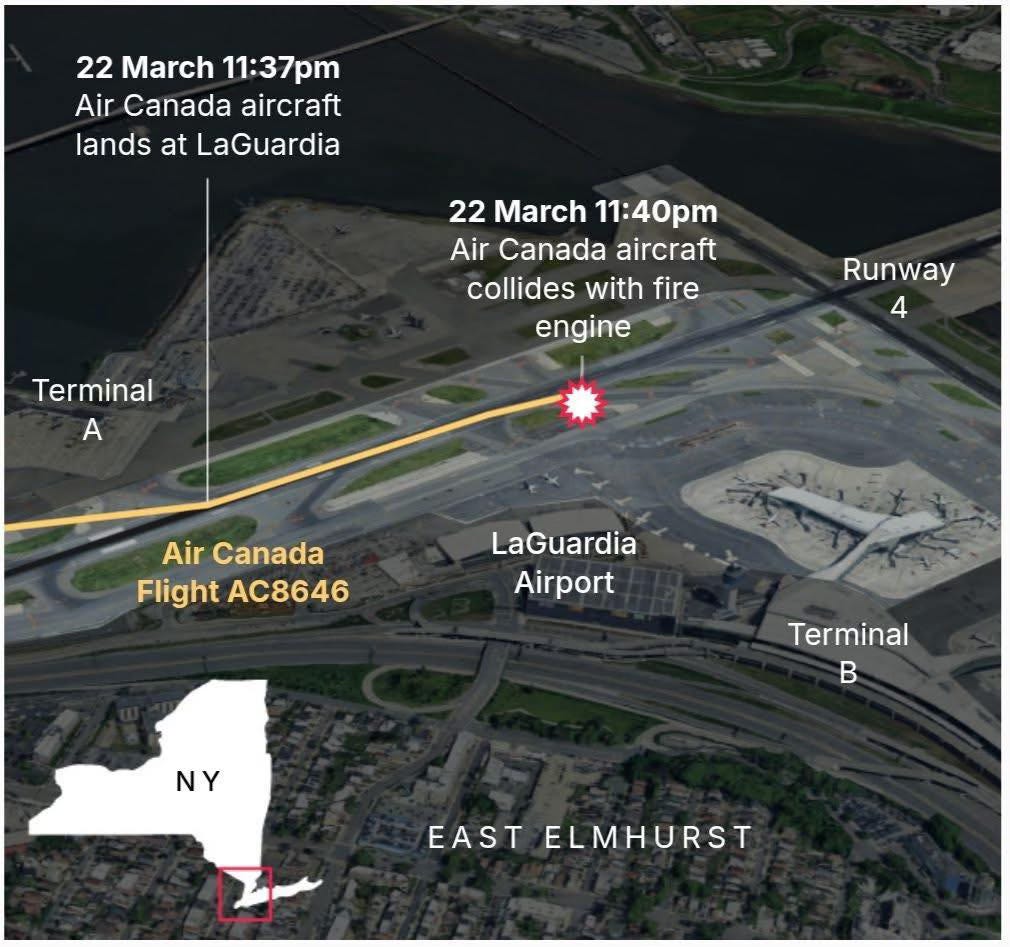
At 11:40 PM on a foggy night, with a United flight reporting an onboard odor and fire trucks responding across the field, the workload in that tower was high. Two controllers were on duty — standard for the midnight shift. But “standard” and “sufficient” aren’t always the same thing.
When you’re on short final into LaGuardia at night, your world is a wall of light. Runway edge lights, centerline lights, approach lights, taxiway lights — all of it bleeding together in mist. Behind that, the glow of Queens, the Bronx, the city reflecting off low clouds. In marginal weather, picking out a single vehicle on the runway — or even a line of fire trucks staged near a crossing point — is close to impossible. Everything blends. Your eyes are locked on the runway environment, the PAPI, the threshold. You trust — you have to trust — that the ground is clear. That the safety system is watching what you can’t see.
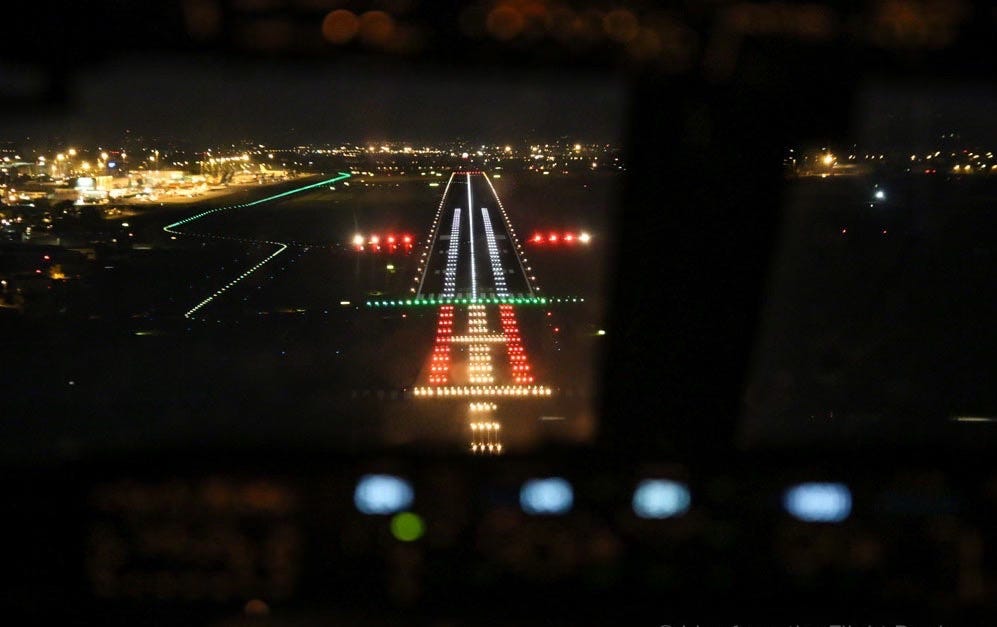
The controller cleared the fire truck to cross twenty seconds before the jet landed. Then realized the conflict and called for it to stop. The NTSB revealed that a critical radio transmission was “stepped on” by another — meaning the call may have been blocked. We don’t know if the firefighters ever heard it.
The plane struck the fire truck nearly head-on. The cockpit was destroyed. Both pilots were killed. A flight attendant was thrown from the aircraft, still strapped to her seat, and survived. Forty-one passengers were hospitalized. Most have been released.
One passenger, Rebecca Liquori, said she felt the pilots brake hard before impact.
She told reporters: “Those pilots saved our lives.”
✈ If someone you know is nervous about flying right now — they need to read this.
After LaGuardia, after the shutdown, after everything — there are people in your life who are quietly dreading their next flight. Forward them this piece. It's the context and the calm that the news cycle isn't giving them.
The Bigger Picture
This crash didn’t happen in a vacuum. Twelve months ago, a midair collision near Reagan Airport killed 67 people. The NTSB found that combined controller positions in the tower were a contributing factor. The FAA launched a hiring surge. New funding passed. But the underlying problem — too few controllers, aging technology — hasn’t been fully solved. LaGuardia has 33 certified controllers against a target of 37.
Then came the 43-day government shutdown. Controllers working without pay. The FAA ordering a 10% flight reduction at 40 airports. Runway incursions have been on Canada’s Transportation Safety Board watchlist since 2010. The FAA has tracked a rising trend of near-misses for years.
Sunday’s crash wasn’t a near-miss. It was the real thing.
What This Means for Your Next Flight
If you have a flight coming up and you’re nervous, I want to talk to you directly.
The airplane is still the safest way to travel. What happened at LaGuardia was a ground incident — a vehicle on the runway. It was not a failure of the aircraft, the engines, the wings, or anything you typically worry about during a flight.
What failed are systems that can be fixed. Transponders on every airport vehicle. An upgraded ASDE-X. Better controller staffing on overnight shifts. Tighter procedures for clearing vehicles across active runways. These are not unsolvable problems. They require funding and urgency — both of which this crash just provided.
And what the pilots did in those final seconds likely saved lives. Antoine Forest was 30 years old. Mackenzie Gunther had just graduated from flight school. They were at the start of their careers, flying a routine approach on a foggy night. And in the last seconds of their lives, they appear to have done everything in their power to protect the 72 people behind them.
I think about that every time I sit in the left seat.
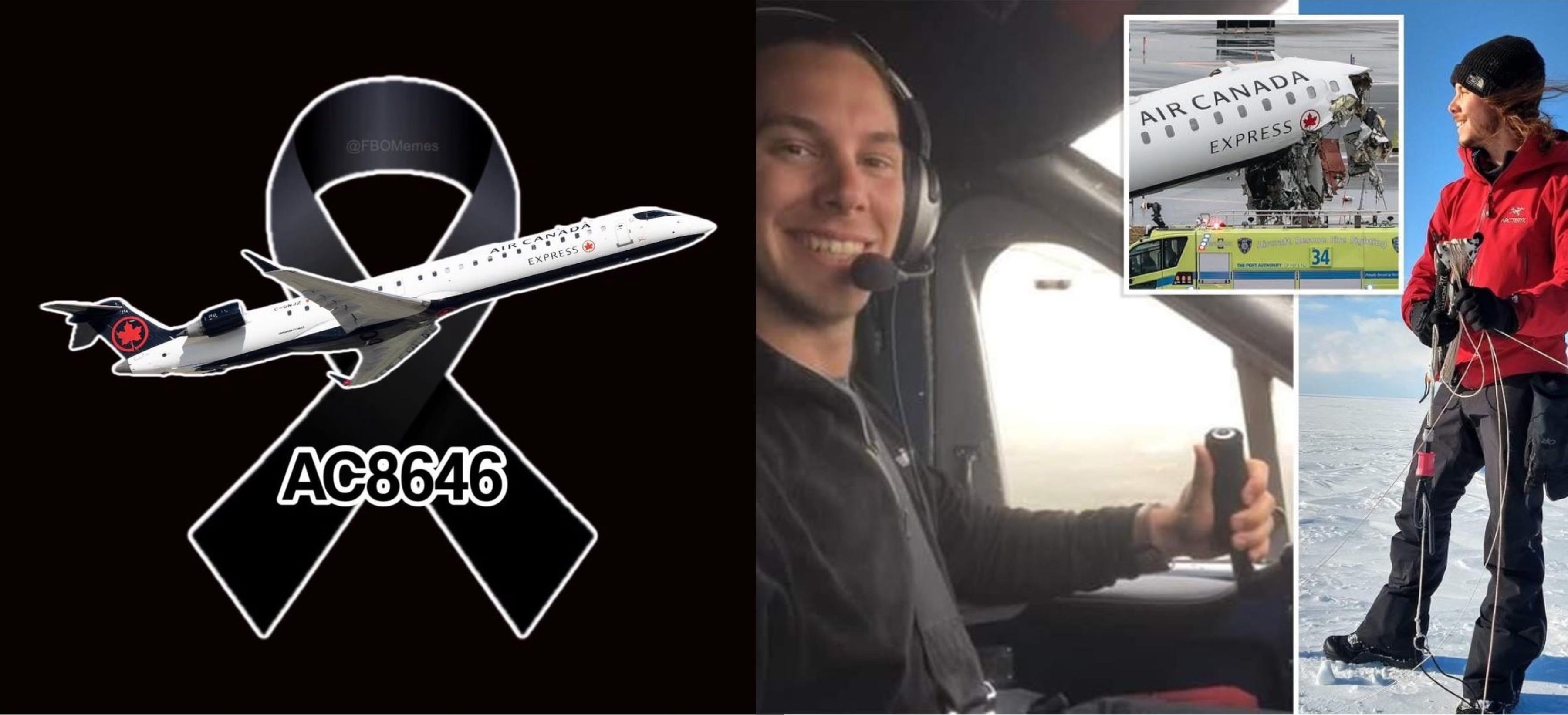
“Two pilots lost their lives Sunday night at LaGuardia. They were young. They were at the start of their careers. And they did nothing wrong”
A fire truck at a major US airport didn’t have a transponder.
In 2026. The NTSB chair looked into the cameras and said “this is 2026” as if she couldn’t quite believe she had to say it.
The plane worked. The pilots worked. What failed was everything on the ground that was supposed to make sure they’d never need to be heroes.
They shouldn’t have needed to be heroes. If you agree, share this piece.
Fly Safe,
Pilot Nick

✈ If this piece changed how you think about what happened — or how you’ll feel on your next flight — stay on the jumpseat.
For less than $7 a month, you get every Insider Pilot Strategy I publish, Jumpseat Privileges to ask me anything about flying, and The Captain’s Toolkit with guides and resources to fly calmer. Most readers choose the annual plan.
And if you know someone who needs to read this before their next flight — forward it. That’s how this newsletter grows.
I feel genuinely heartbroken for the families of those pilots. The antiquated infrastructure alone is infuriating. LaGuardia has spent hundreds of millions on a makeover the last few years too. One would think critical safety systems would take priority over posh bars in the terminals, and yet here we are.
Thank you Nick for this informative, sobering read.