

We Just Lost Both Engines at 41,000 Feet. There's No Airport in Range.
How a brand-new Boeing 767 ran out of fuel at 41,000 feet and why the captain was the only person on Earth who could have landed it.

🕒 12 min read · Black Box Series · Episode 02 · Pilot Nick
July 23, 1983. A Saturday evening in central Canada.
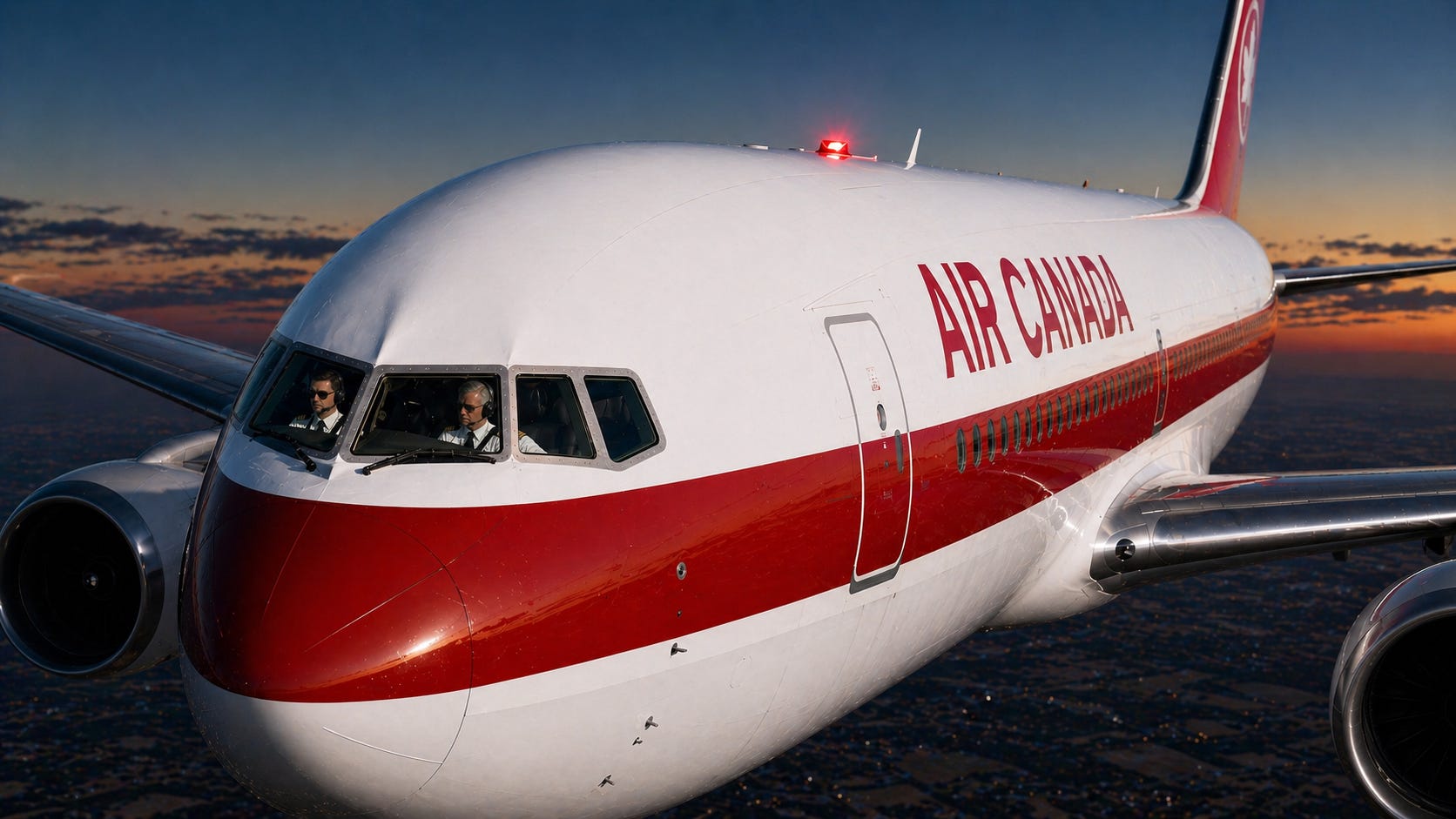
A brand-new Boeing 767, just five months old, is cruising at 41,000 feet over a place called Red Lake, Ontario.
Sixty-one passengers. Eight crew. A standard domestic flight from Montreal to Edmonton.
In the cockpit Captain Robert “Bob” Pearson, 48 years old, 15,000 hours of flight time. Beside him First Officer Maurice Quintal, 36, ex-Royal Canadian Air Force.
It’s a quiet flight. The kind of evening sector pilots love. Smooth air. Clear sky. The sun is going down over the Canadian shield.
Then a single chime fills the cockpit.
Four notes. Soft. Almost polite.
Both pilots glance at the warning panel.
It says the aircraft has a fuel pressure problem on the left side.
Pearson and Quintal exchange a look the look pilots give each other when something on the panel doesn’t quite make sense. Because according to the fuel quantity readout in front of them, they have plenty of fuel.
Plenty.
Ninety seconds later, the left engine flames out.
Thirty seconds after that, the right one follows.
And the world’s most modern airliner a brand-new, twin-engine, computerized 767 becomes the largest glider in commercial aviation history.
What happens in the next 17 minutes is taught in every airline training program on Earth.
Welcome to Black Box · Episode 02
If you’re new here Black Box is the series where I take a real aviation incident and break it down the way a pilot actually thinks about it.
Not the news version. Not the dramatized version.
The version from the left seat.
What the crew saw. What they decided. Why. And most importantly for the nervous flyers reading this what changed afterwards, so that you never have to.
🔒 The rest of this story is for paid subscribers.
What Pearson did in the next 17 minutes is one of the most extraordinary pieces of flying in commercial aviation history.
Inside the paid section:
→ The glide speed Pearson guessed and why he was right
→ The forward slip no airline pilot is trained to fly
→ The drag race in progress on the runway he was about to land on
→ What changed in every cockpit because of this flight
→ Why this story should make you feel safer, not more afraid
