


Air Transat Flight 236: the Azores Glider, and the pilots who flew it
On the night of August 24, 2001, Air Transat Flight 236 was a routine overnight flight from Toronto to Lisbon. On board the Airbus A330-200 were 293 passengers and 13 crew members, with Captain Robert Piché and First Officer Dirk de Jager at the controls. They were cruising at 39,000 feet over the dark Atlantic.
A few hours later, both engines would be silent, and this crew would fly one of the most remarkable glides in aviation history. That glide is why the flight is still known today as the “Azores Glider.”
When the engines went silent
About four hours into the flight, a fuel line in the right engine cracked. During maintenance, a mismatched part had been installed, and it rubbed against the line until it gave way. Fuel began pouring out over the ocean.
In the cockpit, the first sign looked harmless: the computers showed a fuel imbalance between the tanks. Nothing on the displays said “leak.” So the crew did what the indications suggested and balanced the fuel, without knowing they were feeding the very leak that was draining their airplane.
The Critical Moments
Captain Robert Piché, a 48-year-old pilot with 16,800 flight hours, and First Officer Dirk de Jager, 28, with 4,800 hours, faced every pilot's nightmare scenario. At 06:13 UTC, while still 150 nautical miles (280 km; 170 mi) from Lajes and at 39,000 feet (12,000 m), engine no. 2 flamed out from fuel starvation.
The situation deteriorated rapidly. Thirteen minutes later, at 06:26 UTC and about 65 nautical miles (120 km; 75 mi) from Lajes Air Base, engine no. 1 also flamed out, requiring the plane to glide the remaining distance.
In an instant, the massive Airbus A330 had transformed from a powered aircraft into the world's heaviest glider, with 306 souls aboard and nothing but dead engines over the vast Atlantic.
How Aircraft Can Glide Without Engines
Contrary to what many people believe, when an aircraft loses all engine power, it doesn't simply fall out of the sky like a stone. Modern passenger aircraft are designed with excellent gliding capabilities, thanks to their aerodynamic design and wing structure.
A typical commercial aircraft has a lift-to-drag ratio of around 10:1, which means that for every 10 miles it travels forward, it loses only 1 mile in altitude. From a cruise altitude of 36,000 feet (about 6 miles up), an aircraft can potentially glide for up to 60 miles before reaching the ground. This gives pilots precious time—typically 20 to 30 minutes to find a suitable landing site and prepare for an emergency landing.
In fact, passengers experience gliding on almost every flight during descent, when pilots reduce engine power to minimum thrust settings, effectively allowing the aircraft to glide down toward the airport.
Flight 236 landed safely because of more than piloting. The RAT and other backup systems most passengers never see kept the essentials running. Read my article below 👇🏻
Do Planes Have Backup Engines? A Pilot Explains the 5 Systems That Keep You Safe

Forty minutes after takeoff. The seatbelt sign just went off, you’re somewhere over the ocean, and a thought slips in: “What if an engine quits out here?”
Against All Odds
Armed with this gliding capability, Captain Piché and his crew still faced enormous challenges. They calculated they had about 15 to 20 minutes left before they would be forced to ditch in the ocean. The aircraft was descending at 2,000 feet per minute, and the crew knew that ditching in the Atlantic's large swells at night would likely be fatal for everyone aboard.
But fate intervened. The lights of Lajes Air Base in the Azores appeared in the distance just barely within gliding range. Captain Piché, who was also an experienced glider pilot, drew upon every skill he possessed. Piché executed one 360° turn, and then a series of "S" turns, to dissipate excess altitude.
The Miracle Landing
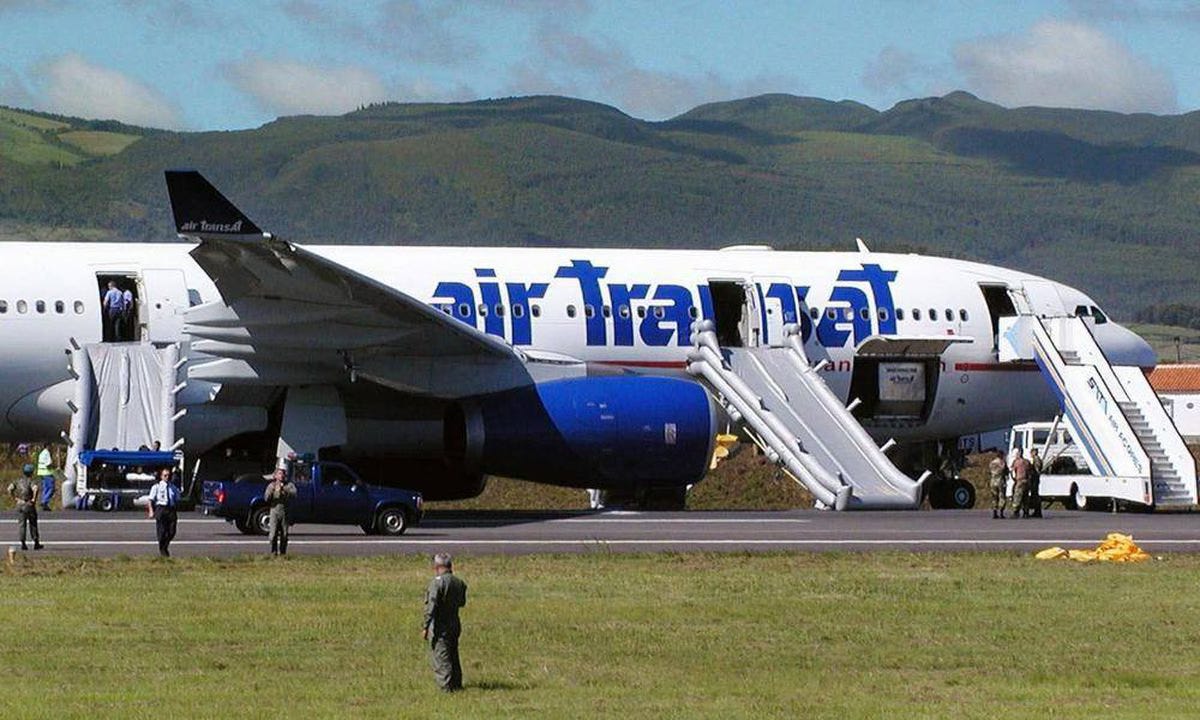
After gliding for nearly 75 miles or 121 kilometres, the plane touched down hard in Lajes, around 1,030 feet (310 m) past the runway threshold of runway 33, at a speed of around 200 knots at 06:45 UTC.
The landing was anything but gentle. Because the antiskid and brake modulation systems were inoperative, the eight main wheels locked up, the tires abraded and fully deflated within 450 ft (140 m), and the wheels themselves were worn down to the axle journals during rollout.
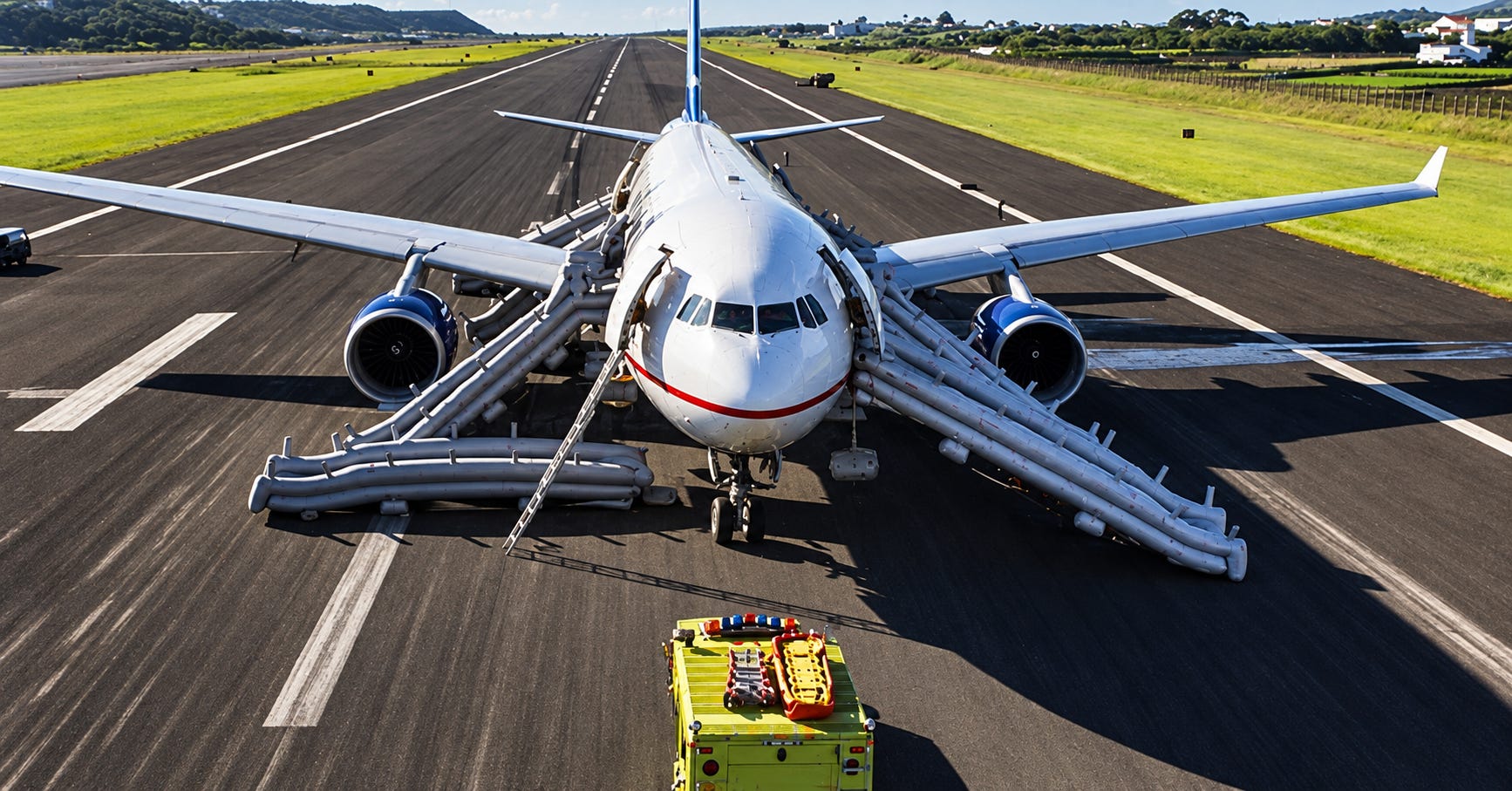
But it worked. The aircraft came to a stop after consuming 7,600 feet of the 10,000-foot runway. All 306 people aboard survived, though 16 passengers and two crew members sustained minor injuries during the emergency evacuation.
The Human Story
Captain Piché's background made him uniquely qualified for this moment. An experienced glider pilot and former Royal Canadian Air Force member, he had actually served a prison sentence for drug smuggling in the 1980s before rebuilding his career and joining Air Transat in 1995. His unconventional past had given him a deep understanding of both flying and crisis management.
"When I tell people that I was scared, they don't want to believe me, they think I'm saying that out of modesty," Robert Piché explained in a telephone interview.
The Investigation and Legacy
The investigation revealed that the crisis began with a maintenance error. An incorrectly installed hydraulic component had caused the fuel and hydraulic lines to chafe against each other, eventually creating the fatal fuel leak. The crew's initial response transferring fuel from the working engine to the leaking one inadvertently made the situation worse, though their ultimate handling of the emergency was exemplary.
The Captain's skill in conducting the engines-out glide to a successful landing averted a catastrophic accident and saved the lives of all those on board. The Air Line Pilots Association later described it as "the greatest feat of the last 50 years in civilian piloting."
A Record That Stands
Flight 236 holds the world record for the longest passenger aircraft glide without engines—nearly 75 miles over the Atlantic Ocean. The aircraft, registration C-GITS, was repaired and returned to service just four months later, earning the nickname "Azores Glider." It continued flying with Air Transat until being retired in March 2020.
Lessons Learned
The story of Air Transat Flight 236 demonstrates the crucial importance of pilot training, maintenance procedures, and emergency preparedness. It also shows how human skill, experience, and calm decision-making can overcome even the most dire circumstances.
The incident led to improved maintenance protocols and better fuel leak detection systems. But perhaps most importantly, it stands as a testament to the dedication and skill of aviation professionals who put passenger safety above all else.
Twenty-four years later, the "Azores Glider" remains a powerful reminder that even when everything goes wrong, the human spirit and professional expertise can still find a way to bring everyone safely home.
Fly Safe,
Pilot Nick

📬 Get more cockpit insights and travel tips, subscribe free to Lessons From the Flight Deck for weekly updates that help you fly calm and confident or visit.
Although the handling of the glide and landing were exemplary, there is a bit more to it that that. The crew's initial response transferring fuel from the working engine to the leaking one, relying on memory rather than the fuel imbalance checklist, didn't just make the situation worse... It turned a problem into an emergency. Had they not opened the crossfeed, only one engine would have suffered fuel exhaustion, and they could have continued to a single engine landing.
As it happens, a number of years later an old friend of mine was invited to ride the jump seat in an Airbus 320 Sim, while another old friend did some practice. (He was a training Captain who loved nothing more than getting into the sim in his off time and practicing emergencies.) One of the emergencies simulated was system failure that resulted in loss of the ABS. As the sim shuddered to a halt on "landing" our friend in the jumpseat said "that's very realistic". When he was asked how he knew, he revealed that he and his family had been on that Air Transat flight. They, along with a fair number of the passengers, are part of a study on the long term affects of PTSD.
What a story! I had no idea so thank you for sharing it.