



Let me start with a confession:
I love passengers.
For 27 years, I’ve watched people step onto my airplane…and within the first few minutes, I can usually predict how the flight will go.
Not because of the weather.
Not because of maintenance.
Because of behavior.
Most of it is harmless.
Some of it quietly makes every flight crew sigh.
And a few habits?
They create real operational problems at 35,000 feet.
After nearly three decades in the cockpit, here are 11 things passengers do that pilots rarely say out loud.

You’re the reason I have a career. But after 27 years of flying from regional routes in Midwest snowstorms to long-haul international trips, there are certain things I’ve watched people do thousands of times that make me quietly shake my head behind the cockpit door.
This isn’t about shaming anyone. Most of these habits come from not knowing how things actually work on an airplane. So consider this your friendly briefing from someone who’s spent more time in the sky than most people spend in their cars.
1. 👏 Clapping When the Plane Lands
I know, I know, this is a controversial one. But here’s the thing: landing a plane is literally my job. I’ve done it over 12,000 times. The applause, while well-intentioned, can actually be distracting during the most task-heavy phase of the flight. After touchdown, we are managing reverse thrust, braking, runway turnoff, ground control frequency changes, and checklists. The cockpit is not a quiet place in those moments.

✦ Do This Instead: If you want to show appreciation, a quick “thanks” or nod to the crew as you deplane means more than any round of applause. Better yet, send a short note to the airline.
2. 🚶 Standing Up the Instant the Seatbelt Sign Turns Off
The plane has barely stopped and thirty people are already hunched over in the aisle like they’re queuing for the last lifeboat on the Titanic. Here’s what you don’t see: the jet bridge isn’t connected yet. The door isn’t open. You’re going to stand in that pretzel position for 5–10 minutes while your carry-on presses against the overhead bin. Nobody is getting off this aircraft any faster because you’re vertical.
✦ Do This Instead: Stay seated until your row is actually next to deplane. Use those extra minutes to gather your things calmly, check under the seat, and avoid being the person who holds up the aisle fumbling for a jacket while 180 people wait behind you.
3. 🎧 Ignoring the Safety Briefing Completely
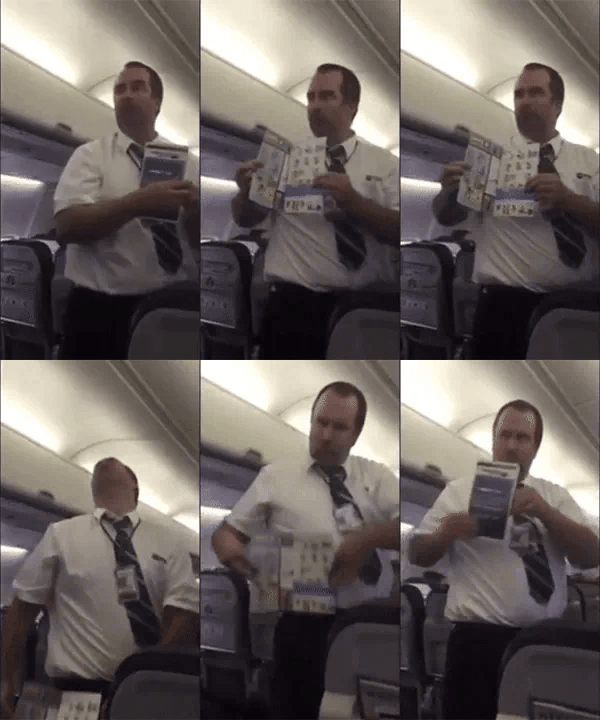
I get it—you’ve flown a hundred times and you know where the exits are. But here’s something most people don’t realize: every aircraft type has different exit configurations, different emergency procedures, and different brace positions. What you learned on one airplane does not apply to another. Our flight attendants aren’t performing a theatrical show for their own amusement. They’re giving you information that could save your life in the 90 seconds you’d have to evacuate

✦ Do This Instead: At a minimum, count the rows between you and the nearest two exits. If you can’t see, count seat backs by touch. That one piece of information has saved lives in smoke-filled cabins where visibility drops to zero.
In my career, I’ve had two genuine emergencies that required passenger preparedness. Both times, the passengers who responded fastest were the ones who had actually paid attention. The ones frozen in their seats? Almost always frequent flyers who assumed they already knew what to do.
The rest of this list includes the behaviors that create the most tension in the cabin and the ones that can cost airlines six figures in a single diversion.
If you fly even twice a year, this might change how you board your next flight.
